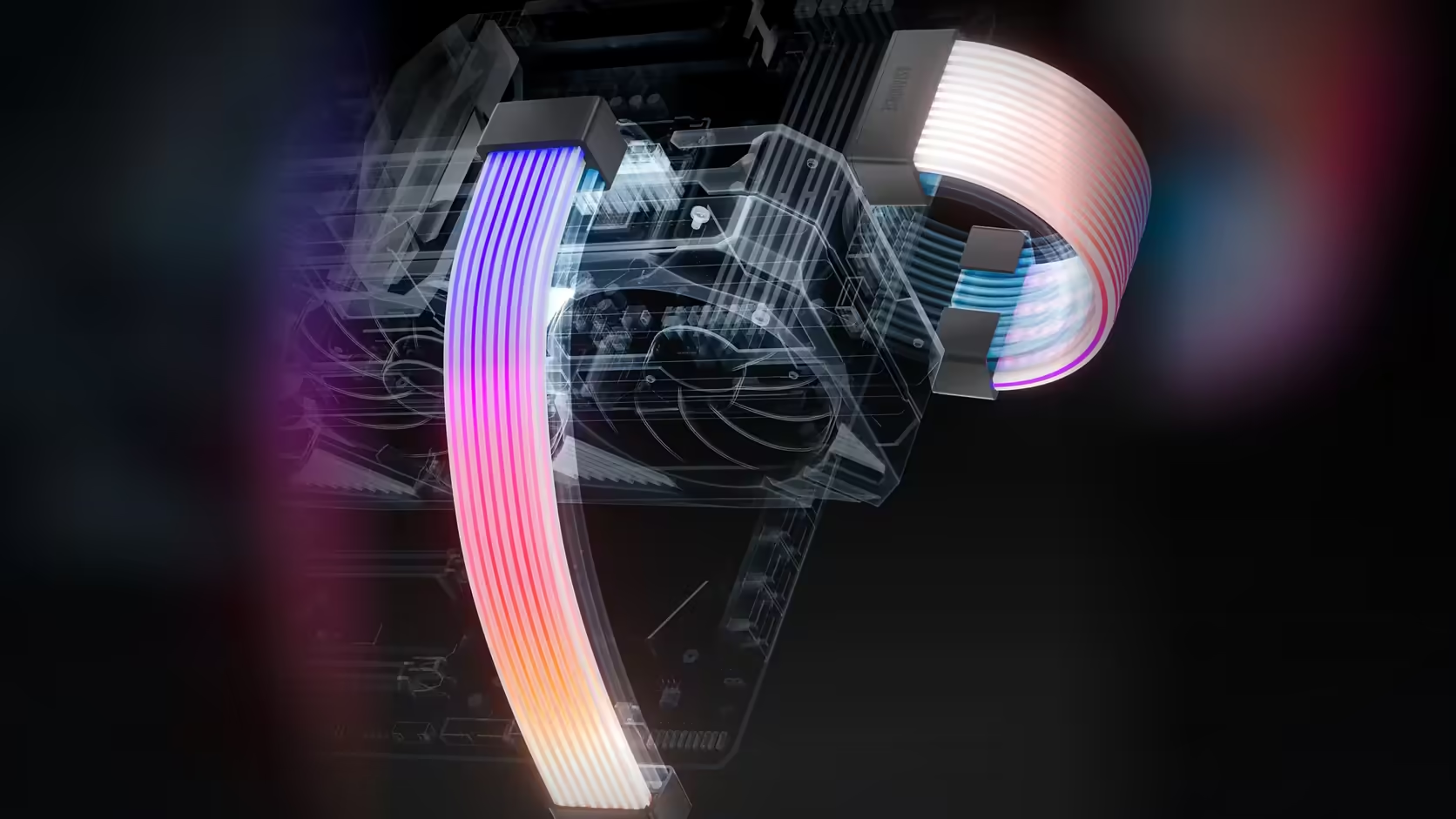
A cable cover isn't the kind of part you install and adjust afterwards - once neighbouring components are back in place, the position it ended up in is largely the position it's staying in. That's the reason marking out where AsiaHorse's Aurora ARGB cover kit's board shell will sit is worth doing before it's ever clipped onto the 24-pin run.
Quick Answer
Mark the intended footprint of the Aurora kit's 24-pin cover before clipping it into place, since the covered section stops being freely adjustable once other parts of the build go back in. That shell is also the wider of the two in the R699 kit, which matters wherever the run passes close to a drive cage, a shroud edge, or a board heatsink.
📍 Why marking the position matters
Once fans, drive cages, and cable ties are all back in their final positions, working around them to reposition an already-clipped shell becomes a much bigger job than simply picking the right spot the first time. A couple of minutes with tape marking each end of the intended span, done while the build's interior is still relatively open, avoids that entirely.
What the marking should be checked against
Two things: the case window, so the lit section ends up where it will actually be seen once the panel's back on, and the nearest surrounding components, so clearance is confirmed before anything is committed.
📏 Width is the constraint that catches people out
Length gets most of the attention when placing a shell, but the 24-pin cover is the wider of the pair in this kit, and that width extends either side of the cable itself rather than just along it. A shell that fits the cable's length perfectly can still foul a shroud edge or a drive cage sitting close beside that run - which is a clearance problem rather than a length problem, and it's easy to miss if only the visible span was measured.
Marking out the width, not just the span
Holding the shell loosely against the run at the intended position, without clipping it shut, shows whether there's genuine room either side before committing. If something's tight, shifting the position slightly along the run - provided the cable stays reasonably straight through the new spot - is usually enough to solve it.
🔄 Can the shell be moved after fitting?
It clips on rather than fixing permanently, so repositioning later is technically possible. In practice it means opening the panel and often working back around parts fitted since - drive cages loaded with storage, cable ties holding the surrounding bundle in place, sometimes a second cover fitted for the graphics run right next to it. None of that is impossible, just considerably more effort than getting the position right the first time.
📐 The graphics cover needs its own check
The eight-pin shell is a different size entirely - narrower and longer than the board cover - so it comes with its own footprint question rather than inheriting the answer from the 24-pin run. Treating the two as separate placement jobs, rather than assuming one solves the other, avoids ending up with one shell well-placed and the other compromised.
Evetech's cable management accessories are genuinely useful at this stage, both for tidying what the shells don't cover and for holding the surrounding bundle out of the way while the covers are being positioned. The case lighting range is also worth a browse for comparing footprints against other lit accessories before committing to a final layout.
Frequently Asked Questions
How much space does the 24-pin shell take up?
It covers a fixed span along the cable run and is the wider of the two shells in the kit, so its footprint extends either side of the cable as well.
Why does the width matter specifically?
Because the board cover is the wider of the pair, and a shell that fits the cable's length can still catch a shroud or drive cage sitting beside it.
How should the position actually be marked?
A small piece of tape at each end of the intended span is enough, and it can be adjusted freely before anything is clipped shut.
What should the marked position be checked against?
The case window, so the lit section falls where it will actually be seen, and the nearest components for clearance either side.
Can the shell be repositioned once it's fitted?
Yes, but it means opening the panel and often working around parts fitted since, so it's considerably more effort than getting it right first time.
Does the cable route itself affect the footprint?
Significantly - a run that curves through the intended span can't host a straight shell, so it may need straightening before marking a position.
Is the graphics cover the same size as the board cover?
No - it's narrower and longer, so it needs its own footprint check rather than assuming the 24-pin measurement applies to it too.
Planning exactly where your cable covers will sit?
Grab cable management accessories from Evetech to tidy the run before either shell goes on.