GPU clearance is the case spec that silently decides whether your dream graphics card fits, and it catches out more upgraders than any other dimension. This checklist makes the case for measuring before you buy, so SA builders never face the gut-punch of a card that physically will not go in.
Quick Answer
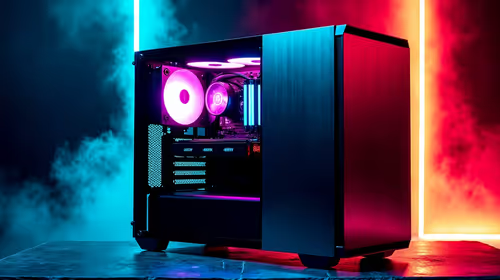
When upgrading a case, check the GPU clearance figure against your card's length; modern cards like an RTX 4070 or RX 7800 XT can exceed 300mm, so a case rated for at least 330mm leaves headroom. Cases run around R900 to R3,500. Confirm clearance before buying, since a card that is even a few millimetres too long simply will not fit, forcing a return.
GPU length is rising, so check it carefully
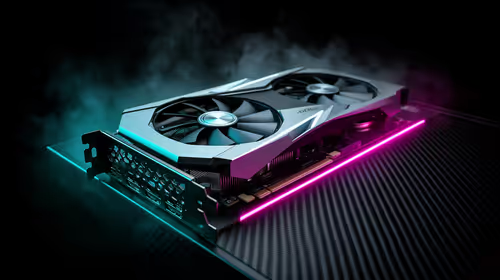
Graphics cards have grown, with many mid-to-high cards like an RTX 4070 or RX 7800 XT running over 300mm long with their coolers. A case lists a maximum GPU clearance, and your card must be shorter. Buying a case rated for at least 330mm leaves headroom for the chunky cards common now and for a future upgrade. This single number decides whether the most expensive component in your build fits at all, so it deserves a careful check rather than a glance at the case photos.
Watch for clearance-eating obstructions
The headline GPU clearance figure can shrink if you fit a front radiator or thick front fans, which eat into the space the card needs. Read the case spec for clearance with and without a front radiator, especially in compact cases. A case that fits a 330mm card with no front fans might only take a 300mm card with a radiator installed. For a build that pairs a long GPU with liquid cooling, this caveat matters, so account for everything sharing the front of the case.
Plan clearance for the card you might buy
Smart upgraders size GPU clearance for the card they might add later, not just today's. If you run an RTX 4060 now but might move to a longer high-end card, a case with 350mm of clearance future-proofs the build. With a high-end GPU costing many thousands of rand, buying a case that comfortably fits a future upgrade is cheap insurance against a second case purchase. Headroom on clearance is one of the easiest ways to keep upgrade paths open.
FAQ
How much GPU clearance does a case need?
At least the length of your card, and a case rated for 330mm or more leaves headroom, since modern cards like an RTX 4070 can exceed 300mm. Confirm clearance before buying to avoid a card that will not fit.
Can a front radiator reduce GPU clearance?
Yes. A front radiator or thick front fans eat into the space the card needs, so the usable clearance can be less than the headline figure. Check the case spec for clearance with a front radiator installed.
Should I size clearance for a future GPU?
It is wise. If you might move to a longer high-end card later, a case with 350mm of clearance future-proofs the build and avoids a second case purchase, which is cheap insurance given GPU costs.
Measure your GPU length and any planned upgrade against a case's clearance before buying; choose a case from Evetech rated for 330mm-plus so your current and future graphics cards fit with room to spare.