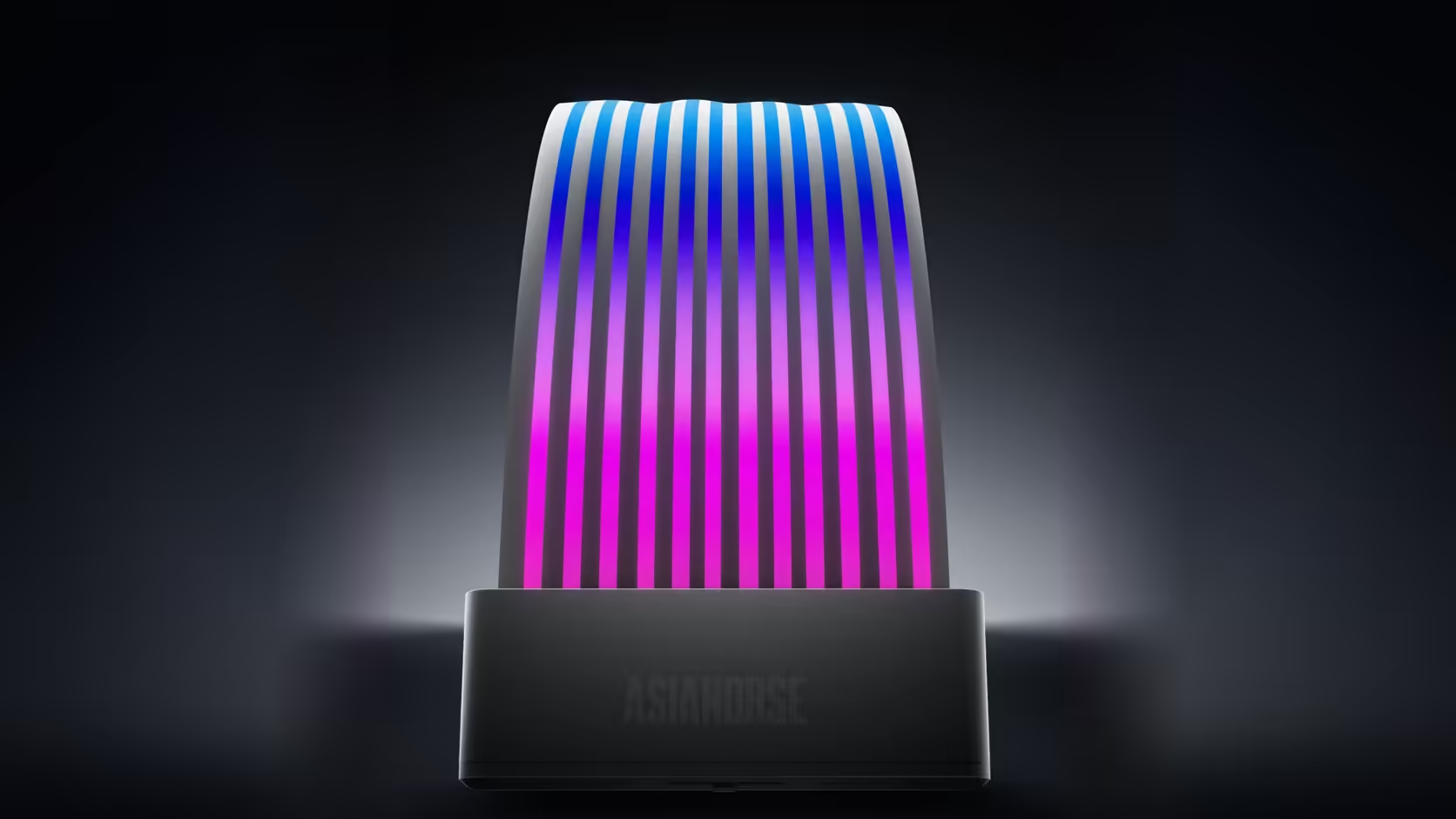
A remote loses most of its appeal the moment its effect is impossible to see from where you actually sit, and that simple fact makes positioning matter far more for the Aurora Learn ARGB PSU Cable Cover than for a fixed accent that never changes at all.
Quick Answer
Because the Aurora Learn remote invites frequent changes, place the R599 cover somewhere you can actually see the result from your chair, rather than facing a wall or the back of the case. A lit span pointed away from your seat turns each remote press into guesswork, followed by standing up just to check whether anything actually happened. Positioning the cover with the viewing angle in mind from the start avoids that entirely.
👀 Why the viewing angle genuinely matters here
A controllable accent is only worth controlling if the effect of each change is actually visible, and the remote specifically invites frequent experimentation, which a hidden span simply cannot reward the way a visible one does. The controller behind it draws its own power separately from a power supply connector, entirely independent of where the cover itself ends up mounted.
🪑 Checking the angle from where you genuinely sit
The machine's typical position
Beside or under a desk is where most machines end up, which often means the case window faces away from a seated position, so checking that angle before fitting anything is worth the two minutes it takes.
Turning the case rather than moving the light
Repositioning the whole machine so its window faces the seat is frequently easier than trying to relocate the lit span deep inside the case itself.
🔦 What if reflected light is the more realistic option?
A lit span can throw usable colour onto a nearby wall or desk surface even at an awkward angle, which still gives genuine feedback on a change even when the span itself sits partly out of direct view.
🖥️ Does board sync change this consideration at all?
Changes made through software are usually shown with an on-screen preview, so immediate physical visibility of the cover itself matters slightly less once that mode is active than it does under remote control.
🎛️ Does the controller's own position follow the same logic?
Not quite. The controller's placement is about the remote's reach rather than about seeing the lighting effect, so that is worth treating as a separate consideration from where the cover itself sits.
🧭 Weighing the cover against other visible parts of the build
If case lighting is already planned along the front or top of the case, it is worth checking that the cover's chosen position does not simply disappear behind those other lit elements once everything is switched on together. A short mock-up with everything roughly in place, before any cable is permanently tied down, is the easiest way to catch that kind of overlap early.
🌆 Evening viewing versus daytime viewing
A placement that reads clearly during a bright afternoon can look quite different once the room lights are off and the lit span becomes the dominant source of colour in the space, so it is worth glancing at the intended position at both times of day before finalising anything.
🪑 A five-minute check worth doing before fitting anything
Sitting in your normal chair, with the case in its intended spot, and simply looking at where a lit shell would sit is a cheap way to settle the placement question before committing to any cable routing at all.
Frequently Asked Questions
Why does the viewing angle matter for this particular cover?
Because the remote invites frequent changes, and a span you cannot see from your seat turns each adjustment into pure guesswork.
Where does the machine typically sit relative to a desk?
Beside or under it, which often means the case window faces away, so checking the visible angle before fitting is worth doing.
Is turning the whole case easier than repositioning the light?
Often, yes. Turning the machine so the window faces the seat is usually simpler than moving the lit span inside it.
Which power run is generally more visible from a seated position?
That varies by case and desk, so it is worth checking from the actual chair rather than assuming based on layout alone.
Does reflected light still give useful feedback on a change?
A lit span can throw colour onto a nearby wall or desk, giving genuine feedback even when the span itself sits at an angle.
Does board sync mode change how much viewing angle matters?
Somewhat. Software changes are often shown with an on-screen preview, making direct visibility of the cover itself slightly less critical.
Should the controller's placement follow the same viewing logic?
Not quite. Its position matters for the remote's reach rather than for seeing the lighting effect, so treat the two separately.
Want to actually see your Aurora Learn changes from your desk?
Check Evetech's power supply range and plan a placement your chair can actually see.