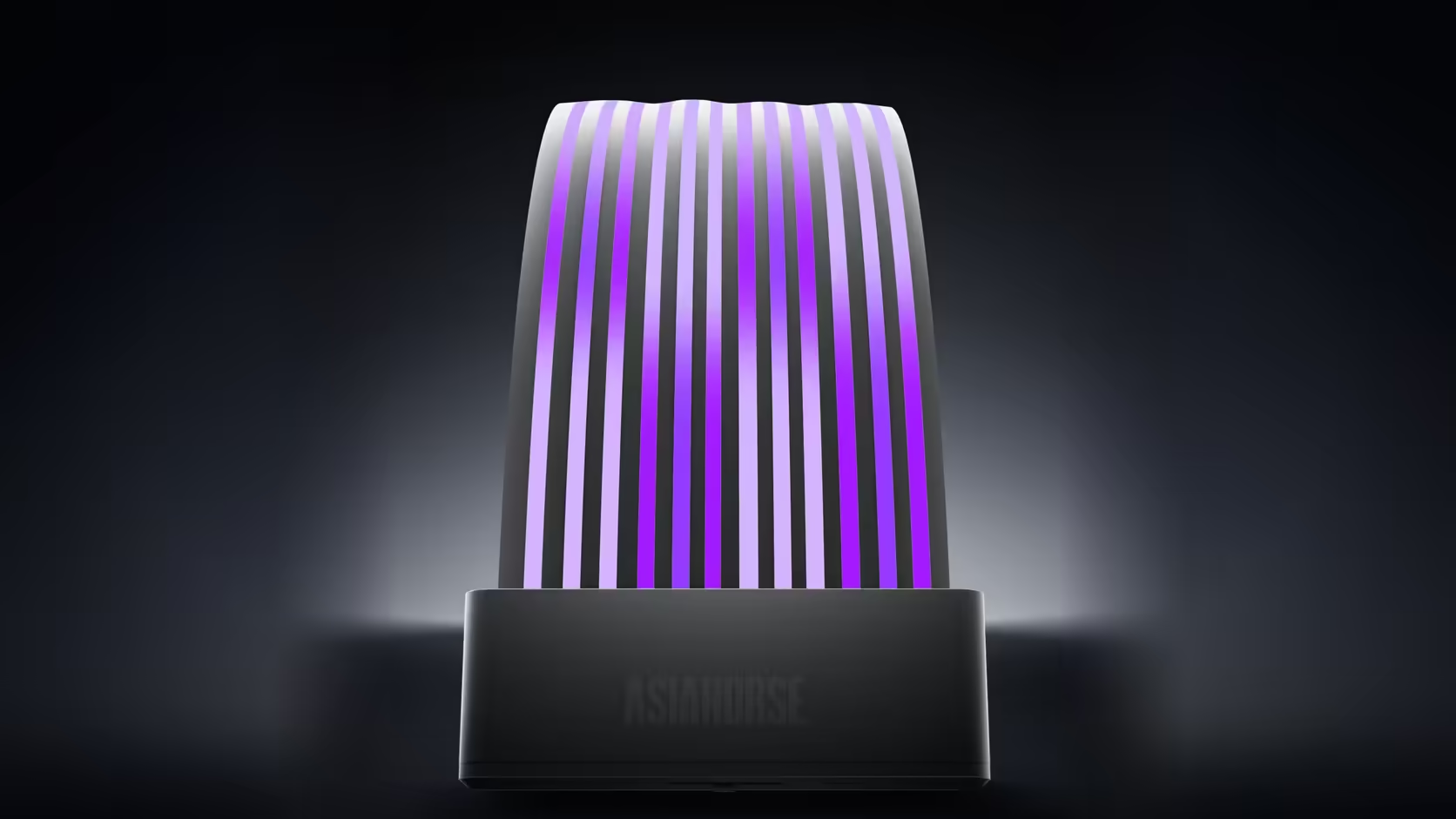
A remote with 124 or more buttons worth of options sounds generous until someone unfamiliar with it actually picks it up, and on a machine several people share, that generosity around the Aurora Learn ARGB PSU Cable Cover can turn into genuine confusion without a simple bit of documentation.
Quick Answer
On a shared PC, a short written note explaining what the Aurora Learn remote's buttons actually do saves a considerable amount of aimless cycling through its library. With 124 or more presets available on this R599 cover, searching through the full set is genuinely a lot to sit through just to find a familiar scene. Two or three documented favourites are usually enough for most households, and recording those specific ones is what keeps the lighting genuinely useful for everyone rather than frustrating for anyone but the original installer.
✍️ What is actually worth writing down
Which buttons select the household's preferred scenes, along with a rough description of what each one looks like, saves someone else from finding them purely by trial and error on a machine they did not set up themselves. The controller behind those scenes draws power from a power supply connector, which is worth a mention if anyone else will ever be reorganising cables inside the case.
📊 How many presets people actually settle on
Most households genuinely land on two or three favourites out of the full library, which is exactly why naming those specific few is far more useful in practice than trying to describe all 124 or more available scenes.
📍 Where that note should physically live
Keeping it near the remote itself is the practical choice, so the two stay together and the information is actually available at the exact moment someone needs it rather than filed away somewhere separate.
🖥️ Does this matter as much on a single-user machine?
Less so on a day-to-day basis, though it still helps after any extended time away from the machine, or whenever the PC eventually changes hands to someone new.
⚠️ Is there a real risk of losing the settings themselves?
The presets remain stored safely inside the controller regardless, so what actually risks being lost is the household's shared knowledge of which specific ones were liked, rather than the scenes themselves disappearing.
🔀 Would switching to board sync sidestep this problem entirely?
It moves control into software instead, which tends to be more discoverable for a new user browsing menus, though that route needs a genuinely free addressable header available on the board to work at all.
🏠 Documenting the whole household's lighting, not just this cover
If the build also runs a case lighting purchase synced through the board, the household note is worth extending to cover that software too, rather than leaving each lit component documented separately or not at all. A single page listing every control method in the case saves considerably more confusion than several scattered notes, particularly on a machine that gets shared across a family or a flat.
👶 Keeping the language simple for younger users
Where the household includes children, describing presets in plain terms, such as "the blue one" or "the rainbow one", rather than technical scene names, makes the note genuinely usable by every age group rather than only by whoever originally set the cover up.
🔄 Revisiting the note occasionally
Preferences shift over time, so a note written on day one may not reflect what the household actually settles on a few months later. Updating it occasionally, rather than treating it as a one-time task, keeps it genuinely useful rather than a stale record of settings nobody uses anymore.
Frequently Asked Questions
What is actually worth writing down for a shared machine?
Which buttons select preferred scenes, and roughly what each looks like, so someone else does not have to find them purely by trial.
How many presets do most households actually end up using?
Usually two or three, which is exactly why naming those specific favourites is far more useful than describing a library of 124 or more.
Where should this kind of note physically be kept?
Near the remote itself, so the two stay together and the information is genuinely available right when it is needed.
Does this documentation matter on a single-user machine too?
Less day to day, though it still helps after time away from the machine or whenever it eventually changes hands.
Is there a real risk of the saved presets being lost?
The presets stay stored in the controller regardless, so what risks being lost is shared knowledge of which ones were actually liked.
Would board sync sidestep the need for this kind of note?
It moves control into software, which is more discoverable for a new user, though it needs a genuinely free addressable header to work.
Should the current control mode be noted alongside the presets?
Yes, since a remote that appears to do nothing usually just means the cover is currently running in board sync mode instead.
Sharing a PC with Aurora Learn lighting installed?
Browse Evetech's power supply range and leave a quick note near the remote for everyone else.