Quick Answer
For 1080p video editing in Potchefstroom, a Ryzen 7 7700 (8 cores), 32GB DDR5, an RTX 4060 and a 1TB NVMe SSD give fluid timelines in Premiere or DaVinci Resolve for roughly R20,000–R28,000. At 1080p the CPU and storage matter more than a big GPU.
Where to spend
1080p editing leans on the processor and disk. An 8-core Ryzen 7 7700 handles multi-track scrubbing and effects, 32GB DDR5 keeps multiple layers responsive, and a 1TB Gen4 NVMe means footage loads instantly. A mid-range RTX 4060 accelerates GPU effects and speeds H.264/H.265 exports through NVENC — you don't need a flagship card for 1080p.
Scannable build guide
- CPU: Ryzen 7 7700 (8 cores, 16 threads)
- RAM: 32GB DDR5 (16GB minimum for light edits)
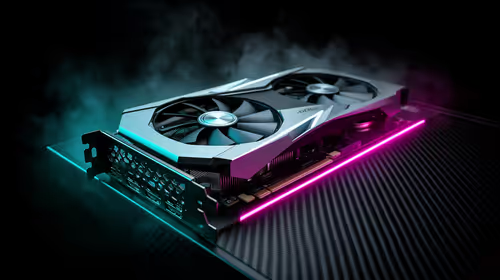
- GPU: RTX 4060 (NVENC for fast exports)
- Storage: 1TB Gen4 NVMe + bulk drive for archives
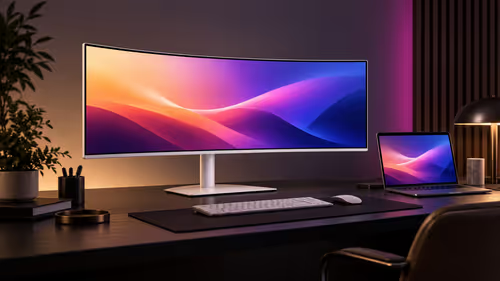
- Display: 1440p IPS for accurate framing
Export presets that save time
Set up reusable export presets — 1080p H.264 for YouTube, a higher-bitrate master for archive — so you're not retyping settings each time. With NVENC enabled, the RTX 4060 renders a typical 1080p clip in a fraction of the time CPU encoding takes. Batch-export multiple clips overnight for big projects. DaVinci Resolve's free version covers 1080p editing, grading and audio, so your full budget goes toward the hardware itself. A 1440p IPS monitor (~99% sRGB) makes framing and colour accurate, and a second screen for the preview speeds up the whole 1080p workflow.
FAQ
Is 16GB RAM enough for 1080p editing?
For single-layer cuts, yes; for multiple tracks and effects, 32GB DDR5 keeps playback smooth and prevents stutter.
How fast should my editing SSD be?
A Gen4 NVMe around 7,000 MB/s reads keeps footage scrubbing without dropped frames — far ahead of SATA drives.
Do I need a powerful GPU at 1080p?
No. An RTX 4060 is ample; it accelerates effects and exports while the CPU does the timeline work.
Set your editor's cache to the fast NVMe — render caching there keeps 1080p playback smooth during effect-heavy edits.