Quick Answer
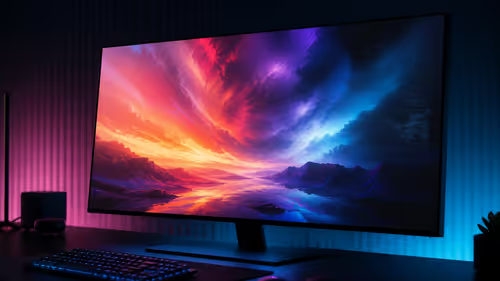
A 240Hz monitor runs warm by design, but genuine overheating is rare; the heat you feel is usually normal panel and backlight operation. A 240Hz gaming display draws roughly 30-60W and should stay merely warm, not hot. If it is uncomfortably hot or smells, power it off and check ventilation and brightness settings before assuming a fault.
What actually causes overheating on a 240Hz gaming monitor
High brightness, HDR, and a 240Hz or higher refresh all raise a 240Hz LCD panel's power draw and surface temperature. Blocked rear vents, a closed cabinet, or a hot SA room amplify it. OLED panels in particular feel warm because each pixel emits its own light, which is normal rather than a defect. A typical 240Hz panel needs a 1ms response and a DisplayPort 1.4 or HDMI 2.1 cable rated for the full 240Hz; cheap cables cap you at 120Hz or 144Hz.
Safe checks to fix overheating on a 240Hz gaming monitor
Give the monitor 5-10cm of clearance behind it, lower brightness from 100% if you do not need full HDR, and keep it out of direct sun. Update the firmware via the manufacturer's tool, and confirm the room itself is not the issue in summer. A 240Hz monitor that is only warm to the touch is operating normally and does not need replacing. Work through one change at a time and retest, noting what helped, so you can tell a settings fix from a genuine hardware fault without guesswork.
FAQ
Is my 240Hz gaming monitor broken if it keeps showing overheating?
Usually not. Overheating on a 240Hz gaming monitor is far more often a cable, driver, or settings problem than a panel failure. Replacing the monitor should be your last step after the checks above.
Could a Windows update cause overheating on a 240Hz gaming monitor?
Yes. Updates often reset refresh rate, swap drivers, or disable adaptive sync, which can trigger overheating. Reinstall the GPU driver and re-check your display settings after every major Windows update.
How much does a replacement DisplayPort cable cost in SA?
A certified DisplayPort 1.4 cable rated for high refresh runs roughly R200 to R450 at Evetech, far cheaper than a new monitor. Ruling out the cable first often solves overheating for the price of a small accessory.
Pro Tip
Before spending on a new 240Hz gaming monitor, swap to a certified DisplayPort 1.4 cable and confirm the full refresh rate in Windows; that single check resolves most overheating reports for under R450.