Reproduce the issue the same way each time so a fix is measurable. Below is an ordered, South African gaming checklist for the symptom in the heading, written so each step is something you can verify yourself before booking a repair or buying a replacement.
Quick Answer
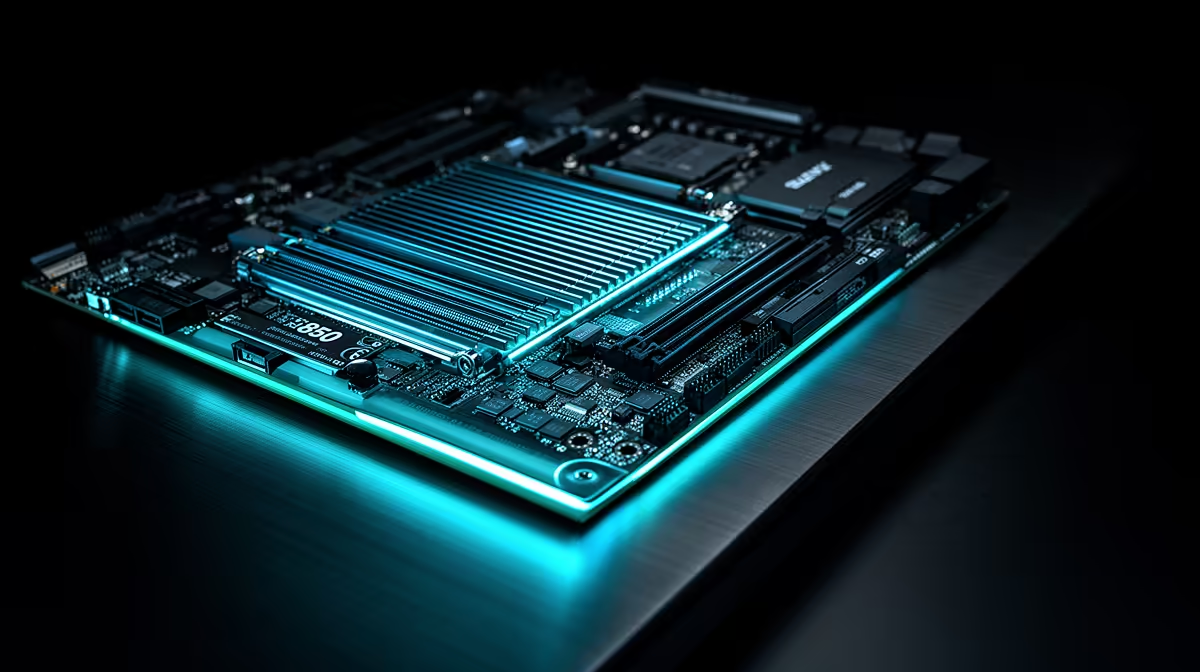
Reproduce the issue the same way each time so a fix is measurable. This usually comes down to the storage drive, a loose connector or background load rather than a faulty B850 motherboard. Run a fixed 20-minute test after each change and keep the one that holds at a steady frame rate or a stable temperature under 85C.
NVMe and disk checks
Watch disk activity during the freeze; a Gen 5 NVMe drive at 70C or more will thermal-throttle and cause micro-stutters. Watch disk activity during the freeze; a Gen 5 NVMe drive at 70C or more will thermal-throttle and cause micro-stutters.
Power delivery checks
Set the Windows power plan to High performance so the CPU is not parked at low clocks during games. Set the Windows power plan to High performance so the CPU is not parked at low clocks during games.
Drivers, BIOS and Windows
Check that a recent Windows feature update did not swap your tuned driver for a generic Microsoft one overnight. Roll the GPU driver back to the last stable release, then do a clean reinstall using DDU so leftover files do not clash.
Heat and airflow checks
Log temperatures across a 20-minute session; a CPU sitting at 95C or a VRM past 100C points to airflow or paste, not the silicon. Confirm the case has a clear front-to-back path and that no cable is resting against a 120mm or 140mm fan.
Plan a baseline budget of around R4,000 before you start.
FAQ
How long should each test run?
Use a fixed 20-minute load that reliably triggers the fault. A shorter burst can hide a thermal or memory problem that only appears once the system is fully warmed up at 80C or higher.
Does heat explain random crashes?
Often. A CPU sitting at 95C or a GPU hotspot past 100C will throttle or shut down to protect itself, so log temperatures across a full session rather than reading one quick number.
Is it safe to keep using the PC like this?
If it shuts down or blue-screens, stop heavy loads until you find the cause. Repeated hard crashes can corrupt the boot drive, so back up your data before deep testing.
Replace only what the evidence shows If the checks isolate the fault, compare current B850 motherboards on Evetech and upgrade the one part that proved unreliable.