Quick Answer
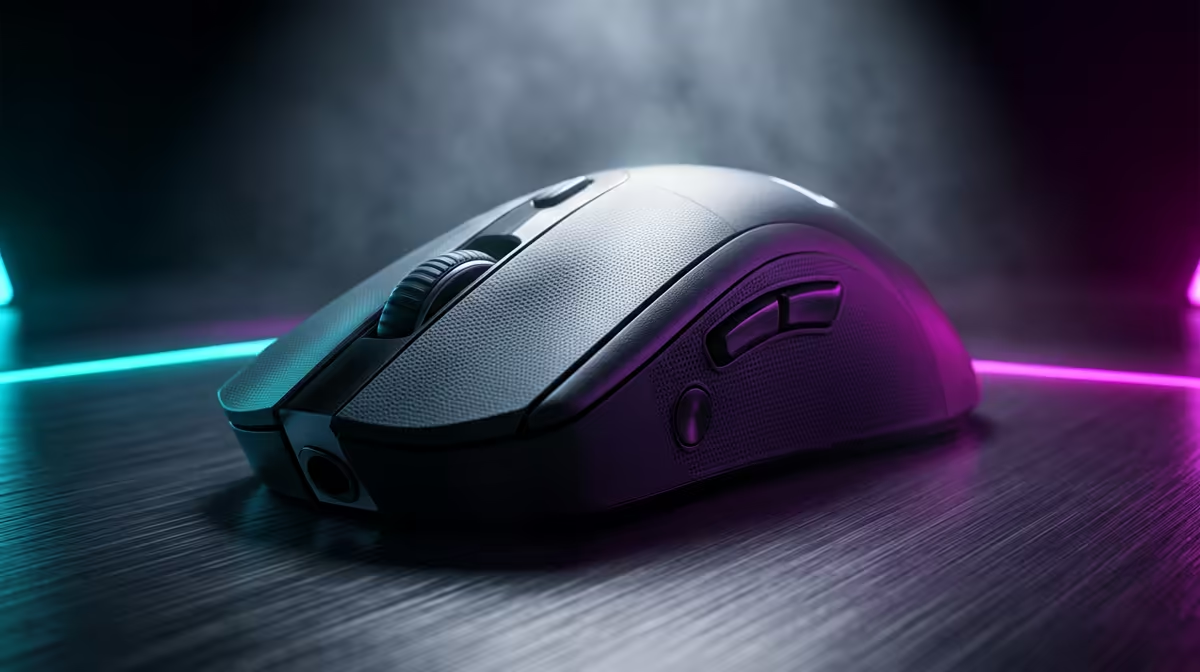
Input lag on a gaming mouse is almost always a polling-rate, wireless or surface issue, not a broken sensor. Set the polling rate to 1,000Hz, use a wired or low-latency 2.4GHz connection on a proper mouse pad, and disable USB selective suspend - most "laggy" mice then track instantly.
Diagnose Before You Upgrade
Check the polling rate first: 1,000Hz means 1ms reporting, while a stuck 125Hz feels sluggish. Then look at the surface - a glossy desk confuses optical sensors and causes stutter, where a cloth pad fixes it. For wireless mice, a weak Bluetooth link adds lag; a 2.4GHz dongle is far faster.
Common Real Causes
Windows USB selective suspend can sleep the mouse and add a wake delay - disable it in Power Options. A dirty sensor lens or worn skates also cause skipping. Test the mouse on another PC and a different surface before assuming the hardware is at fault; the cause is usually the setup.
When To Replace
If the mouse still lags wired, at 1,000Hz, on a good pad with power-saving off, the sensor or controller may be failing - a R500-R1,000 replacement with a known low-latency sensor solves it. Most of the time, though, settings and surface fix the problem for free.
FAQ
What polling rate should a gaming mouse use?
1,000Hz (1ms) for gaming - the mouse reports its position a thousand times a second. A stuck low rate like 125Hz adds perceptible lag, so set it high in the mouse software.
Can my mouse pad cause lag?
Yes. A glossy or reflective desk surface confuses optical sensors and causes stutter or skipping. A proper cloth or hard gaming pad gives the sensor a consistent surface and removes that problem.
Does wireless cause input lag?
A weak Bluetooth link can. A dedicated 2.4GHz dongle, however, is effectively as fast as wired on modern gaming mice. Use the dongle rather than Bluetooth for gaming to keep latency low.
to 1,000Hz, use a cloth pad, and disable USB selective suspend in Windows Power Options - that trio clears the overwhelming majority of phantom mouse lag without spending a cent.