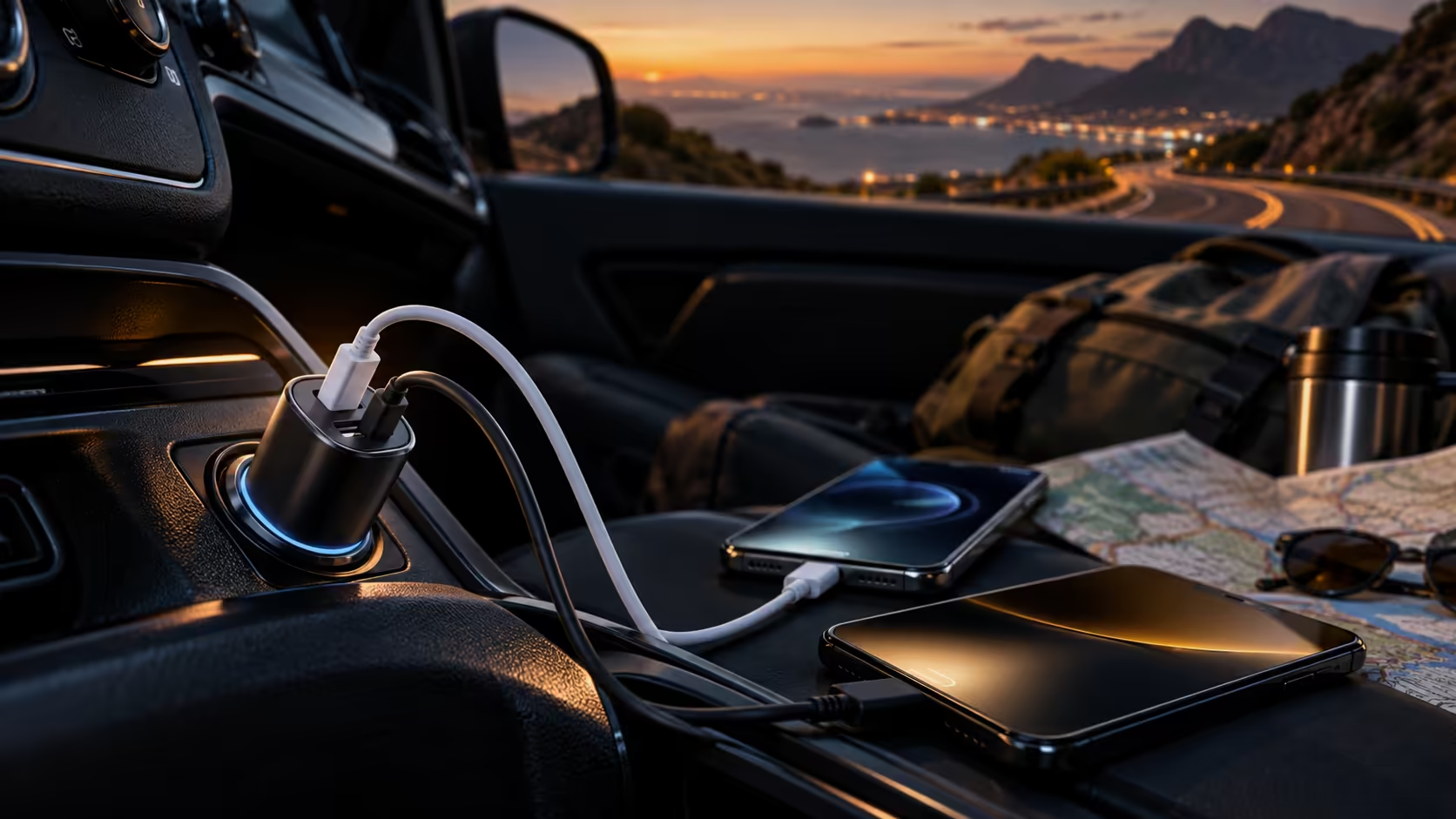
A road trip is the one scenario where a phone's power budget genuinely gets tested, which makes it the fairest place to ask whether a 30W USB-C car charger earns its keep. Short errands rarely stress a phone's battery. A cross-country haul does.
Quick Answer
On a long South African drive, yes: maps, music and mobile data running together outpace what an old 5V socket ever supplied, and a modern PD port keeps ahead of that drain rather than merely slowing the loss. The Johannesburg to Durban run is a good example, hours of exactly that combined load, and summer cabin heat pushes a phone toward throttling right when it needs the charge most. R349 covers a charger carrying both that 30W USB-C PPS port and a second 22.5W USB-A output for whoever else is in the car.
🧭 What a road trip actually asks of a phone
Turn-by-turn navigation keeps the screen on, the GPS radio active and cellular data running continuously, none of which a phone does during normal pocket use. Add music streaming over the same data connection and the combined draw is meaningfully higher than a quick check of messages at a red light.
An old-style 5V socket without Power Delivery, common in older cars still on South African roads, was never built for that kind of sustained load, and a phone running navigation on one for several hours can lose ground rather than gain it. A 30W PD charger comfortably outpaces that draw for most phones, turning a multi-hour drive into net charging time instead of a slow drain. A smartwatch tracking the same trip barely registers against that budget by comparison, since its own charging draw is a fraction of a phone's.
🌡️ Why the Durban run specifically tests it
The Johannesburg to Durban route runs several hours through Gauteng and KwaZulu-Natal heat, particularly in summer, and a car's cabin can climb well past outside temperature once parked at a fuel stop in direct sun. A phone that has heat-soaked at a stop, then goes back to full navigation, is exactly the combination that pushes both the phone's own thermal limits and the charger's.
PPS on the USB-C port helps here specifically, since its finer voltage matching produces less heat inside the phone at the same wattage than a fixed-rung charger would, which matters more on a trip measured in hours than on a five-minute top-up. Carrying a power bank as backup covers the stretch between fuel stops when the phone briefly leaves the car mount.
Frequently Asked Questions
Is a 30W charger overkill for a short daily commute?
Not overkill, but the margin matters less. A short trip rarely drains a phone enough for the charger's ceiling to be the deciding factor either way.
Does navigation really use that much more power than normal use?
Yes. Screen-on time, active GPS and continuous data together draw noticeably more than a phone doing occasional background tasks in a pocket.
Should I worry about the charger overheating on a hot day?
A charger with proper thermal protection manages this automatically, throttling rather than failing, though avoiding direct sun on the unit itself is sensible practice regardless.
Is one charger enough for a car full of people on a long trip?
For two regular devices, yes, though a car with more passengers regularly charging at once will feel the shared power budget on both ports sooner.
Ready to keep your phone charged for the next long drive?
Take a look at the car charger range before you set off on your next road trip.