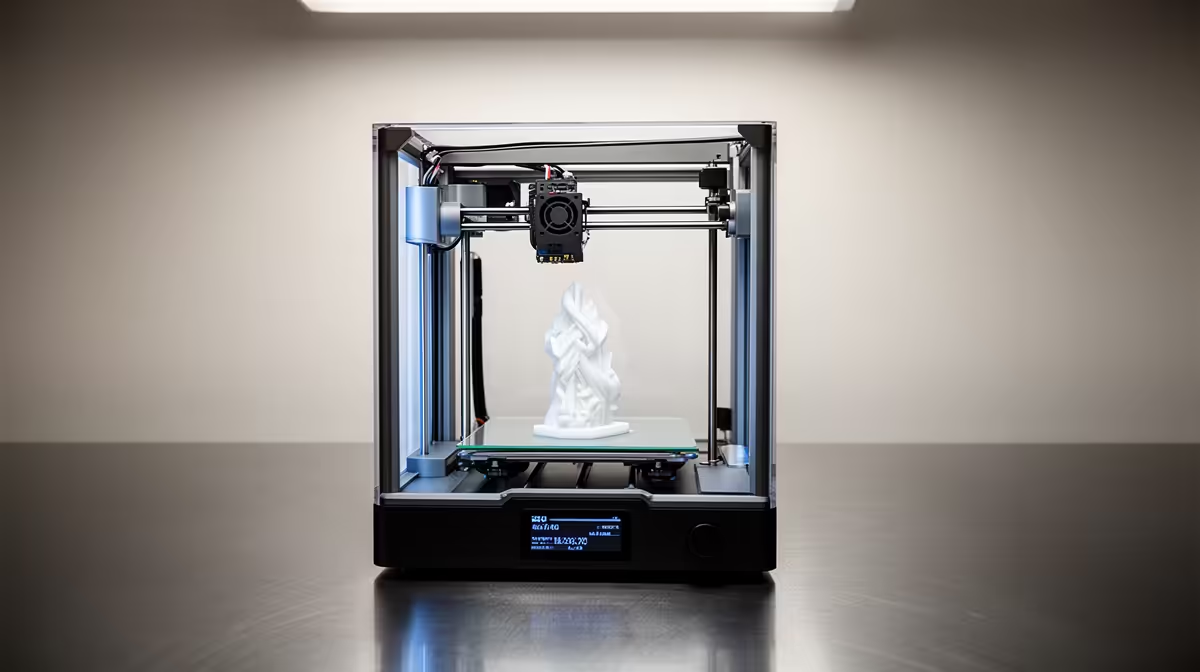
The sub-R10,000 3D printer bracket finally has real options in 2026, driven by a wave of sub-$500 international launches that translate into a workable SA price band once import duty and VAT are added. Machines like the Bambu A2L and the Elegoo Centauri Carbon 2 sit right at the line that matters for students, makers and small businesses watching the budget. This tracker is about which of those launches actually land under R10,000 here, not just on paper overseas.
Quick Answer
A sub-$500 printer overseas roughly maps to a sub-R10,000 SA price once duty and VAT are layered on, though the exchange rate moves that line. As of mid-2026, entry enclosed CoreXY machines and capable bed-slingers are the models worth tracking in this band. Check the live listing before buying, since stock and pricing shift week to week.
What "under R10,000" buys you in 2026
The headline shift is that enclosed, fast CoreXY motion and auto-levelling are no longer premium-only features. A few years ago the budget tier meant a slow open-frame machine you tuned yourself. Now the sub-R10,000 bracket includes printers that arrive calibrated, run multi-hundred-millimetre-per-second travel speeds, and handle PLA, PETG and TPU out of the box with minimal fuss.
What you give up at this price is usually print volume, multi-material support without an add-on unit, and the very high-end sensor suites. None of that stops a sub-R10,000 machine from being a genuinely productive printer for prototyping, cosplay, miniatures or functional parts.
How the dollar price becomes a Rand price
A $469 launch does not become R469 times the spot rate on the shelf. Add import duty, then 15 percent VAT on the landed cost, then freight and the retailer's margin, and a sub-$500 machine realistically targets the R9,000 to R10,000 band rather than the straight conversion. That is why a printer can look cheap in a US review and still sit close to the R10,000 ceiling locally.
This also means the Rand matters as much as the model. A weaker Rand can push a borderline machine just over R10,000, and a stronger one can pull a slightly pricier model under. The practical move is to watch the 3D printers listing at Evetech rather than fixing on a single advertised number.
What to prioritise in this band
If you are spending close to R10,000, prioritise auto bed levelling, an enclosed or semi-enclosed frame for warp-prone materials, and a build volume large enough for your actual projects. A heated bed that hits PETG temperatures and a direct-drive extruder for flexible filament round out a printer that will not frustrate you in month two. Spares and filament holders to keep it running live in the accessories best-sellers range.
Frequently Asked Questions
Is a sub-R10,000 printer good enough for a beginner?
Yes, and arguably better than older budget machines. Auto-levelling and pre-tuned profiles mean a first print can succeed on day one, where older open-frame kits demanded hours of manual calibration before anything usable came out.
Will the price stay under R10,000?
Not guaranteed. Pricing in this band tracks the Rand and import costs closely, so a model under R10,000 one month can edge over the next. Always confirm the current shelf price before deciding.
What can I actually make with one?
Functional prototypes, replacement parts, miniatures, cosplay props and small enclosures are all well within reach. The main limits are build volume and, for multi-colour work, the need for an add-on multi-material unit.
CoreXY or bed-slinger at this price?
CoreXY machines tend to be faster and more rigid, which suits speed and taller prints. Bed-slingers can still offer larger volumes for the money. Pick by whether print speed or build size matters more to you.
Prices in the budget bracket move with the Rand, so check live before you commit. See what is currently under the line in the Evetech 3D printers range and grab the machine that fits your budget today.