
A compromised software package can expose far more than the machine that installed it. Researchers say malicious LiteLLM releases read live process memory, capturing credentials that build systems and AI tools had already loaded.
Quick Answer
The March 2026 LiteLLM supply-chain incident may have exposed secrets linked to more than 2,500 organisations and about 434,000 CI/CD pipelines. Reported data includes cloud keys, repository tokens, SSH keys and package-publishing credentials. Removing the affected package is necessary, but it does not revoke a copied secret. Teams must identify, replace and verify every exposed credential.
🚨 Check whether the environment was exposed
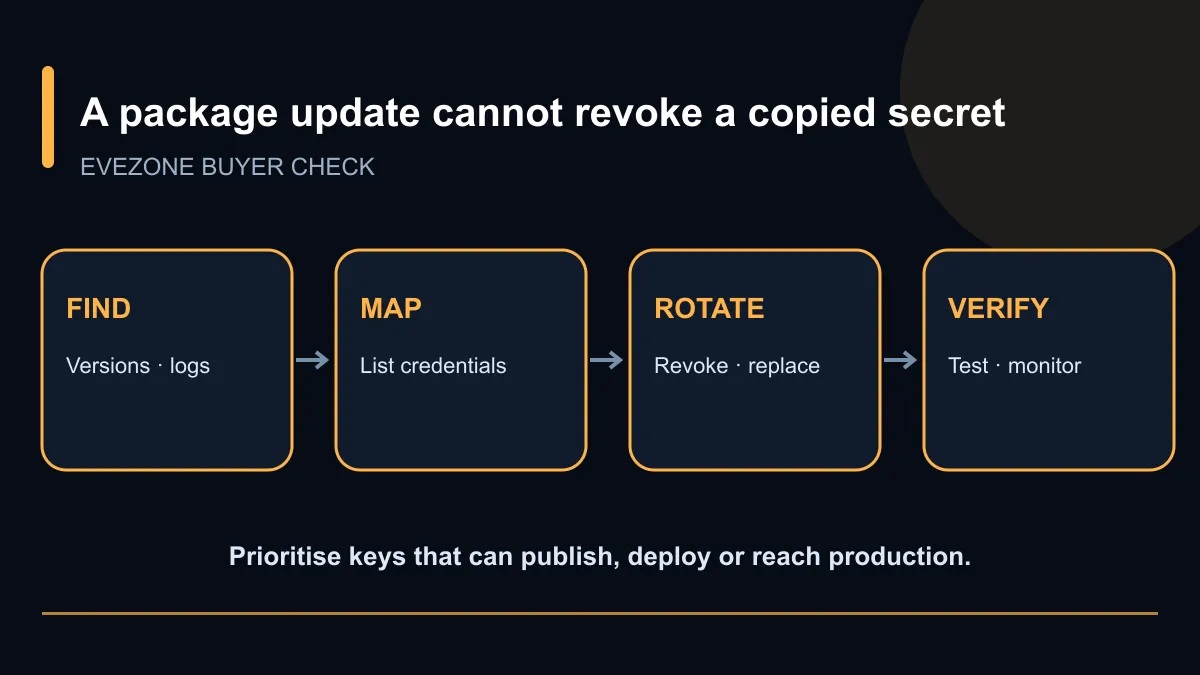
Start with dependency evidence, not guesswork. Review Python lockfiles, build logs, container histories and package caches for the affected LiteLLM versions and the March window described by the researchers. Check developer workstations as well as shared runners because a local process can hold the same production credentials as an automated pipeline.
Build an inventory for every secret available to an affected job. Record the issuing service, owner, permissions, last rotation and systems that use it. Search logs for unusual access without copying actual secret values into tickets or chat. If an organisation appears in an incident lookup, confirm the match against its own package and pipeline records.
The reported collection window lasted about 40 minutes, yet a stolen credential can remain useful for months. A clean scan today cannot prove that an earlier token was never copied. Exposure history is the reason rotation matters.
🔑 Rotate credentials in a controlled order
Prioritise secrets that can change code, publish packages, access production data or create cloud resources. Repository administration tokens, package-registry credentials, cloud access keys, SSH keys and signing material deserve early attention. Replace each credential at the service that issued it, then update approved consumers.
Do not merely edit an environment variable while leaving the old token active. Revoke or disable the earlier value and verify that normal builds work with the replacement. Watch authentication and audit logs for access from unfamiliar locations, new accounts, permission changes or unexpected pipeline runs.
Service identities should receive only the permissions and lifetime they require. A read-only test job should not carry a production deployment key. Short-lived credentials and workload identity can reduce the value of anything captured from process memory, though they do not remove the need for careful dependency review.
🧱 Harden the next build
Pin direct and transitive dependencies through reviewed lockfiles. Treat an unexpected package version, maintainer change or install script as a security event worth examining. Separate build stages so that dependency installation does not automatically receive every deployment secret.
Network boundaries still matter around development systems. Teams replacing or segmenting equipment can review networking hardware. Developers refreshing workstations can compare laptop specials and gaming PC deals, but new hardware does not neutralise a compromised account by itself.
Add secret scanning to source control and pipeline output, then test the response process with harmless sample credentials. The useful question is not only whether a scanner raises an alert. It is whether the team can identify an owner, revoke the value, restore service and preserve evidence quickly.
Frequently Asked Questions
What was compromised in the LiteLLM incident?
Researchers say malicious package versions read process memory and removed credentials during a short March window.
How many organisations may be affected?
CloudSEK reports potential exposure across more than 2,500 organisations and about 434,000 CI/CD pipelines.
Is updating LiteLLM enough?
No. Any exposed token, key or password should be treated as compromised and replaced at its issuing service.
Which secrets need attention first?
Start with cloud keys, repository tokens, package publishing credentials, SSH keys and production pipeline secrets.
How can a team check exposure?
Review package lockfiles, build logs and the incident lookup, then map each affected credential to its owner and permissions.
What reduces the next supply-chain risk?
Pin dependencies, review lockfile changes, limit secret scope and prevent build jobs from receiving credentials they do not need.
Responding to a possible package exposure? Confirm the affected versions, rotate high-impact credentials, verify the replacement builds and monitor every privileged service involved.