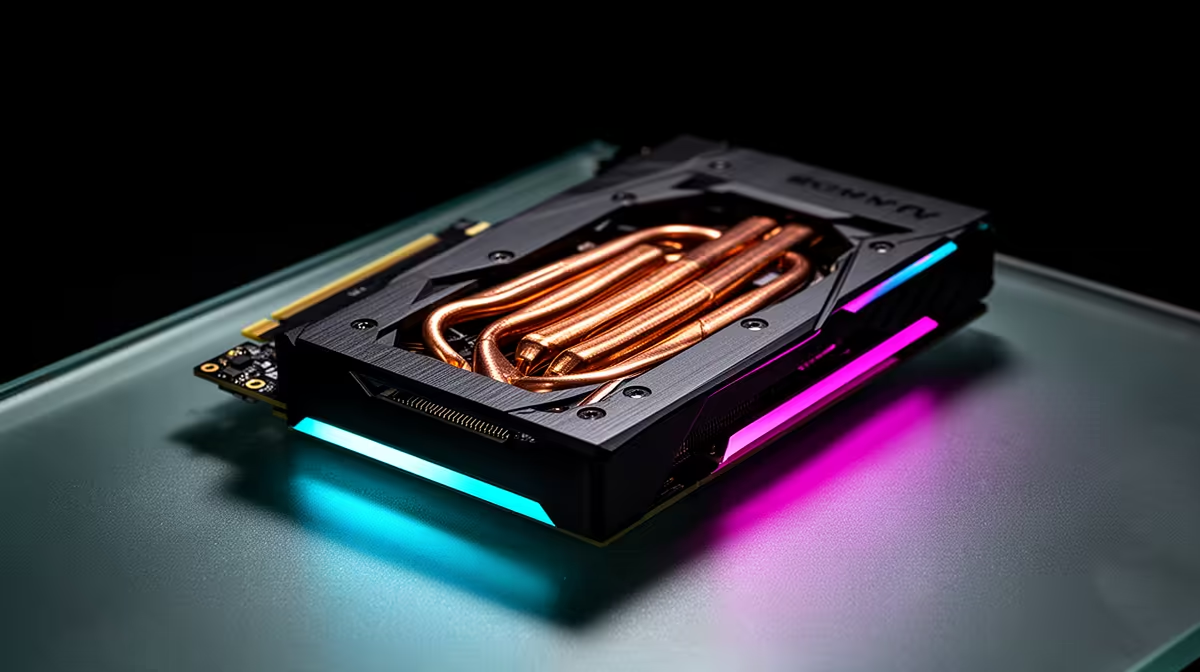
Generating 4K video with matching audio used to mean a render farm or a cloud bill. As of early 2026 it means a single graphics card sitting in your own machine. LTX-2 landed in January 2026 and does something that was cloud-only territory until now: it produces 4K video with synchronised audio locally on RTX 4090 and RTX 5090-class GPUs. For anyone doing video work on a powerful desktop, that is a meaningful shift in what a single card can deliver.
Quick Answer
LTX-2, released in January 2026, generates native 4K video with synchronised audio locally on RTX 4090 and RTX 5090-class GPUs. The RTX 5090's 32GB of VRAM gives more headroom for longer clips than the RTX 4090's 24GB allows. The model is open-weight with a roughly 19 billion parameter architecture split across video and audio.
What LTX-2 actually does
The headline is the combination, not just the resolution. Plenty of models generate video; LTX-2 generates video and matching audio together, synchronised, in a single pass. It produces native 4K at up to 50 frames per second and can output clips up to around 20 seconds long, all running on hardware you already own rather than a remote service.
Under the hood it is a roughly 19 billion parameter model, split into a video portion and a smaller audio portion that work in tandem to keep sound and picture aligned. It ships as an open-weight release with the architecture, weights and tooling available, which is part of why it has drawn so much attention from local-AI enthusiasts. Anyone speccing or upgrading a desktop for local AI video will find purpose-built configurations in the AI-ready PC range at Evetech.
The card decides what you can make
This is where the RTX 4090 versus RTX 5090 choice matters. Both run LTX-2, but VRAM sets your ceiling. The RTX 4090's 24GB handles 4K generation capably, while the RTX 5090's 32GB gives extra headroom, which translates into longer clips and more comfortable margins before you hit memory limits. On a 5090, 4K generation runs in the region of a few minutes per clip.
For buyers, the practical guidance is simple. A 16GB RTX 40 or 50 series card is the recommended floor for running LTX-2 at all, with FP8 and FP4 optimised versions helping trim memory use. But for genuine 4K work with breathing room, a 24GB RTX 4090 or a 32GB RTX 5090 is the sweet spot, and the 5090 is the pick if longer clips or larger batches are your goal. To gauge current pricing and availability on these top-tier cards, checking the GPU best sellers at Evetech gives a fast read on current pricing and availability.
Who this is for
LTX-2 is not a casual toy; it is a serious tool for people with serious hardware. If you are a content creator, a small studio, or a hobbyist who already runs a 4090 or 5090, it puts genuinely capable 4K video-with-audio generation on your desk with no per-render cloud cost and no upload of your source material. For everyone else, it is a clear signal of where local AI video is heading, and a reason to factor VRAM into your next GPU decision.
Frequently Asked Questions
What GPU do I need to run LTX-2?
The recommended floor is an RTX 40 or 50 series card with 16GB or more of VRAM. For full 4K work, a 24GB RTX 4090 or a 32GB RTX 5090 is the sweet spot. Optimised FP8 and FP4 versions help reduce memory demands on tighter setups.
What is the difference between running LTX-2 on a 4090 versus a 5090?
Both work, but VRAM is the divider. The 4090's 24GB handles 4K generation well, while the 5090's 32GB adds headroom for longer clips and larger batches. The 5090 also completes 4K generation in roughly a few minutes per clip.
Does LTX-2 really generate audio with the video?
Yes, that is its standout feature. It produces synchronised audio and video together in one pass, rather than requiring you to add sound separately. The model dedicates part of its architecture specifically to the audio output.
When was LTX-2 released?
LTX-2 was released in January 2026. It arrived as an open-weight model with its architecture, weights and tooling made available, which is why it gained traction quickly among people running AI locally.
How long can LTX-2 clips be?
LTX-2 can generate clips up to around 20 seconds at native 4K and up to 50 frames per second. Longer clips lean harder on VRAM, which is where the 5090's larger 32GB pool gives it an edge over the 4090.
Want a machine that can run 4K AI video generation locally? Explore the systems built for it in the AI-ready PC range at Evetech and choose the GPU headroom your projects need.