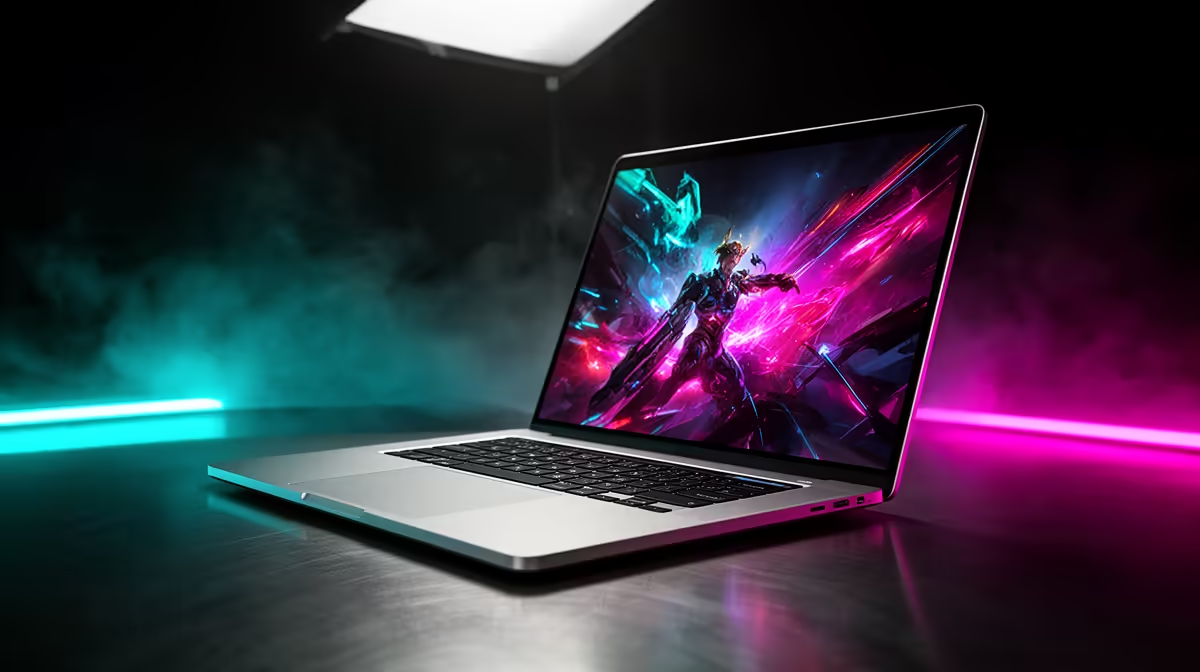
Apple's next big laptop display jump keeps surfacing in the leak cycle, and the M6 OLED MacBook Pro is shaping up to be the most significant redesign since the move from LCD to miniLED. The chatter points to a tandem-OLED panel and a 2nm chip, landing late 2026 or early 2027. Here is what has actually been reported, separated from the wishful thinking.
Quick Answer
A tandem-OLED MacBook Pro powered by the M6 chip is rumoured for late 2026 or early 2027, built on TSMC's 2nm process for better efficiency and performance. Leaks frame the OLED switch as the biggest display upgrade since miniLED arrived. Nothing is confirmed by Apple, so treat dates and specs as reported, not official.
The Tandem-OLED Display
The standout claim is the move to a tandem-OLED panel. Tandem OLED stacks two emissive layers, which lets the screen hit higher sustained brightness and last longer than a single-layer OLED before the pixels degrade. Apple already uses this approach in the iPad Pro, so applying it to a MacBook Pro is a logical next step rather than a wild guess. The practical payoff would be deeper blacks, true per-pixel contrast, and better HDR than the current miniLED backlight can deliver, since OLED lights each pixel individually instead of using dimming zones.
If the reports hold, this would resolve the small blooming artefacts that miniLED can show around bright objects on a dark background. For anyone editing photos or video, per-pixel control is a meaningful upgrade. You can compare the current Apple lineup against what is rumoured in the MacBook range at Evetech to gauge whether waiting makes sense for your needs.
The M6 Chip and 2nm
The second pillar of the rumour is the M6 chip built on TSMC's 2nm process node. A smaller node generally means more transistors in the same space and better performance-per-watt, which translates to either more speed at the same battery life or the same speed with longer runtime. Apple has historically used each new node to push efficiency hard, so a 2nm M6 would be expected to extend battery life while lifting CPU and GPU performance over the M5 generation. As always, the exact gains are unknown until silicon ships.
Timing and What Is Still Unconfirmed
The reported window is late 2026 to early 2027, which fits Apple's roughly annual cadence for pro laptop updates. That said, display transitions can slip, and a tandem-OLED panel at MacBook Pro scale is a supply-chain challenge. Treat the date as a target, not a promise. Equally unconfirmed are pricing, whether OLED comes to the whole Pro line or starts on one size, and any chassis or port changes. Apple does not comment on unreleased products, so everything here rests on supply-chain leaks and analyst notes.
Should You Wait or Buy Now?
If your current machine is struggling today, there is no reason to wait a year-plus for a rumoured display. The M-series MacBooks already on shelves are excellent and will stay capable for years. If you are due an upgrade but can hold out, and you specifically want the best possible screen for HDR work, the OLED jump may be worth the wait. For everyone in between, buying a current model now and keeping an eye on the leaks is the sensible play. The best-selling laptops at Evetech show what local buyers are choosing right now while the M6 remains a rumour.
Frequently Asked Questions
When is the M6 OLED MacBook Pro expected?
Leaks point to a launch in late 2026 or early 2027. Apple has not confirmed any date, and display transitions of this scale can slip, so treat the window as a reported target rather than a fixed release.
What is tandem OLED?
Tandem OLED stacks two light-emitting layers, allowing higher sustained brightness and longer panel lifespan than a single-layer OLED. Apple already uses it in the iPad Pro, and applying it to the MacBook Pro would lift contrast and HDR performance.
Is the M6 chip confirmed?
No. The M6 on a 2nm process is reported by supply-chain sources and analysts, not announced by Apple. A smaller node typically improves efficiency and performance, but the exact figures stay unknown until the chip ships.
Should I wait for the OLED MacBook Pro?
Only if you can comfortably hold out and specifically want the best display for HDR work. Current M-series MacBooks remain powerful and will serve well for years, so there is no need to delay if you need a machine now.