Apple is making a big claim about its new silicon, and the number is the headline: the A18 Pro MacBook Neo is, by Apple's own figures, up to 3x faster at on-device AI than an Intel Core Ultra 5 PC. That speed comes from a 16-core Neural Engine, and the practical upshot is that a lot of AI work that used to lean on the cloud now happens right on the laptop, instantly and privately.
Quick Answer
Apple states the A18 Pro MacBook Neo runs on-device AI up to 3x faster than an Intel Core Ultra 5 PC, thanks to its 16-core Neural Engine. In practice that means quicker Apple Intelligence features, real-time transcription, and AI writing tools that finish locally instead of waiting on a server.
What "on-device AI" actually buys you
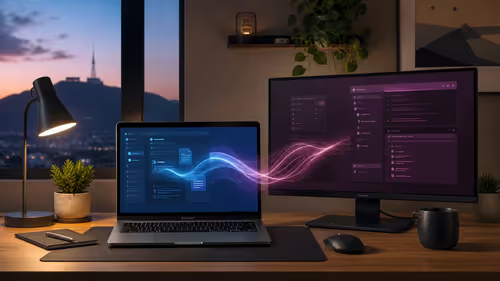
On-device AI means the machine learning model runs on the laptop's own Neural Engine rather than sending your data to a remote server. Three things follow from that. It is faster, because there is no round trip over the network. It is private, because your text, audio, and images stay on the machine. And it works the same whether your fibre is flying or your connection drops out entirely.
The 16-core Neural Engine is the part doing this work. It is purpose-built for the matrix maths that AI models rely on, which is why a chip like the A18 Pro can pull ahead of a general-purpose laptop CPU on these specific tasks even when raw clock speeds look similar.
Where the speed shows up day to day
The 3x figure is a benchmark, so it matters more what it feels like. A few concrete examples:
Apple Intelligence writing tools, like rewriting or summarising a block of text, return results with much less of a pause. Real-time transcription of a meeting or voice note keeps up as you speak instead of lagging behind. Image clean-up and subject selection in Photos happen the moment you tap rather than after a spinner. And because none of it touches a server, it all keeps working offline, on a plane, or during a patchy signal.
For a student transcribing lectures, a writer drafting all day, or anyone who lives in their notes app, those small waits add up, and removing them is the real benefit of the faster Neural Engine. If you are weighing the Neo against the rest of the line-up, the full MacBook range at Evetech lays out the options, and the laptops buyers are choosing most give a sense of where demand is landing.
Is the AI speed reason enough to buy?
For most buyers, on-device AI speed is a strong bonus rather than the single deciding factor. The Neo is already a capable, efficient laptop; the faster Neural Engine sweetens it for anyone who leans on transcription, summarising, or AI editing regularly. If those features are background luxuries for you, judge the machine on its battery, screen, and everyday performance, and treat the AI lead as a welcome extra.
Frequently Asked Questions
Is the A18 Pro really 3x faster at AI than an Intel laptop?
That figure is Apple's own claim, comparing on-device AI tasks against an Intel Core Ultra 5 PC. It applies to specific AI workloads handled by the 16-core Neural Engine, not to general performance across every task.
What can it actually do on-device?
Apple Intelligence writing tools, real-time transcription, AI-assisted editing in Photos, and similar machine learning features run entirely on the laptop. They work offline and keep your data on the device.
Does on-device AI mean better privacy?
Yes. Because the processing happens on the Neural Engine rather than a remote server, your text, audio, and images do not leave the machine for those tasks. That is a genuine privacy advantage.
Do I need an internet connection for these AI features?
For the on-device features, no. That is the point. They run locally, so transcription and writing tools keep working with no signal at all.
Curious whether the A18 Pro MacBook Neo fits your workflow? Compare it against the rest of the line-up on the MacBook range at https://www.evetech.co.za/macbooks/l/3284 and find the model that suits how you work.