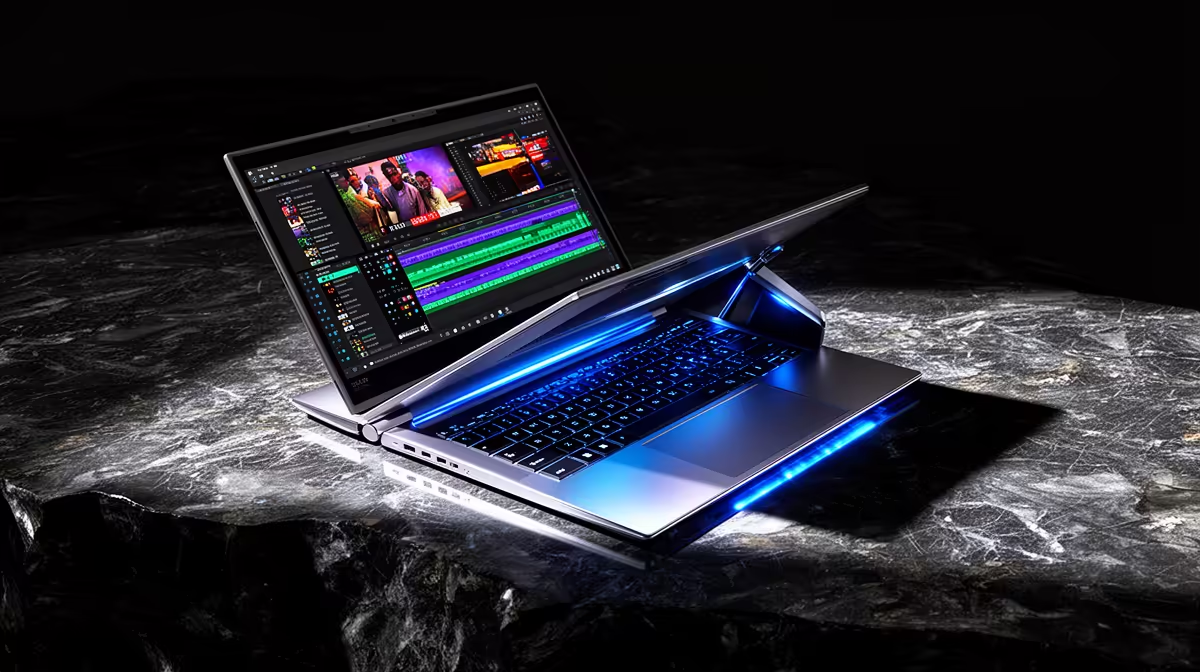
The ASUS Vivobook S14 OLED at R10,719 suits a South African content creator who values a sharper OLED screen more than a fold-back tablet mode. A 2-in-1 can be useful for sketching or client markups, but for most editing, writing, thumbnail work, uploads, and admin, a well-priced laptop with the right screen or processor is the smarter buy.
Better Creator Value Than A 2-In-1
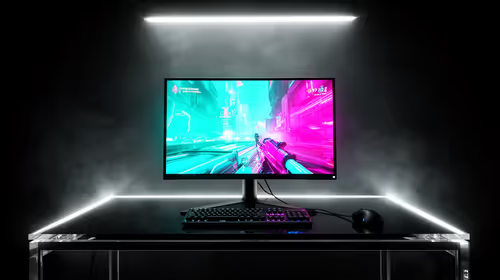
The ASUS Vivobook S14 OLED at R10,719 is the cleanest everyday creator pick here because OLED is a real visual advantage for photo previews, colour checking, and content review. It keeps the spend focused on what a creator looks at all day, rather than paying extra for a hinge style that may not improve the actual workflow.
The Lenovo IdeaPad Slim 3 i7 at R13,400 makes sense when the work leans more toward multitasking, browser tabs, documents, and light editing. Its i7 spec gives it a stronger productivity angle than a basic note-taking machine, which matters if the same device handles planning, uploads, captions, and client revisions.
The ASUS Vivobook X1504VA i7 at R13,999 is another i7 option for a creator desk where the machine will spend most of its life open beside a phone, camera gear, and external storage. If video projects or heavier timelines are part of the week, the Lenovo LOQ RTX3050 at R9,500 is the better specialist choice because RTX3050 graphics are more relevant than a convertible screen.
Creator Desk Reality In SA
On a South African creator desk, the practical question is whether the device helps you finish content faster. The ASUS ExpertBook P1503 i5 at R9,858 is enough for writing, admin, and publishing tasks, while the ASUS ExpertBook P5405 at R12,700 gives a more premium ExpertBook option without pretending a tablet hinge is essential.
Ready to choose the right laptop?
Use ASUS ExpertBook P1503 i5 at R9,858 as the creator desk benchmark, then check whether its listed spec matches the space, workload, and upgrade path.