Quick Answer
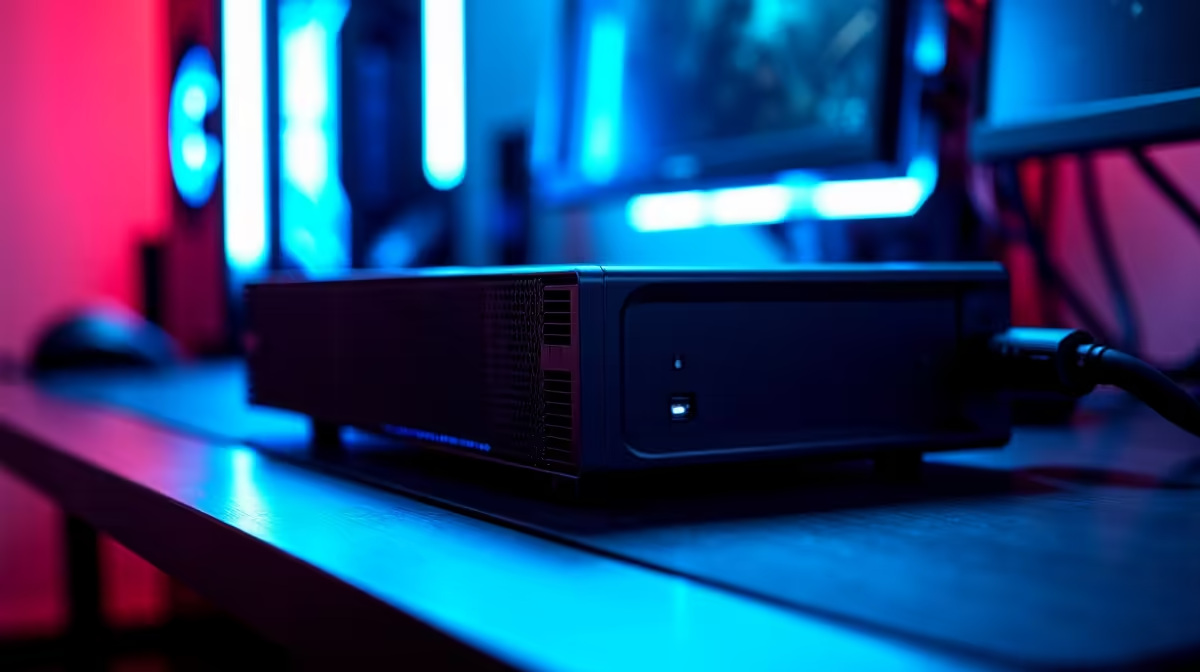
The combination of a fully modular PSU and a magnetically removable OLED display (as found on units like the ASUS ROG Thor III) directly solves the two biggest cable management challenges in glass-panel builds: unused cables cluttering the PSU compartment and the display module blocking access to connector ports during assembly. Both features together let you route only the cables you need and position the display after cabling is complete.
The Core Cable Management Problem in Modern Builds 🔧
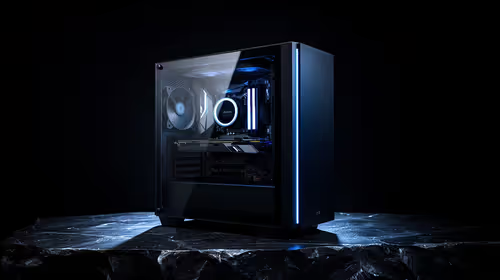
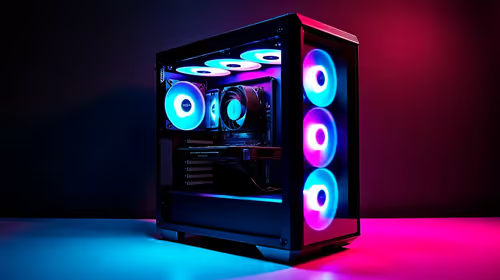
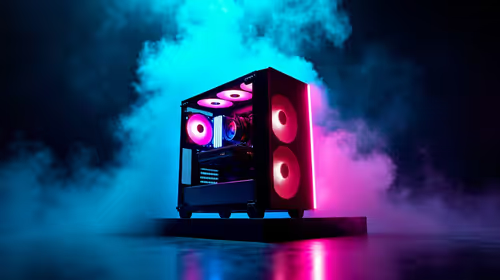
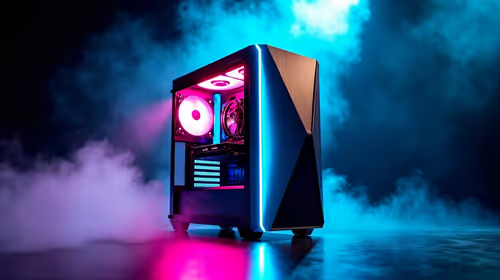
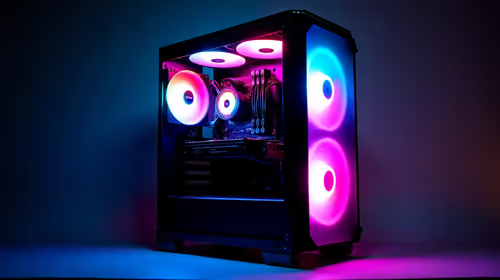
High-end cases with glass side panels expose the interior to full view, and any cable management shortfall is immediately visible. A non-modular PSU ships with every cable permanently attached, including EPS12V, SATA, and Molex cables you may never use. These must be bundled and hidden behind the motherboard tray, adding bulk that restricts rear-panel airflow and strains cable routing clips. Semi-modular units improve this slightly by fixing only the 24-pin and EPS12V cables. Fully modular units, available from Seasonic, Corsair, and ASUS ROG in the R3,500 to R9,000 range at Evetech, leave all cables removable. You connect only the PCIe, CPU, and SATA cables your build actually uses, reducing cable bulk behind the motherboard tray by 40% to 60% in a typical gaming build.
How Removable OLED Displays Change the Assembly Workflow 🖥️
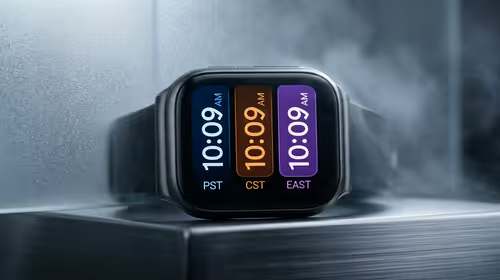
PSUs with fixed OLED displays require you to orient the PSU before screwing it into the case, accounting for which direction the display will face when viewed through the glass panel. If you misjudge orientation or if the case mounts the PSU in a direction that rotates the text sideways, you are committed. The ASUS ROG Thor III's magnetic OLED module detaches with a firm pull and reattaches in any of four 90-degree orientations. During assembly, you can: remove the display, route all cables first without the display module in the way, then reattach the display in the correct orientation without reopening the cable channel. This workflow is significantly faster in compact mid-tower cases where the PSU compartment has limited hand clearance.
Practical SA Builder Tips for Clean Installations 💡
For South African builders working with popular cases like the Lian Li Lancool or NZXT H-series, the PSU is typically mounted at the bottom behind a shroud. If the case has a glass or mesh panel on the PSU side, the OLED display is visible; otherwise, the magnetic module is irrelevant. Use velcro cable ties at 15cm intervals rather than rigid plastic clips for PCIe cables, as they allow repositioning without damaging cable insulation during the multiple adjustments a high-end build requires. For the 12V-2x6 GPU cable specifically, leave an extra 5cm of slack routed from the back to prevent the cable from pulling on the GPU connector under its own weight.
Label Your Modular Cables Before Building ⚡
All modular PSU cables from a given brand look similar, but PCIe cables and CPU EPS cables are NOT interchangeable and plugging the wrong cable into the wrong PSU port can cause immediate damage. Put a small label on each cable end before the build and keep them organised by type. This is especially important if you store spare cables for a build upgrade later.
FAQ
Do modular PSU connectors loosen over time?
Quality modular connectors from Seasonic, Corsair, and ASUS ROG use firm-retention spring-clip contacts that maintain good contact through multiple connect and disconnect cycles.
Is the magnetic OLED display waterproof or dust-sealed?
No.
Can I use aftermarket sleeved cables with any modular PSU?
Only with cables specifically designed for your PSU brand and model. PSU connector pinouts differ between manufacturers, and using a Corsair-sleeved cable in a Seasonic PSU, or vice versa, can deliver incorrect voltages to components. Always confirm cable compatibility before purchase.
Building a glass-panel rig that needs clean cable routes?
Evetech stocks fully modular PSUs and OLED-display premium units from ASUS ROG, Seasonic, and Corsair, all with confirmed local warranty support.