So, you’re piecing together a new AM5 rig here in South Africa, and you spot something interesting… HDMI and DisplayPort connections right on the motherboard's I/O panel. Does this mean you can skip buying a pricey graphics card? It’s a great question, and the answer is… it depends. Let's dive into what those AM5 motherboard display outputs are really for and how you can use them to your advantage. 🔧
Why Your AM5 Motherboard Has Display Outputs
Unlike the older AM4 platform where only specific "G-series" APUs had integrated graphics, the game has changed with AM5. Most AMD Ryzen 7000 and 8000 series desktop CPUs now come with a basic integrated GPU (iGPU) built right in.
This is a fantastic feature for several reasons:
- Troubleshooting: If your new, beastly graphics card isn't showing a signal, you can plug your monitor directly into the motherboard. This helps you get into the BIOS, install Windows, and download drivers without any drama.
- Cost Spreading: Building on a tight budget? You can get your PC up and running using the iGPU first and save up for a dedicated graphics card later.
- Non-Gaming Builds: For a home office or media PC, the integrated graphics are more than powerful enough for browsing, streaming 4K video, and handling everyday tasks.
The key takeaway is that the presence of AM5 motherboard display outputs gives you flexibility you never had before on previous AMD platforms.
Understanding the Ports: HDMI vs. DisplayPort
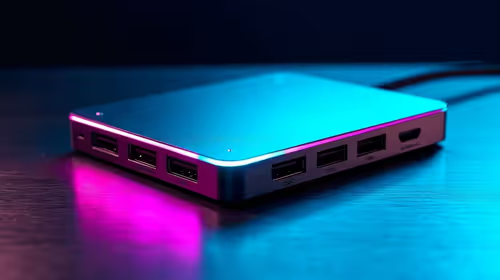
When you look at the back of an AM5 motherboard, you'll typically see two types of display outputs: HDMI and DisplayPort. While they both send video and audio to your monitor, they have slight differences.
- HDMI (High-Definition Multimedia Interface): The universal standard. Most modern boards use HDMI 2.1, which is great for connecting to TVs and supports high resolutions and refresh rates like 4K at 120Hz.
- DisplayPort: The preferred choice for PC monitors. DisplayPort 1.4 is common and offers massive bandwidth, making it ideal for ultra-high refresh rate gaming monitors and multi-monitor setups.
For most builders, a solid board from the AMD B650 motherboards range provides a perfect mix of these essential ports without breaking the bank.
Troubleshooting Pro Tip ✨
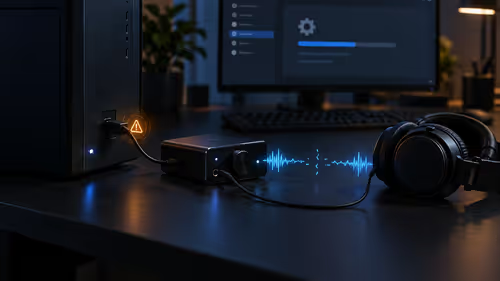
No signal from your brand-new graphics card? Don't panic! Power down, plug your HDMI or DisplayPort cable directly into the motherboard's output, and restart. This uses the CPU's integrated graphics to give you a display, allowing you to install drivers or diagnose if the GPU is seated correctly in its PCIe slot.
Gaming on Motherboard Outputs: The Reality Check
Here’s the million-rand question: can you actually game using the AM5 motherboard display outputs?
Technically, yes. The integrated RDNA 2 graphics are capable of running older titles or modern indie games at low settings. But for any serious gaming—think Call of Duty, Cyberpunk 2077, or Helldivers 2—the answer is a firm no. 🚀
The iGPU is designed for basic display tasks, not for rendering complex 3D worlds at high frame rates. For a true gaming experience, you must plug your monitor directly into your dedicated graphics card (like an NVIDIA GeForce or AMD Radeon GPU). The motherboard ports will be automatically disabled when a dedicated GPU is detected and in use.
As new platforms emerge, like the performance-focused AMD X870 motherboards, this principle remains the same: the motherboard ports are for utility, and the graphics card ports are for performance.
Choosing the Right AM5 Motherboard
So, how much should you worry about the specific display outputs on an AM5 motherboard? For most gamers, not too much. Your primary focus should be on features like VRM quality, PCIe 5.0 support, and connectivity that benefits your whole system.
The motherboard's display ports are a fantastic backup and diagnostic tool. Whether you're eyeing the upcoming value of AMD B850 motherboards or a top-tier X870, you can rest assured those onboard video ports will be there when you need them. Think of them as a built-in toolkit for your PC build.
Ready to Build Your AM5 Powerhouse?
The display outputs on AM5 motherboards are a fantastic utility feature, but your real gaming power comes from the right components. Explore our massive range of AM5 motherboards and find the perfect foundation for your next-gen rig.