Quick Answer
The only thing that changes between an ARGB GPU support bracket and a plain one is the lighting. Structural support, adjustment range, and GPU protection are identical. ARGB brackets cost R100 to R250 more and are worth it only in glass-panel builds where the lighting is visible and you have a spare ARGB header to connect it.
What ARGB Actually Adds to a Support Bracket ✨
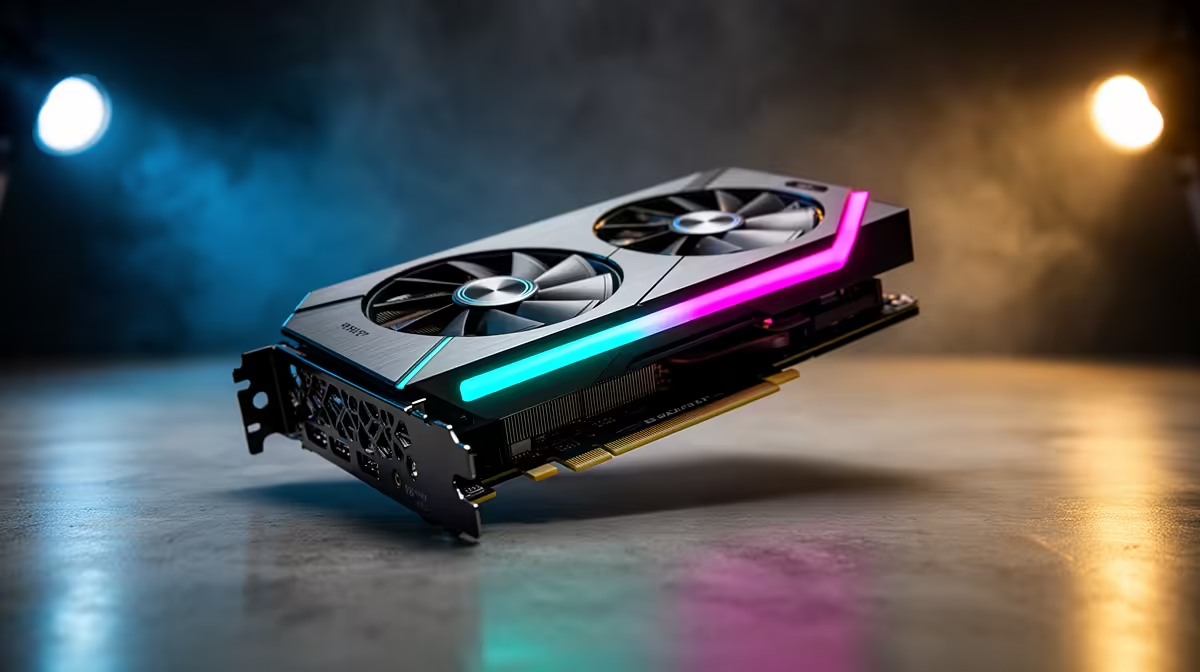
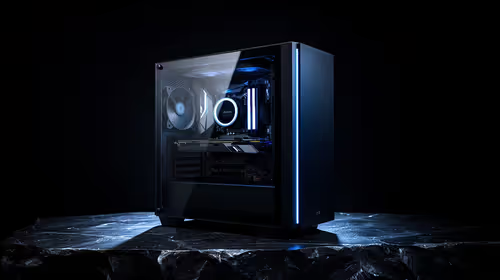
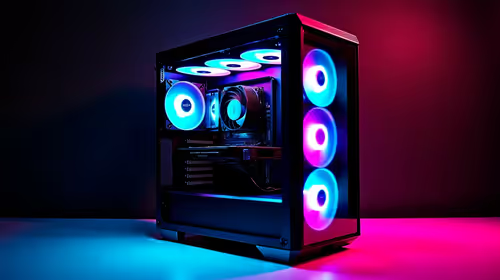
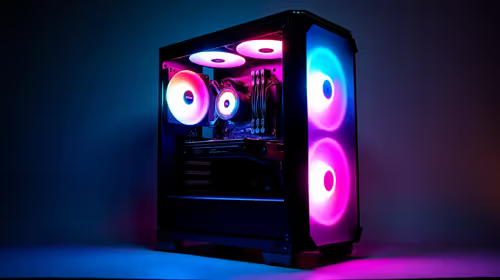
ARGB GPU support brackets include an LED strip or halo built into the bracket arm or base, connected via a 3-pin 5V ARGB header cable. When connected to a motherboard ARGB header or hub and controlled through compatible RGB software, the bracket's LEDs can display colour gradients and animations synced to the rest of the build's lighting. Visually, the bracket illuminates the space between the PSU shroud and the GPU underside, creating a lit pedestal effect visible through a tempered glass side panel. In a white case build with three ARGB fans and a lit CPU cooler, an ARGB GPU bracket completes the lighting scheme across all vertical levels of the case interior. In a closed-side or mesh-side-only case with no glass, the ARGB component serves no visual purpose.
Plain Supports: When They Are the Better Choice 🔲
Plain GPU support brackets with brushed aluminium, matte black, or matte white finishes are the better choice in three scenarios. First, if the case has no tempered glass side panel, the ARGB lighting is completely hidden. Second, if all ARGB motherboard headers are already occupied by fans and a CPU cooler, adding another ARGB device requires an extra hub. Third, if the build aesthetic is a clean minimal look without any RGB, an ARGB bracket contradicts the design intent. Plain brackets from reputable brands cost R250 to R400, compared to R350 to R600 for ARGB equivalents. For any of the three scenarios above, the plain bracket provides identical protection at lower cost.
Build Integration Considerations 💡
ARGB GPU brackets are sold by several brands compatible with major RGB ecosystems. ASUS ROG branded brackets integrate directly with Aura Sync on ASUS boards. Third-party ARGB brackets from Lian Li and similar accessory makers use standard 3-pin headers compatible with any ARGB hub. If you already own an ARGB controller or hub with spare ports, adding an ARGB bracket costs only the R100 to R250 premium. The bracket typically draws less than 2W of power from the ARGB header, within the 3W limit of a standard 5V ARGB header. No separate power connection is required. Locally, these accessories are stocked at Evetech alongside matching ARGB fans and hubs for complete ecosystem builds.
Pair ARGB Bracket Colour to Your Build Theme ⚡
Set your ARGB GPU bracket to a static colour matching your cable sleeve or fan accent colour rather than an animation effect. Static accent colours in gaming builds photograph cleanly and do not create competing light-show distractions during streaming. Reserve animation modes for desktop idle when the build is visible as ambient decor.
FAQ
Can I install an ARGB GPU bracket without connecting the ARGB cable?
Yes. The structural support function works regardless of whether the ARGB header is connected. The LEDs simply remain dark.
Will an ARGB bracket from one brand work with a different brand's motherboard?
Physically yes, the 3-pin 5V ARGB connector is an industry-standard pinout. RGB animation sync and effect control varies by software ecosystem. A Lian Li ARGB bracket connected to a Gigabyte Fusion board will display static or simple colour cycle effects rather than fully synchronised animations, which is acceptable for most builds.
Are ARGB GPU brackets heavier than plain brackets?
By 20 to 50 grams for the LED strip and cable. This is negligible relative to the GPU weight being supported and has no practical impact on the bracket's structural performance or load rating.
Finishing your tempered glass build with the right GPU support?
Browse Evetech's selection of plain and ARGB GPU support brackets to choose the style that matches your case, budget, and lighting setup.