Quick Answer
ATX gaming cases win for high-end GPU and radiator compatibility. Full-tower and mid-tower ATX cases routinely clear 420mm to 440mm GPU lengths and support 360mm top or front radiators, while most compact ITX and Micro-ATX cases cap out at 280mm radiators and 300mm to 330mm GPU clearance, which excludes flagship RTX 5080 and RX 9070 XT cards that stretch past 340mm.
What ATX Cases Offer in Raw Space 🖥️
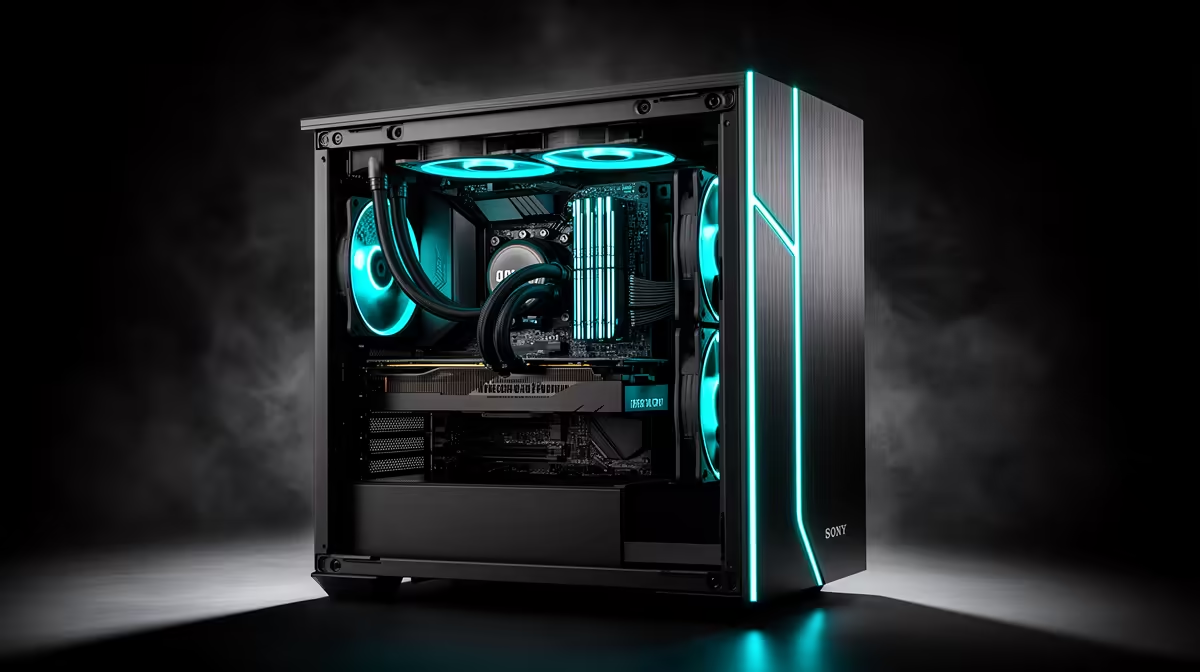
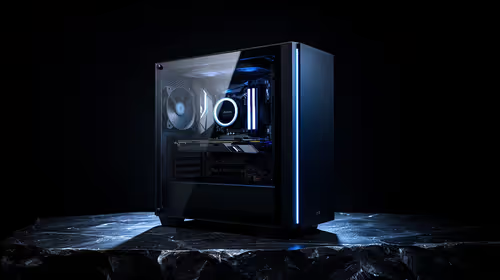
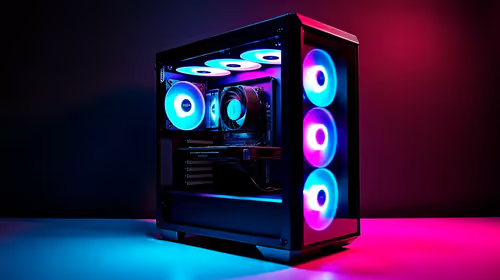
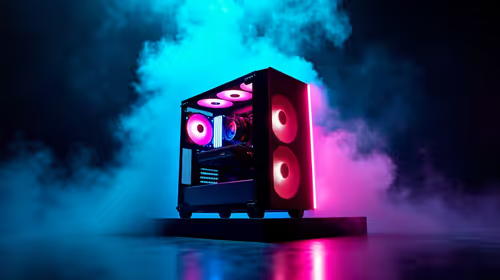
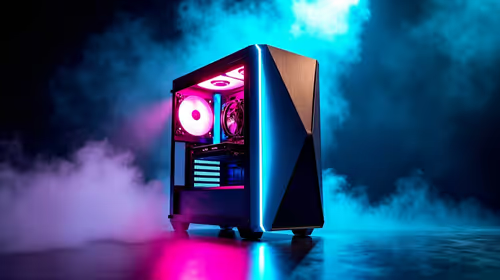
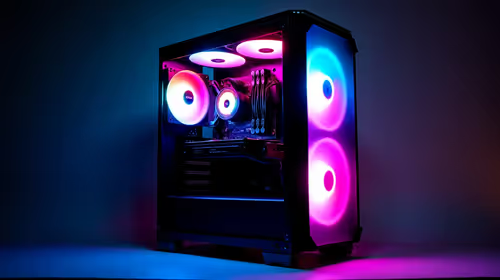
A standard mid-tower ATX case measures roughly 450mm to 520mm tall and 200mm to 230mm wide. That extra interior volume pays off in two ways: first, GPU clearance of 400mm or more becomes the norm rather than the exception, comfortably fitting triple-fan RTX 5090 and RX 9070 XT cards without removing drive cages; second, the top and front panels have room for 360mm radiator brackets, so a 360mm AIO sits flush without forced repositioning of the motherboard tray or drive bay. Cases like full panorama designs add tempered glass on three sides, turning that space into a display. In SA the budget starts around R2,500 for a solid mid-tower and climbs to R5,500 or more for premium showcase builds.
Where Compact Cases Struggle With Big Hardware 🔧
ITX and small-form-factor cases are appealing for desk space, but the compromises stack up fast when you pair them with current-gen flagship cards. Many ITX designs physically cap GPU length at 320mm, which rules out reference-length RTX 5080 cards measuring 336mm. Even Micro-ATX cases that advertise 360mm GPU clearance often block that slot with a 240mm radiator bracket at the top, so you must choose one or the other. Airflow is the second problem: with tightly packed components and limited fan mounting, thermals on a compact Ryzen 9 9950X and RTX 5090 combo can push GPU junction temps above 95 degrees Celsius under sustained gaming loads, versus 80 to 85 degrees Celsius in a well-vented ATX chassis. If your build centres on a high-end GPU costing R18,000 or more, fitting it into an undersized case is a real risk.
Radiator Mounting: The Deciding Factor 💧
Radiator size dictates cooling headroom on CPU-intensive titles. A 360mm AIO drops CPU temps roughly 8 to 12 degrees Celsius compared to a 240mm unit under Cinebench R24 multi-core loads on a Ryzen 9 9950X. ATX mid-towers and full towers mount 360mm radiators at the front or top without modification; compact cases cannot. If you plan to run a high-wattage CPU alongside a GPU that draws 450W or more, a 360mm AIO in an ATX case is the safest thermal path.
Measure Before You Buy ⚡
Check your GPU's exact length on the manufacturer spec sheet before ordering a case. Triple-fan RTX 5090 cards from different board partners range from 336mm to 358mm, so a case rated for 340mm clearance may not fit a 358mm card. Always add 5mm to 10mm buffer when comparing listed clearance to your card's measurement.
FAQ
Can you fit an RTX 5090 in a Micro-ATX case?
Some Micro-ATX cases advertise GPU clearance up to 380mm and can technically house an RTX 5090, but check the fine print: cable routing, drive brackets, and radiator mounts often eat into that clearance figure. Confirm the case's effective GPU length with drive cages installed before purchasing.
Is a 360mm radiator always worth it for a high-end build?
For builds pairing a Ryzen 9 or Core Ultra 9 CPU with an RTX 5080 or 5090, a 360mm AIO delivers noticeably lower temps and quieter fans than a 240mm unit. The price gap between the two is typically R600 to R1,200, which is minor against the total build cost.
Do ATX cases cost significantly more than compact cases in South Africa?
Not always. Entry-level ATX mid-towers start around R1,800 to R2,500 while decent ITX cases begin at R2,200 to R3,000 because compact designs require more precision engineering.
Building with a flagship GPU or 360mm AIO?
Browse the full range of ATX gaming cases and compact builds at Evetech to find the chassis that clears your hardware.