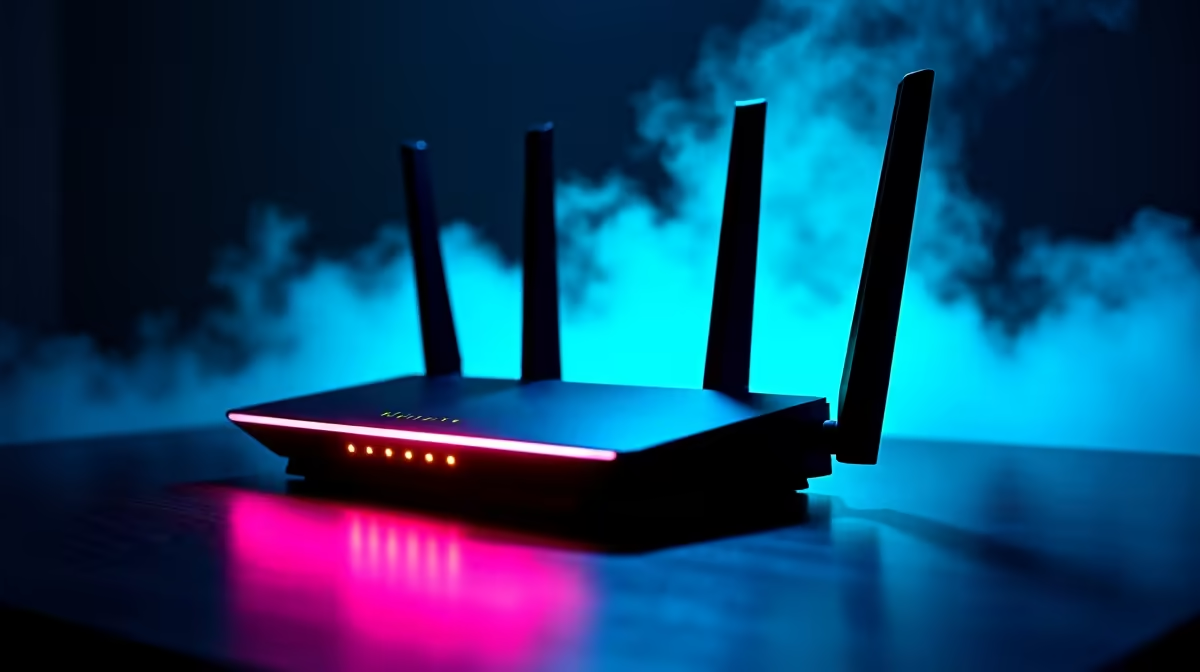
When the fibre map ends at your street, you are not stuck with slow ADSL or a patchy mobile hotspot. 5G home internet has become the genuine high-speed option for South African homes that fibre never reached, delivering speeds in the same league through the air, with no trench, no installation crew and no cable to the property. The whole proposition rests on one thing: a strong 5G signal from a tower near you.
Quick Answer
Where no fibre exists, a sub-6GHz 5G router connected to a strong local tower is the fastest home option, reaching roughly 100 to 300Mbps and beyond without any cabling. Rain, Vodacom and MTN all offer 5G home plans in South Africa, with Rain's uncapped rainOne starting around R679 a month, no contract and no installation. Coverage at your exact address is what decides the experience.
Why 5G works where fibre cannot
Fibre requires physically running a cable into your home, which is why so many suburbs, smallholdings and newer developments simply do not have it, the infrastructure was never laid. 5G fixed-wireless skips that entirely. A router in your home talks to a nearby cellular tower over the air, so the only thing that needs to exist is tower coverage, not a cable to your door.
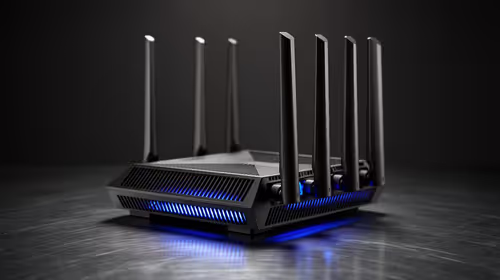
That makes setup almost instant. There is no waiting weeks for an installation, no digging, and in most cases no technician visit at all, you power on the router, it connects to the network, and you are online. For an area fibre has bypassed, that immediacy is a large part of the appeal. If you are sorting out the router, switches and Wi-Fi gear to spread the signal indoors, the networking range at Evetech covers what you need around the provider's unit.
What the providers actually offer
Three networks compete for South African 5G home customers, and they differ in price and coverage.
Rain
Rain runs Africa's first commercial 5G network and owns more than 3,000 towers, with extra reach through sharing agreements with the other carriers. Its uncapped rainOne home WiFi starts around R679 a month with no contract and no installation, which makes it the most affordable 5G home option in the country. Its newer routers support Wi-Fi 7 with carrier aggregation for faster speeds, and Rain is the only operator that bundles 5G home WiFi with a mobile voice SIM in one package.
Vodacom and MTN
Both major carriers offer 5G home internet built to deliver fibre-like speeds, typically bundling a 4G or 5G router with the plan and pricing it according to the router chosen. Their broader, established mobile networks can mean strong 5G reach in areas Rain has not reached as densely, so they are well worth checking against your address.
Coverage decides everything, so check yours first
The single most important step before subscribing is confirming real coverage at your exact location. 5G performance depends heavily on your distance from the tower and the line of sight to it, so two homes a few streets apart can have very different experiences. Every provider publishes a coverage map, and that is the first place to look.
Better still, where a network allows a trial period or a no-contract month, use it. Put the router where you intend to keep it and test the actual speed over a few days, not just a single reading, since cellular performance varies with network load through the day. The no-contract nature of options like Rain makes this low-risk, you can simply move on if the signal at your address disappoints.
Setting up for the best signal at home
Once connected, treat the 5G router like the precious link it is. Placement matters enormously: position it near a window or on a higher floor facing the nearest tower, since walls and distance to the tower both sap signal. A router buried in a back room will underperform one with a clear line toward the mast.
Then handle indoor Wi-Fi separately. The 5G router delivers internet to one spot, but spreading it through the house is a normal Wi-Fi job, so a mesh system or access points connected to the router cover the far rooms. Do not blame the 5G connection for a weak signal in a distant bedroom, that is a Wi-Fi coverage task, solved with the same gear any home uses. The mesh kits and adapters to do it sit in the accessories best sellers at Evetech.
5G versus the other no-fibre options
It is worth placing 5G against the alternatives a fibre-less home might consider, because it is not the only choice, just usually the best one. Older fixed-wireless on 4G or LTE still exists and reaches some areas 5G has not, but it delivers lower speeds and higher latency, so it is a fallback rather than a first pick where 5G is available. ADSL has largely been retired and was never fast to begin with. Satellite is a genuine option for truly remote properties with no cellular coverage at all, but it typically costs more and adds latency that 5G avoids.
That leaves 5G as the sweet spot for most fibre-less suburban and peri-urban homes: close enough to fibre on speed for everyday use, far cheaper and faster to set up, and widely available across South African towns and cities. The decision tree is simple. If your address has solid 5G coverage, that is almost always the answer. Only when 5G coverage is weak or absent should you look to 4G fixed-wireless or, in remote areas, satellite.
What 5G handles well, and where to set expectations
For the things most households do, streaming, video calls, browsing, working from home, gaming for most titles, a strong 5G connection performs comfortably and feels much like fibre. The speeds are ample for multiple people online at once, and the convenience of no installation makes it an easy recommendation for a fibre-less home.
Set expectations honestly on two points. Latency and consistency can vary more than fibre, since you are sharing a cellular tower whose load changes through the day, so competitive gaming where every millisecond counts may feel less rock-steady than a wired fibre line. And speeds depend on signal strength, so a home far from the tower will not match one right beside it. For the overwhelming majority of everyday use, though, 5G closes the gap with fibre to the point where most households would struggle to tell the difference day to day.
Frequently Asked Questions
How fast is 5G home internet in South Africa?
A strong 5G connection typically delivers around 100 to 300Mbps and beyond, which is in fibre's league for everyday use. Actual speed depends on your distance from the tower, network load and line of sight, so real-world results vary by address.
Which provider is cheapest for 5G home internet?
Rain is the most affordable, with uncapped rainOne home WiFi starting around R679 a month, no contract and no installation. Vodacom and MTN price their plans by the router chosen and may offer stronger coverage in some areas.
Do I need fibre or any cabling for 5G home internet?
No. A 5G router connects to a nearby tower over the air, so no cable runs to your property and no installation crew is needed. You power on the router and it connects, which is why it suits areas fibre never reached.
How do I know if 5G will work at my house?
Check each provider's coverage map for your exact address, since performance depends heavily on tower distance and line of sight. Where possible, use a no-contract or trial period to test real speeds at home over a few days before committing.
Why is my 5G Wi-Fi weak in distant rooms?
That is usually a Wi-Fi coverage issue, not a 5G one. The router delivers internet to one spot, so use a mesh system or access points to spread the signal through the house, just as any home network would.
Where should I place a 5G router?
Near a window or on a higher floor facing the nearest tower, since walls and distance to the mast weaken the signal. A clear line toward the tower gives noticeably better speeds than a router tucked into a back room.
Fibre skipped your street? Get the routers and mesh gear to make the most of a 5G connection from the networking range at Evetech and bring fast home internet to your address.