Quick Answer
For Rocket League a 1080p 144Hz monitor is the value sweet spot, and 240Hz suits serious competitive players; the game runs at very high frame rates, so a fast refresh rate and low input lag matter most. Resolution is secondary because Rocket League is fast-paced and not visually demanding.
Why Rocket League Loves High Refresh
Rocket League is built on quick reads and precise aerial control, where smooth, low-latency motion directly affects how well you track the ball and your car. A 144Hz panel already feels far better than 60Hz for this, and 240Hz adds clarity for aerials and fast rebounds. The game runs at hundreds of fps on mid-range hardware, so you can fully use a high-refresh panel without an expensive GPU.
Low input lag is just as important as refresh, since car control depends on your inputs feeling instant. A panel with low latency makes precise touches and saves more reliable.
Choosing The Right Panel
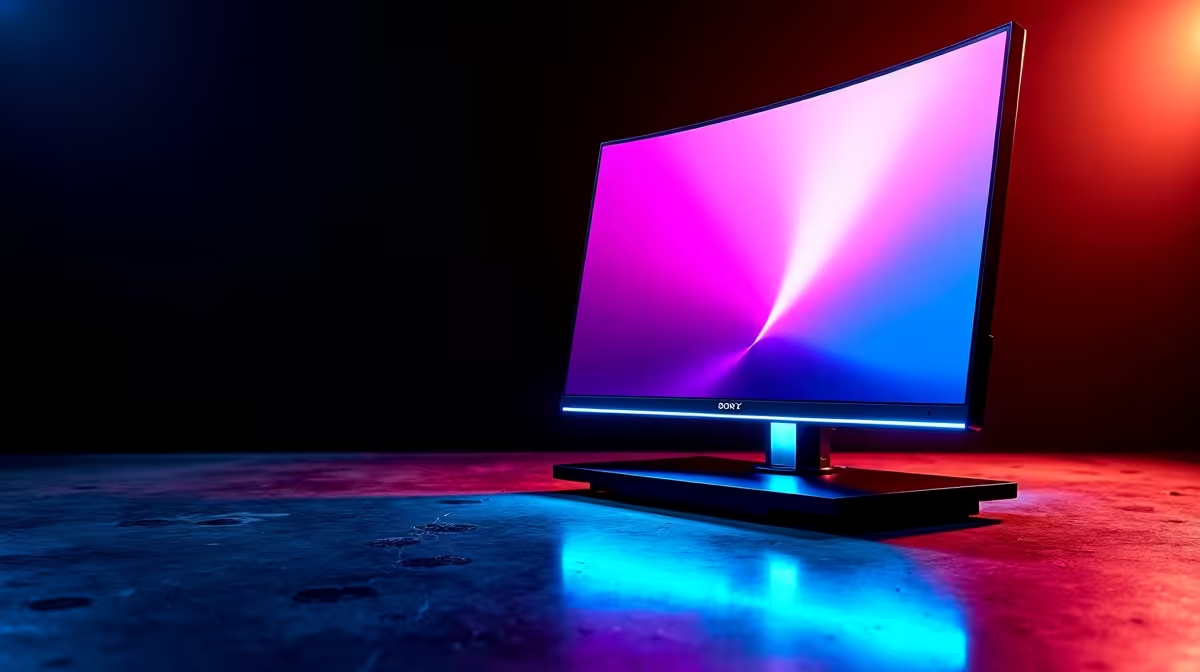
A 24-27 inch fast IPS panel at 144Hz or 240Hz with a 1ms response gives clean motion and good colour. Enable a sensible overdrive setting to reduce ghosting on the fast-moving ball. Cap your frame rate at or above the refresh rate and turn on V-Sync alternatives like adaptive sync to avoid tearing without adding latency. For competition, wired peripherals and a low-latency display mode round out the setup.
FAQ
Is 144Hz enough for Rocket League?
Yes, 144Hz is the value sweet spot and a huge step up from 60Hz for tracking the ball and aerials. Competitive players may prefer 240Hz, but 144Hz serves most well.
Does Rocket League need a powerful GPU for high refresh?
No. The game runs at hundreds of fps on mid-range hardware, so even a modest card can feed a 144Hz or 240Hz panel comfortably. The monitor matters more than the GPU here.
What size monitor is best for Rocket League?
24 to 27 inches. This range keeps the full field in view for reading plays while staying close enough for fast reactions, which suits Rocket League's pace.
adaptive sync (FreeSync or G-Sync) and cap your frame rate just below the panel's refresh. You get tear-free motion without the input lag that traditional V-Sync adds.