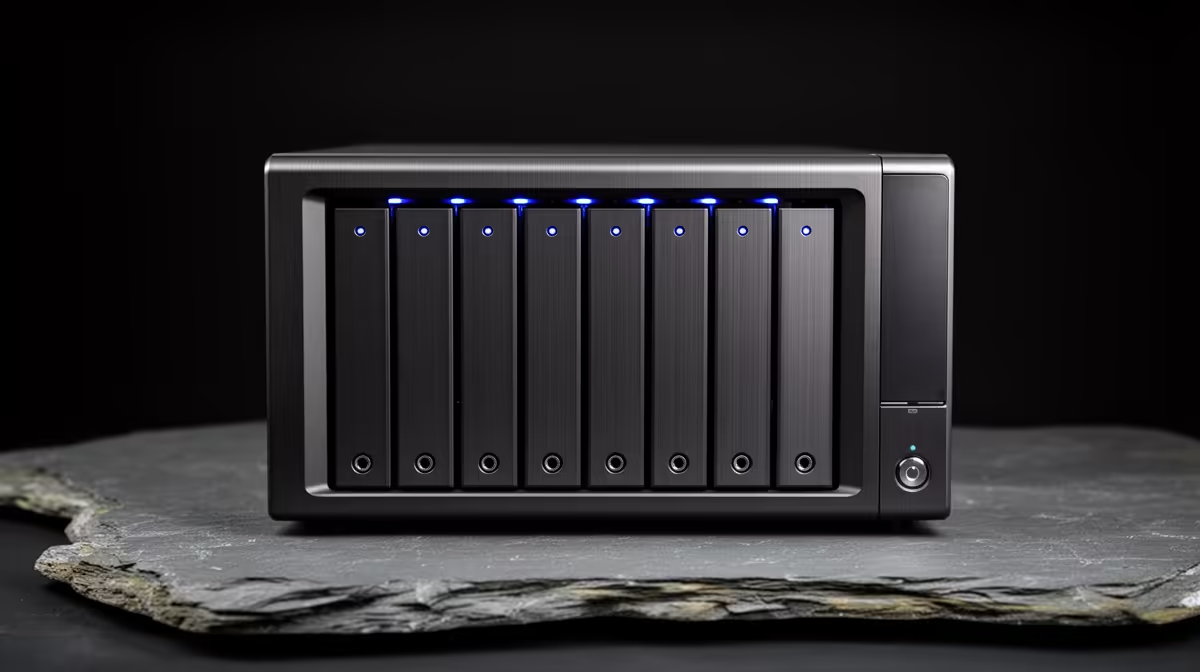
Picking a network storage box is less about the hardware on the shelf and more about the operating system you will live with for years. Each major brand runs its own software, and switching later is painful, so the choice you make now sticks. The leading names to weigh up when comparing the best NAS brands are Synology, UGREEN, QNAP, TerraMaster and Asustor, and they split cleanly along the lines of software polish, hardware value and entry price.
Quick Answer
The five main NAS brands are Synology, UGREEN, QNAP, TerraMaster and Asustor, each with its own operating system targeting a different priority: software maturity, hardware value or low entry cost. The choice matters long-term because moving between brands means rebuilding your volumes and apps from scratch.
Why the brand choice is a long-term commitment
A NAS is not like swapping a router. The operating system holds your storage layout, your apps, your backup schedules and your remote-access setup, and each brand's system is its own world. Migrating from one brand to another generally means rebuilding the whole thing: recreating volumes, reinstalling apps and reconfiguring everything. That lock-in is why the sensible approach is to choose the ecosystem first and the specific model second.
The good news is that the brands occupy distinct positions, so matching one to your priorities is straightforward once you know what each is good at. The decision really comes down to whether you are buying mainly software, mainly hardware, or mainly a low price.
The software-first brands
Synology
Synology is the long-standing benchmark for software. Its operating system is mature, polished and well supported, with a long update window measured in years, and its mobile apps for photos, backups and remote access are among the smoothest in the category. The trade-offs are price and policy: you generally pay more for less hardware than rivals offer, and the brand has leaned toward steering buyers to its own validated drives. If a refined, hands-off experience and long-term support matter most, Synology is the safe pick.
Asustor
Asustor sits in similar territory with a capable operating system and a focus on multimedia and app flexibility. It is a strong choice for media-centric setups, offering a polished interface without the steepest learning curve. It is less of a household name than Synology, but its software maturity makes it a credible software-first option.
The hardware-value brands
UGREEN
UGREEN is the value disruptor. For a small premium over an entry Synology, its units often pack more memory, faster networking and a newer processor, and they let you use any drive you like rather than a restricted list. The catch is software: its operating system is newer and still catching up to the established players. If you want the most hardware for your rand and are comfortable with software that is improving rather than fully mature, UGREEN is compelling.
QNAP
QNAP straddles the line, offering powerful hardware and a feature-rich operating system aimed at users who want more control and more advanced capabilities. Its software is deep, which is a strength for tinkerers but can feel busy for someone who just wants simple storage. It is a strong pick when you want serious performance and a wide feature set in one box.
The entry-price brand
TerraMaster
TerraMaster competes hardest on price, making it a common entry point for a first NAS. The hardware is reasonable for the money and the operating system has improved steadily, though it does not match the polish of the software-first brands. For a budget-conscious first storage box where low cost outweighs software refinement, it earns its place on the list. Whichever brand you settle on, the drives that go inside sit in the NAS storage range, and the fast cache and boot drives buyers add often appear among the popular SSD picks.
The cost factors that cut across every brand
Whichever ecosystem you favour, two costs apply regardless of badge and are worth budgeting for honestly. The first is the drives. Disk prices have climbed since 2025, and the drives now make up a large share of the total spend on any NAS, so a cheaper enclosure does not save as much as it once did when the bays are filled. Compare brands on the empty unit, then add the same drive cost to each, and the price gaps between them often look smaller than the headline figures suggest.
The second is the software lifespan. A NAS commonly runs for many years, so the length of time a brand keeps issuing updates is part of its real value. A unit that stops receiving security updates after a few years is a hidden cost, because it forces a replacement sooner. The software-first brands tend to lead here with long support windows, which is part of what their premium buys. Factoring both the drive cost and the support window into the comparison gives a truer picture than the purchase price alone.
How to choose between them
Decide your priority first. If you want the smoothest software and longest support, lean Synology or Asustor. If you want the most hardware per rand and free drive choice, look at UGREEN or QNAP. If the lowest entry price drives the decision, TerraMaster is the natural start.
Then weigh two practical factors: whether the brand restricts which drives you can use, and how long it supports the unit with updates, since a NAS often runs for many years. Get the ecosystem right and the specific model is the easy part. Plan the drive budget alongside it, because the disks are now a large share of the total cost regardless of brand.
Frequently Asked Questions
Which NAS brand has the best software?
Synology is widely regarded as the software benchmark, with a mature, polished operating system, smooth mobile apps and a long support window. Asustor is also strong on software, especially for media-focused setups.
Which NAS brand offers the best hardware value?
UGREEN typically gives the most hardware for the money, often with more memory and faster networking than a comparably priced rival, plus free drive choice. Its software is newer and still maturing, which is the trade-off.
Can I move my data between NAS brands easily?
Not easily. Each brand runs its own operating system, so switching generally means rebuilding volumes, reinstalling apps and reconfiguring everything. That lock-in is why choosing the right ecosystem upfront matters so much.
Do all NAS brands let me use any drive?
No. Some, notably Synology, have leaned toward steering buyers to validated drives, while others like UGREEN let you use any drive freely. Check the drive policy before buying if you plan to use disks you already own.
Which brand is best for a first, budget NAS?
TerraMaster competes hardest on entry price and is a common first-NAS choice. The hardware is reasonable for the cost and the software has improved, though it is less polished than the software-first brands.
The right NAS is really the right operating system for the next several years, so choose the ecosystem before the model. Plan your drives in the Evetech NAS storage range and match the brand to whether you value software, hardware or price.