Quick Answer
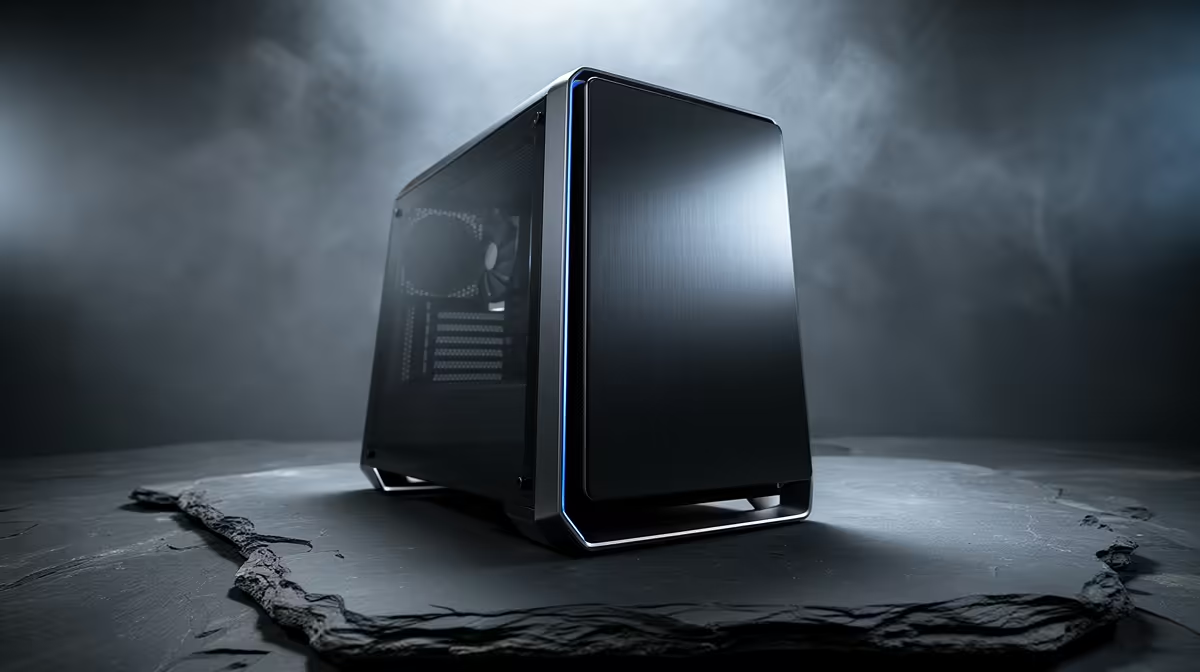
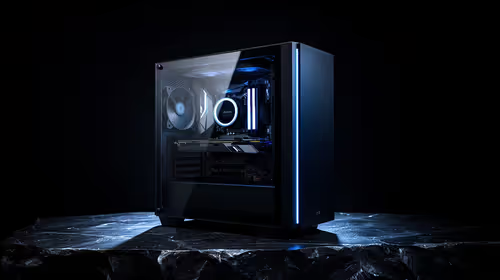
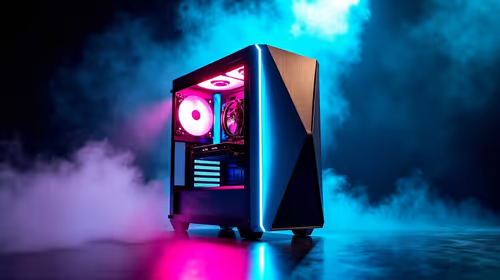
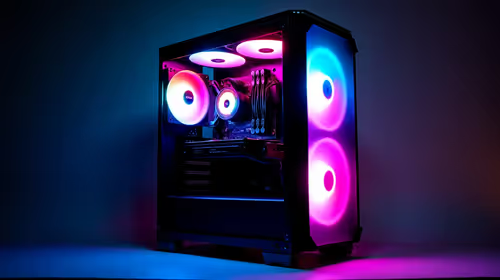
For a rand-conscious SA creator or gaming workstation build, the essential case specifications are: ATX or E-ATX board support, 380mm or greater GPU clearance, 360mm AIO radiator support, at least two 140mm fan mounts at the front, USB Type-C front I/O, and a PSU shroud with 50mm depth. These specs are available in SA from R1,800 to R2,800, the best value-per-rand zone for this use case.
The Non-Negotiable Specs at Every Budget 💡
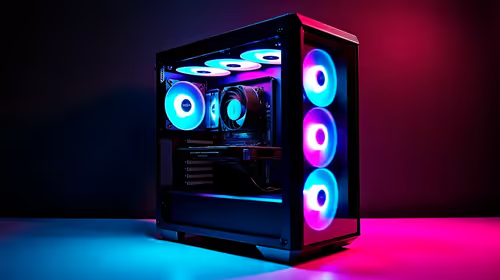
GPU clearance is the first specification to lock in. Current-generation mid-range cards like the RTX 5060 Ti or RX 9070 in AIB triple-fan form reach 300 to 340mm. Specifying 380mm clearance gives comfortable headroom without requiring a full-tower chassis. Radiator support at 360mm covers the Ryzen 7 9800X3D and similar CPUs through SA summer temperatures without throttling. Front USB Type-C at Gen 2 speed (10Gbps) connects most modern audio interfaces, docks, and cameras at full bandwidth without an adapter chain. A PSU shroud is not optional for a creator build where the interior will be photographed or filmed: loose cables across the case bottom look unprofessional and restrict airflow to the GPU.
Where to Compromise and Where Not To 🎯
Panel material is a legitimate compromise point. Thinner 0.7mm steel panels in the R1,800 to R2,200 range are sufficient for a build that does not move frequently. Tempered glass side panels are an aesthetic choice rather than a performance requirement and can be skipped at this budget tier without any thermal consequence. Included fans are a compromise point where SA builders should be selective: a case shipping with three 120mm fans is adequate but less capable than one with two 140mm fans. If the case of choice includes three 120mm fans, budget R300 to R600 extra for two 140mm replacements for the front intake position.
The Best Spec Combinations at Key SA Price Points 💰
At R1,800 to R2,200: a mesh-fronted ATX mid-tower with 360mm top AIO support, 380mm GPU clearance, and a basic PSU shroud covers 90% of creator and gaming workstation requirements. At R2,200 to R2,800: E-ATX board support appears, 420mm AIO capability becomes available, and fan mounting positions increase to allow 3x 140mm front configurations. This is the sweet spot for a rand-conscious builder who wants future-proofing without flagship pricing. At R2,800 to R3,500: dual-chamber designs, 200mm fan positions, and 440mm GPU clearance become available.
Check GPU Clearance With Cage Installed ⚡
When comparing case GPU clearance specs, always check whether the stated clearance applies with the front drive cage installed or removed. A case listing 400mm with cage removed may only offer 340mm with the cage in place. If you need both front storage and a large GPU, verify the figure with cage installed before purchase.
FAQ
Is a semi-modular PSU sufficient for a creator workstation?
A semi-modular PSU works well for most creator builds. The fixed cables (24-pin ATX and CPU EPS) are always used, and the modular SATA and PCIe cables can be tailored to the build. Fully modular PSUs offer slightly cleaner routing but cost R200 to R500 more at equivalent wattage.
Can a R2,000 case handle an RTX 5080?
Yes, if the case lists GPU clearance of at least 380mm and has adequate airflow through a mesh front. The RTX 5080 in AIB triple-fan form is typically 350 to 380mm long. Thermal performance depends more on case airflow design than price.
How many fan mounting positions should a creator workstation case have?
A minimum of five: two or three front intake, one rear exhaust, and one or two top positions for exhaust or an AIO radiator. More positions allow a more granular thermal zone strategy for workloads stressing both CPU and GPU simultaneously over long durations.
Building a creator or gaming workstation on a smart SA budget?
Evetech stocks mid-range and premium cases covering every spec tier from R1,800 upward. Browse the range to find a case that ticks every box without overextending the build budget.