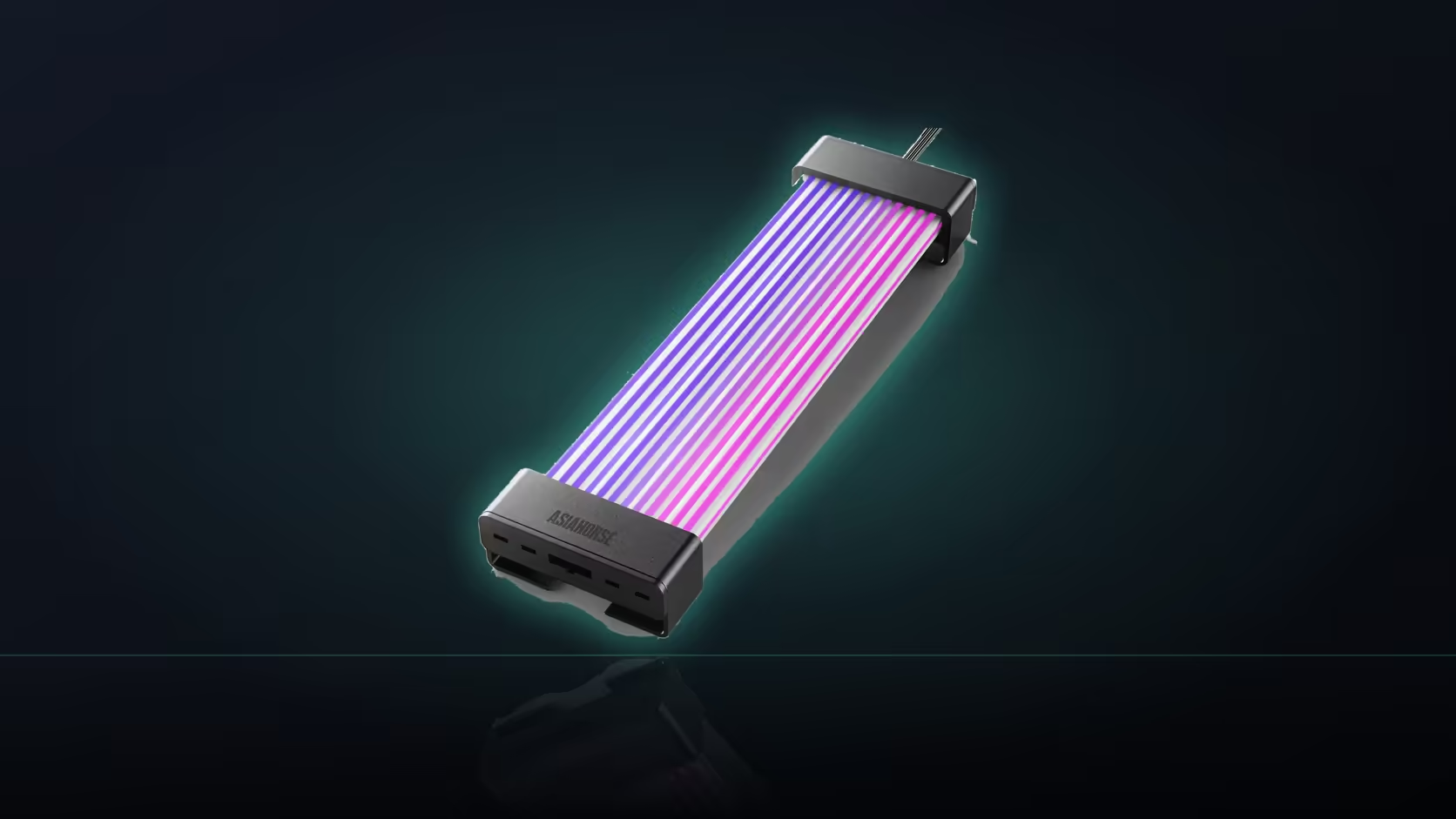
The same colour that looks perfectly balanced under office lighting can turn harsh the moment the room dims, which is a lighting reality that has nothing to do with the Aurora Learn ARGB PSU Cable Cover itself and everything to do with how ambient light changes what your eye reads as comfortable.
Quick Answer
A single scene that looks right against a bright, sunlit desk during the day often reads as too intense once the room goes dark at night, so the practical solution on the R599 Aurora Learn cover is choosing two separate presets from its 124-plus library and switching between them depending on the time of day. Because the remote changes scenes instantly, that switch is a button press rather than anything requiring software or planning ahead of time.
☀️ What generally suits a bright room
Stronger, more saturated colours
Ambient daylight competes directly with any lighting effect, so a subtle or dim preset tends to simply get washed out and become barely noticeable against a bright, sunlit desk. The controller feeding that effect still needs its own SATA connection from the power supply, whatever the time of day happens to be.
🌙 What generally suits evening use instead
Something quieter and dimmer
At night, that same bright setting can end up dominating a dark room entirely, becoming the single brightest thing visible rather than a subtle accent to the rest of the setup.
🎛️ Why the remote makes this genuinely practical
A button press swaps between the two chosen presets instantly, which is a meaningfully lower barrier than opening board software would be, and is precisely the reason keeping the remote within reach of where you sit matters so much day to day.
🖥️ Could board sync achieve something similar?
Board software may offer saved profiles that approximate the same idea, though changing between them generally means opening an application first rather than simply reaching for a physical remote sitting on the desk.
🎨 Does shell colour play into this too?
Black tends to hold contrast better under bright ambient light, while white diffuses more and can look noticeably softer once the room goes dark, which is worth weighing alongside whichever two presets end up chosen.
🪟 Where the room's light actually comes from matters too
A desk beside a large window sees a much bigger swing between day and night than one lit mainly by an overhead lamp, so how dramatic the two-preset switch needs to be really depends on the specific room rather than a general rule. The same reasoning applies to any case lighting elsewhere in the build, since a strip or fan set facing the same window will experience the identical daylight competition this cover does.
🌇 Considering dawn and dusk, not just day and night
The transition periods at sunrise and sunset often expose a preset's shortcomings more than either full daylight or full darkness does, since ambient light is changing quickly during those windows. Choosing presets that hold up reasonably well through that transition, rather than only at the two extremes, avoids a jarring few minutes twice a day where neither preset quite matches what the room is actually doing at that particular moment, however small a detail that might sound on paper. It is the kind of thing most builders only notice once, usually by accident on an ordinary evening, and then find themselves reaching for the remote at roughly the same time every day afterward.
🕰️ Automating the switch versus doing it manually
Nothing about the remote or the controller schedules a change automatically, so the two-preset approach genuinely relies on someone remembering to press the button as the light shifts. For most desks that habit forms naturally within the first few days, simply from noticing the mismatch once or twice at the wrong time of day.
🏠 Rooms that do not swing as dramatically between day and night
Not every desk sits beside a window catching direct sun, and a room lit mostly by consistent artificial light throughout the day may never really need two separate presets at all. In that case, a single well-chosen scene that suits the room's usual lighting is a perfectly reasonable answer, and the two-preset approach becomes something to keep in mind for later rather than a step to work through immediately during the initial install, particularly for a machine tucked into a corner with little natural light reaching it at any hour, where the contrast between day and night is genuinely minor either way, and a single scene reasonably chosen up front is likely to serve just as well as a carefully planned pair ever would, freeing up a little more time to focus on the rest of the build's cable management and overall finish instead. There is nothing wrong with revisiting that decision months later either, since the remote makes adding a second preset to the rotation a matter of a single button press rather than any kind of reinstall, teardown, or fresh trip through the cabling behind the tray.
Frequently Asked Questions
Why does ambient light change how a lighting effect reads?
Because lighting competing with daylight needs more intensity, and that same intensity at night can end up dominating an otherwise dark room.
What kind of preset tends to suit a bright room best?
Stronger, more saturated colours, since anything subtle simply gets washed out by the ambient daylight surrounding the machine.
And what suits an evening setting instead?
Something quieter and dimmer, which keeps the build visible without becoming the single brightest object in an otherwise dark room.
How quickly can the two presets be swapped between?
A single button press on the remote, which is the practical reason for keeping it within easy reach of your desk.
Can board sync achieve a similar day-and-night switch?
Board software may offer saved profiles, though switching between them typically means opening an application rather than reaching for a remote.
Does the shell's colour play a role in this comparison?
Yes, black tends to hold contrast better in daylight, while white diffuses more and can read as softer in a dark room.
Is it worth noting which two presets were chosen?
On a shared machine it helps, so the next person can find the same day and night scenes rather than cycling the full library.
Want lighting that suits both daytime and evening use?
Browse Evetech's power supply range to plan an Aurora Learn install with the remote close at hand.