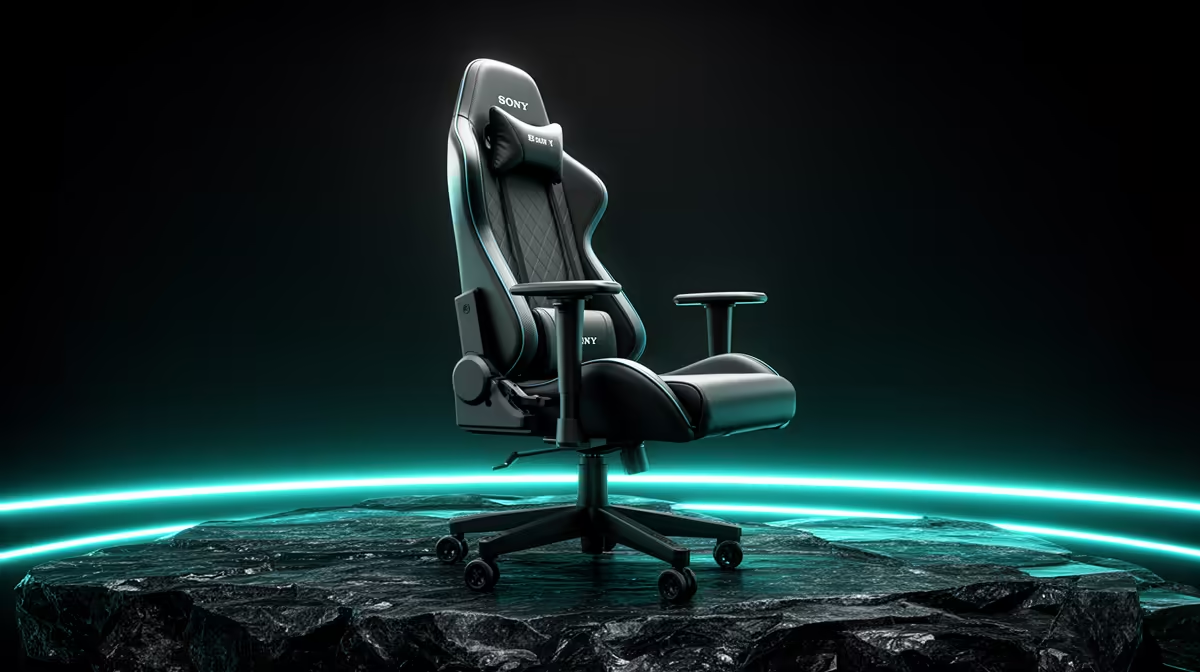
Racing stripes say little about how a chair supports you after two hours. Comparing budget office vs gaming chairs means checking dimensions, adjustment, foam, frame and warranty with your body at the centre.
Quick Answer
Choose a chair under a R3,000 ceiling by fit, adjustment, stability, materials, and written load guidance. A racing shape does not prove stronger foam or a better frame, and a generic office label does not prove comfort. Sit in the exact model when possible and check how it supports your desk posture.
Use the seating and desk products that appear among peripheral best sellers as comparison points, then browse the broader gaming accessories selection. Only a named current chair and July 2026 price can prove what fits the R3,000 basket.
Begin with body and desk measurements
Measure the user from floor to the back of the knee while wearing normal indoor footwear. Check hip width, thigh length, shoulder position, and preferred desk height. Then compare those figures with the chair's seat height range, seat width, depth, backrest, and armrest adjustment.
At a useful starting position, support both feet evenly on a firm surface and keep the knees comfortable. The seat edge should not press hard behind the knees. The backrest should allow you to work without perching forward.
Armrests can help when they meet the forearms without lifting the shoulders. Fixed arms may clash with a desk or stop the chair getting close enough. Measure from floor to desk underside and include the armrest at its working height.
These are setup checks rather than medical treatment. Persistent pain, numbness, or weakness deserves guidance from a qualified health professional.
Compare the seat instead of the silhouette
Racing-style bolsters can hold the torso visually and may press into broader shoulders or thighs. A flatter office seat can allow more movement. Neither shape is better for every person.
Ask how the foam and upholstery are specified for the exact model. Density, thickness, support layers, and construction are different measures. A product photo cannot show how the seat changes after an hour.
Fabric can breathe well and collect dust or spills. Mesh can provide airflow but depends on tension and frame shape. Synthetic leather is easy to wipe and may feel warmer or show wear at high-contact edges. Care instructions matter for each material.
Inspect seams, staples, zips, edge finishing, and how covers attach around moving parts. Decorative stitching should not sit where it rubs the legs or shoulders.
Make the mechanism earn the budget
Seat-height adjustment is the starting feature. Check the stated range and whether the gas lift and base carry a written user-weight rating for the complete chair. A higher class label or thick-looking cylinder needs model-level documentation.
Tilt mechanisms vary. Some rock the seat and back together; others allow separate backrest movement. Tension should suit the user and the lock should hold at stated positions. Test it according to the manual, without throwing body weight into the stop.
Armrests may adjust for height, width, depth, and angle. More directions are useful only when the parts remain stable. A little movement can be normal by design; sharp wobble or a lock that slips deserves attention.
Casters should suit the floor and roll without catching. Use a suitable chair mat or floor-safe wheels where needed. A five-point base gives a broad footprint, but material, dimensions, assembly, and rated load still decide stability.
Inspect the structure and assembly
Check the frame, base, backrest bracket, fasteners, and welds visible on the exact chair. Read the assembly guide before starting and use the supplied or specified hardware in the correct positions.
Do not interchange similar bolts. A longer fastener can damage a hidden part; a short one may not engage enough thread. Start screws by hand, tighten in the recommended sequence, and recheck after the first use period.
The chair should sit level on a flat floor. If it rocks, inspect caster seating, base condition, and assembly before adding washers or improvised packing. Stop using a chair with a cracked base, loose back bracket, failing lift, or bent mechanism.
Pillows are optional. A thick lumbar cushion can push some users too far forward, while another person may prefer gentle support. Test the chair with and without removable cushions.
Run a forty-minute fit test
Set the height, armrests, tilt tension, and back position. Use the actual keyboard, mouse, and monitor for at least forty minutes if a return or showroom process permits it.
Notice pressure under the thighs, shoulder lift, reach to the mouse, backrest contact, heat, and whether you keep sliding forward. Change one adjustment and repeat. The chair should support several comfortable postures rather than lock you into a pose.
Stand and move during long sessions. No chair removes the need for breaks. Keep the monitor and desk aligned so a good seat is not forced to compensate for a screen far to one side.
Build a complete R3,000 comparison
Compare two or three named chairs at their current July 2026 prices. Record seat dimensions, adjustment ranges, load guidance, materials, assembly, written warranty terms, and delivery requirements.
Include any needed floor mat or footrest. Do not force the chair alone into the ceiling while ignoring the piece required for a stable posture or protected floor.
When no chair fits the body and desk within R3,000, keep the existing safe chair, adjust the workstation, and save. A poor fit bought for a racing silhouette remains a poor fit.
Check how the chair behaves when you reach for the mouse, lean back to watch a cutscene, and move closer for focused work. The casters should remain planted and the base should not tip. Listen for new clicks or rubbing around the mechanism. A showroom bounce tells you little; repeated normal movements reveal whether the adjustments remain where you set them.
Keep the assembly guide, spare supplied hardware, proof of purchase, and model label. Recheck approved fasteners after the settling period stated by the maker. Clean upholstery with the specified method so a strong solvent does not damage the coating, fabric, or mesh.
FAQ
Is a gaming chair better than an office chair?
The label does not decide fit or build. Compare exact dimensions, adjustment, mechanism, materials, load guidance, and a real seated test.
Are racing bolsters useful?
They can suit some users and restrict others. Check shoulder and thigh clearance. A chair does not need to hold you against cornering forces at a desk.
Can R3,000 buy a good chair?
It can buy a suitable model when a current named chair fits the user, desk, and required adjustments. Verify the July 2026 price and complete setup rather than relying on a category claim.
Measure the user and desk, compare named chairs by fit and mechanism, and spend the R3,000 ceiling only after a full-session seating test.