Quick Answer
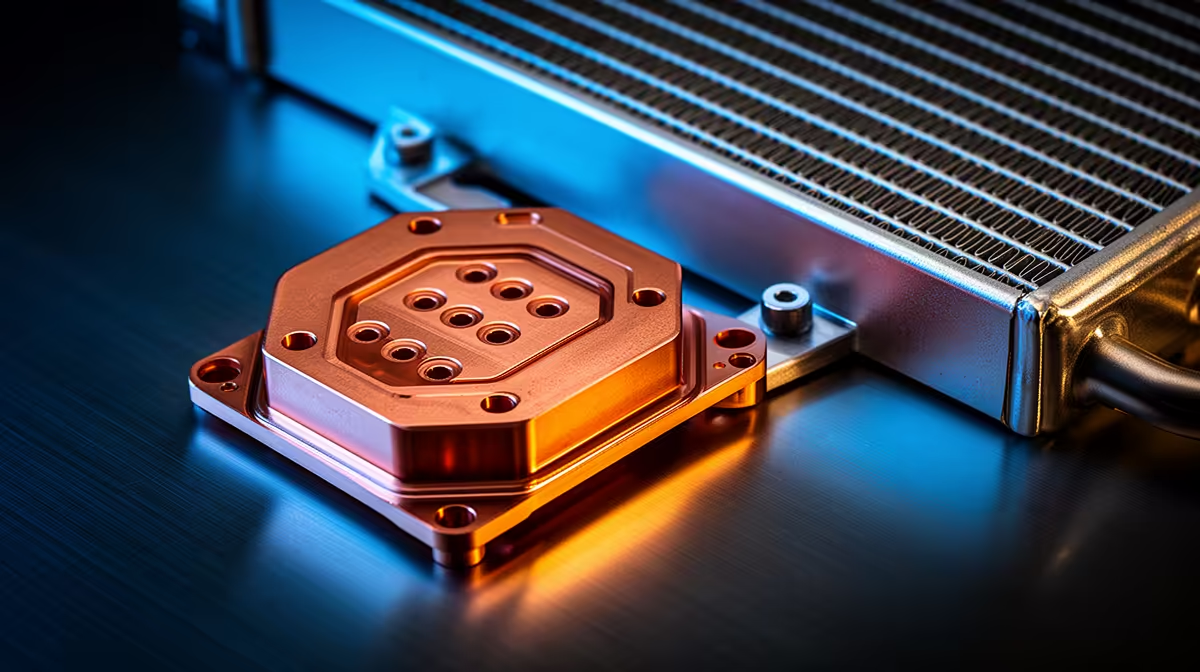
In an AIO cooler, the copper cold plate absorbs heat from the CPU's IHS (integrated heat spreader) at the source, while the aluminium radiator releases that heat into the surrounding air. They do different jobs and the combination is intentional: copper's superior thermal conductivity pulls heat away fast, and aluminium's high surface area and cost-efficiency makes it ideal for the radiator where airflow does the heavy lifting.
Why Copper Dominates at the Cold Plate 🔬
Copper has a thermal conductivity of around 385 W/m·K, roughly four times higher than aluminium's 205 W/m·K. At the CPU contact point, where heat flux density is highest (a modern high-wattage chip like the Ryzen 9 9950X generates over 170W across a die measuring just a few hundred square millimetres), that conductivity difference is critical. Copper pulls heat into the coolant loop faster than aluminium could, reducing the temperature delta between the CPU die and the coolant. Micro-fin cold plates, where the copper base is etched into hundreds of tiny channels, increase surface area even further, maximising how quickly the coolant can carry heat away from the source.
Why Aluminium Works Fine for the Radiator 🌡️
The radiator's job is different: it spreads heat across a large surface and releases it via airflow.
Galvanic Corrosion and Coolant Chemistry ⚠️
One important caveat: copper and aluminium are dissimilar metals. When submerged in a shared liquid, galvanic corrosion can occur if the coolant pH is not managed. Reputable AIO manufacturers address this by using pre-mixed coolants with corrosion inhibitors, which is why you should never replace AIO coolant with plain distilled water. The typical service life of a sealed AIO unit is five to seven years before coolant degradation becomes a concern, though most builders upgrade their cooler well before then. If you're buying from Evetech and planning a long-term build in South Africa's warmer climate, a quality sealed unit from a reputable brand is more than adequate.
Cold Plate Contact Area Check ⚡
When installing your AIO, confirm the cold plate fully covers your CPU's IHS. Large-die CPUs like the Ryzen 9 9950X (AM5, large monolithic die) benefit from cold plates with expanded coverage. Check the cooler's cold plate dimensions against your CPU's IHS size before buying, especially for high-wattage chips where a small contact offset can add 5 to 8 degrees Celsius to peak temperatures.
FAQ
Does a larger cold plate improve cooling on modern CPUs?
Yes, particularly for CPUs with large IHS footprints. The newer generation of premium AIOs includes cold plates with 5 to 15% more contact area, which directly reduces heat concentration under large dies like those used in Ryzen 9000-series chips.
Can I mix copper and aluminium fittings in a custom loop?
In a custom loop, mixing copper and aluminium components requires corrosion inhibitors in your coolant. For standard sealed AIOs, this is handled by the manufacturer. Never swap out the factory coolant for a homemade solution without verifying chemical compatibility.
Why are some radiators listed as copper instead of aluminium?
A handful of premium custom-loop radiators do use copper for both the tubes and fins. These are significantly heavier and more expensive, and while they offer marginally better thermal performance, the difference in a typical gaming build is negligible compared to the fan configuration and static pressure of your radiator fans.
Choosing an AIO for your next build?
Evetech stocks AIOs from leading brands with high-conductivity copper cold plates and efficient aluminium radiators across 240mm and 360mm sizes.