


PCIe 5.0 vs PCIe 4.0 for Strategy and Sim Games in SA
PCIe 5.0 and PCIe 4.0 differ most in lane support, compatibility, and upgrade value for strategy and sim games. SA buyers should match the choice to their actual hardware and games.
Read moreThe creality k2 vs k2 plus + cfs step costs roughly R15,000: the K2 Plus + CFS Combo at R32,999 offers a 350x350x350mm bed and a 4-spool CFS expandable to 16 colours, versus the base K2 at R17,900 with a 260mm plate. Both are locally available in SA.
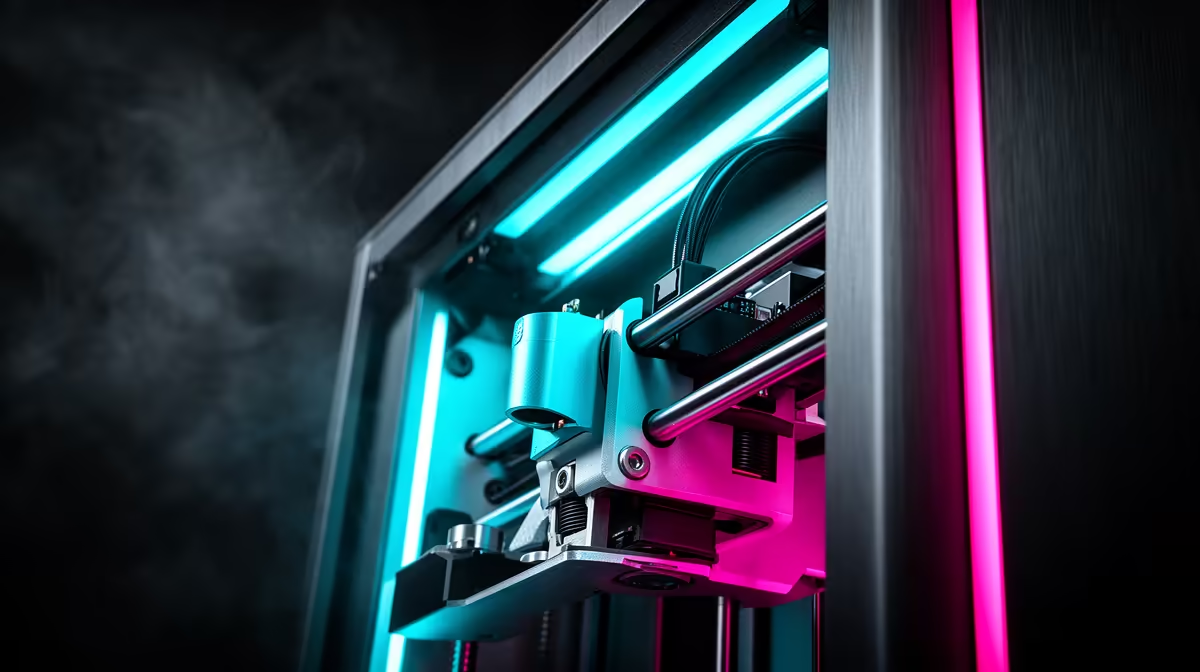
The jump from a base Creality K2 to the K2 Plus + CFS Combo is roughly R15,000, and that gap buys two very different things at once: a far larger build volume and a four-spool multicolour system that scales to 16 filaments. If you print small functional parts in one colour, you do not need it. If you print large models or multi-tone display pieces, the maths changes quickly.
The base K2 sits at about R17,900 with a 260x260x260mm bed. The K2 Plus + CFS Combo runs about R32,999 and gives you a 350x350x350mm bed plus a Creality Filament System that holds four spools and chains out to 16 colours. Both are stocked locally in South Africa, so the real question is whether build size and colour count justify the R15,000 step.
The price difference is not a vague premium. It splits cleanly into two upgrades that happen to ship together in the Combo.
The K2's 260mm cube is generous for a printer in its class, but the Plus moves to a 350mm cube. That is not a small bump. A 350mm bed has roughly 2.4 times the footprint area and over three times the volume of a 260mm bed. Helmets, cosplay armour, large drone frames, and full-scale prototypes that need slicing into pieces on the K2 often print as a single part on the Plus. Fewer seams, fewer failed glue joints, less post-processing.
The CFS (Creality Filament System) is the headline. It feeds four spools into a single hotend and swaps between them automatically. RFID tags embedded in supported filament rolls let the printer read material type, temperature requirements, and colour data so the slicer can manage swaps correctly without manual entry. Daisy-chain extra CFS units and you reach up to 16 colours. For makers printing signage, layered logos, tabletop terrain, or anything where a single hue looks flat, this is the difference between owning the result and settling for it.
Spending more is not automatically the right call. The base K2 holds real advantages for the right user.
It is quieter on the budget and lighter on desk space, and a 260mm bed handles the overwhelming majority of everyday prints: brackets, replacement parts, miniatures, phone stands, enclosure panels. Single-colour functional printing is where most hobbyists actually spend their time, and the K2 does that beautifully without the CFS overhead. There is also a maintenance angle. A four-spool feed system adds tubes, swap points, and a small amount of filament waste on every colour change (purged into a waste block). If you rarely change colours, that complexity earns nothing.
Multicolour printing has a cost most spec sheets skip. Every colour change purges a small amount of filament to clear the nozzle, and a busy multi-tone model can add meaningful waste and runtime. A four-colour print is not four times slower, but it is noticeably slower than a single-colour run of the same model. Budget for that. The upside is a finished piece with crisp colour boundaries that would otherwise need painting. For makers who sell prints or value display quality, that trade is usually worth it. For rapid functional prototyping, it often is not.
Early production runs of the CFS had reported reliability quirks with filament routing and swap detection. Firmware updates through late 2025 have improved this significantly, and by early 2026 the system runs reliably for day-to-day multicolour printing. If you are buying new stock through local SA channels, you are likely receiving hardware that benefits from those improvements. Still, any multi-spool system is mechanically more complex than a single-feed setup, and the K2 alone is the lower-maintenance path if colour flexibility is not a priority.
The decision lines up neatly around output.
Pick the base K2 if you print mostly single-colour functional parts, work within a 260mm envelope, and want the lower entry cost. It is the sensible default for hobbyists, students, and anyone iterating prototypes.
Pick the K2 Plus + CFS Combo if you regularly hit the edges of a smaller bed, or if colour is part of the product: cosplay, tabletop gaming pieces, branded signage, architectural models. The combo also suits small print-on-demand operations where larger single-piece prints and multicolour finishes justify the spend. If you are weighing where it fits in a full workshop, the 3D printer range stocked at Evetech lays out the current local options and pricing side by side.
Both printers run standard 1.75mm filament, so consumables are not locked to a proprietary cartridge. PLA, PETG, and TPU are all widely available locally. The CFS does add filament waste per colour change, so a heavy multicolour user will get through spools faster. Factor in a spare nozzle and a build-plate adhesive of your choice. To round out a print station with the smaller extras that genuinely matter, the current accessories best sellers cover the tools, adhesives, and spares that save a failed first layer.
Only if you need the larger 350mm bed or genuine multicolour printing. For single-colour functional parts inside a 260mm envelope, the base K2 does the same job for far less.
A single CFS unit feeds four spools. Daisy-chaining additional units extends that to a maximum of 16 colours on one print.
Yes. Each colour change purges a small amount of filament to clear the nozzle, collected in a waste block. A busy multi-tone model uses noticeably more filament and time than a single-colour version.
Both machines accept standard 1.75mm filament, so you are not tied to a proprietary spool. PLA, PETG, and TPU are all readily available in South Africa.
For most hobbyists, yes. The 260mm bed and single-colour workflow cover the large majority of everyday prints without the added complexity of a multi-spool system.
Yes. Both the base K2 and the K2 Plus + CFS Combo are stocked in South Africa, so there is no import wait or grey-market warranty risk.
Weighing build size against multicolour scale for your own projects? Compare both machines and check current pricing in the 3D printer range at Evetech, then pick the one that matches the prints you actually make.
Only if you need the larger 350mm bed or genuine multicolour printing. For single-colour functional parts inside a 260mm envelope, the base K2 does the same job for far less.
A single CFS unit feeds four spools. Daisy-chaining additional units extends that to a maximum of 16 colours on one print.
Yes. Each colour change purges a small amount of filament to clear the nozzle, collected in a waste block. A busy multi-tone model uses noticeably more filament and time than a single-colour version.
Both machines accept standard 1.75mm filament, so you are not tied to a proprietary spool. PLA, PETG, and TPU are all readily available in South Africa.
For most hobbyists, yes. The 260mm bed and single-colour workflow cover the large majority of everyday prints without the added complexity of a multi-spool system.
Yes. Both the base K2 and the K2 Plus + CFS Combo are stocked in South Africa, so there is no import wait or grey-market warranty risk.
PCIe 5.0 and PCIe 4.0 differ most in lane support, compatibility, and upgrade value for strategy and sim games. SA buyers should match the choice to their actual hardware and games.
Read more
AM5 vs AM4 for video editing in 4K Difference explained is mostly about compatibility, budget, upgrade path, and setup fit. SA buyers should check device support and real needs before expecting a clear win from either option.
Read more
OLED vs QD-OLED for strategy and sim games buyers - what changes is mostly about compatibility, budget, upgrade path, and setup fit. SA buyers should check device support and real needs before expecting a clear win from either option.
Read more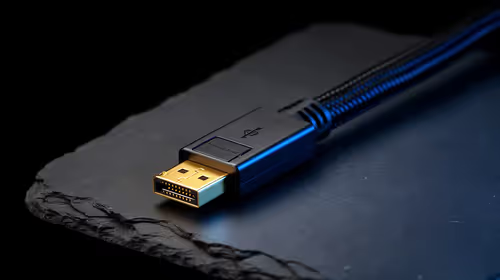
DisplayPort 2.1 and 1.4 differences matter when SA PC builders match GPUs, monitors, and refresh targets. Use this difference between displayport 2 1 and displayport 1 4 explained pc builders guide to avoid mismatched parts.
Read more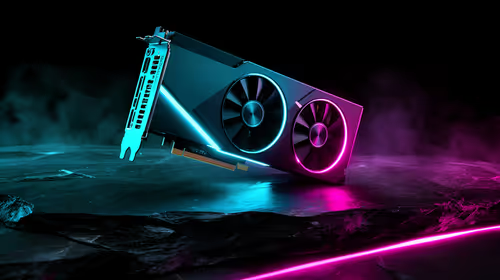
Ray tracing vs Path tracing depends on Strategy and sim games needs, platform limits, and budget fit. Compare compatibility, latency, upgrade path, and real setup constraints before choosing for an SA build.
Read more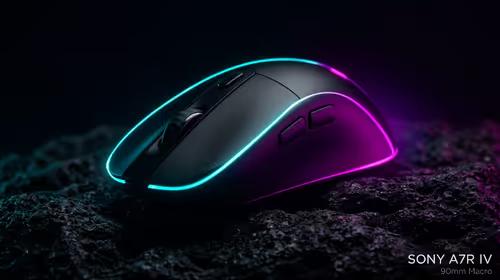
wireless mouse guide for Gqeberha gamers should be shortlisted around the job it must do. South African buyers should compare sensor, shape, weight, and wireless latency, warranty path, and upgrade room before treating any pick as best.
Read more
From 1 October 2026, WhatsApp Business Platform service replies in South Africa are expected to cost about $0.0076, or 12 cents, per delivered message.
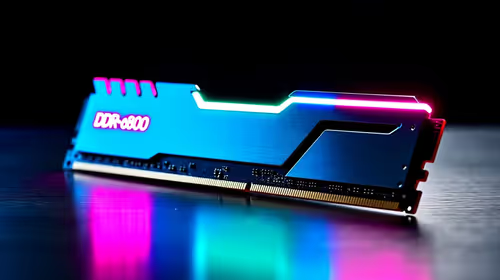
DDR5-8000 RAM Kits pros and cons depend on the build, budget, and workload. Weigh gaming needs, platform fit, power, cooling, warranty support, and South African pricing context before shortlisting it.
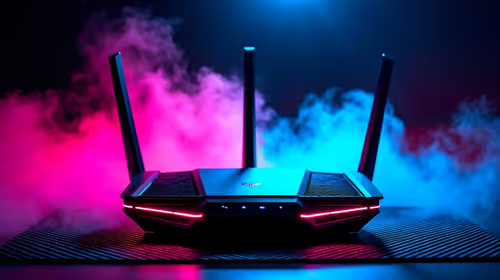
Wi-Fi 6E vs Wi-Fi 6 depends on AAA single-player gaming needs, platform limits, and budget fit. Compare compatibility, latency, upgrade path, and real setup constraints before choosing for an SA build.
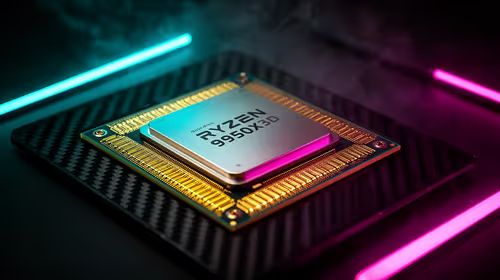
Ryzen 9 9950X3D dead pixel checks should isolate the panel first. Run colour fills, inspect the monitor menu, test another cable or input, and capture proof before linking it to the SA CPU upgrade.

YouTube will count public views from the first frame across video formats from 24 August, while earnings and eligibility remain tied to engaged viewing.
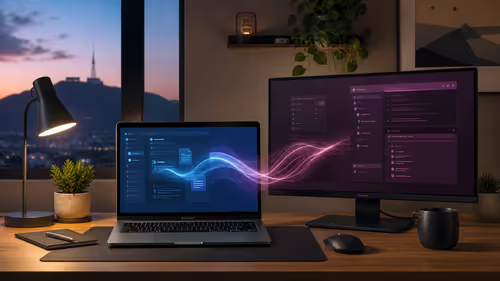
Canonical expects Ubuntu on WSL users to outnumber native Ubuntu desktop users before the end of 2026. The software is open source and runs inside supported Windows PCs.
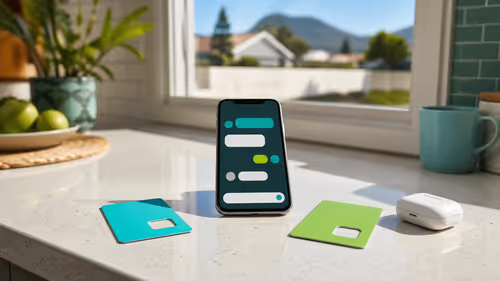
Telkom's daily bundles pair WhatsApp access with 10 all-network voice minutes. The R15 option includes 300MB, while the R17 option uses a fair-use threshold.
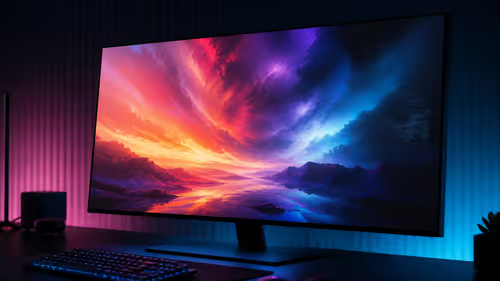
A 10,000-hour test found similar image retention across older and newer OLED TVs, while newer panels were brighter and more efficient. Local OLED monitors started at R9,999.
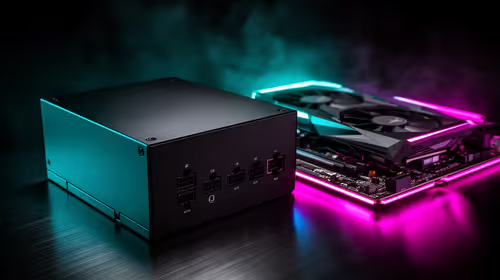
650W for RTX 5090 needs a full-build check, not a simple yes. Review GPU guidance, CPU draw, transient load, connectors, PSU quality, and upgrade plans before deciding.
PCIe 5.0 and PCIe 4.0 differ most in lane support, compatibility, and upgrade value for strategy and sim games. SA buyers should match the choice to their actual hardware and games.
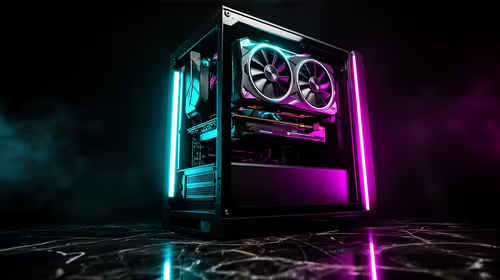
How to fix FPS drops Windows 11 RX 9070 XT starts with GPU drivers, overlays, power plans, and frame pacing checks. For SA gaming PCs, verify chipset updates, HAGS, refresh rate, thermals, and per-game graphics settings.
AM5 vs AM4 for video editing in 4K Difference explained is mostly about compatibility, budget, upgrade path, and setup fit. SA buyers should check device support and real needs before expecting a clear win from either option.