Quick Answer
Daisy-chained fans are significantly cleaner for cable management because they reduce three separate PWM cables and potentially three ARGB cables to one of each, cutting visible cable volume in the radiator zone by up to two-thirds. For enthusiast and showcase builds, daisy-chain is the preferred setup.
How Each Setup Looks Inside the Case 🔧
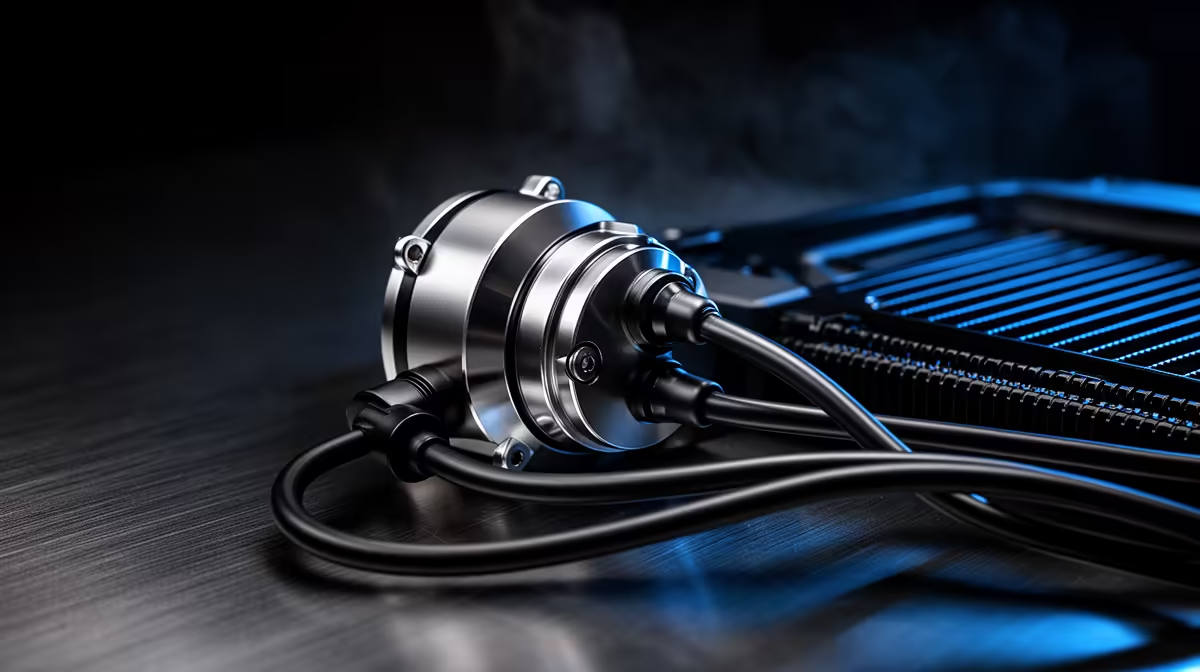
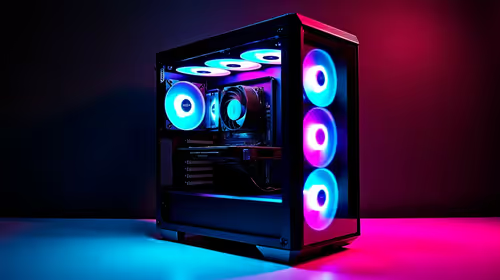
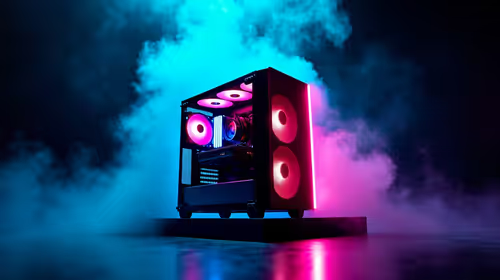
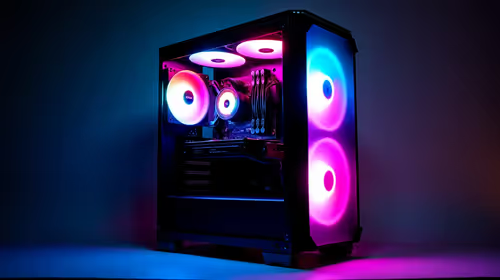
In a 360mm AIO with three separate fan cables, each 120mm fan runs an individual PWM cable to either the motherboard fan headers or to a fan hub. In a typical mid-tower top-mount installation, that means three cables dropping from the top radiator zone down to the board or hub, plus up to three ARGB cables. Six cable runs from a single component is significant clutter. Daisy-chained fans link internally from fan to fan; only the first fan in the chain sends a single cable to the motherboard header, and only one ARGB cable connects to the hub. In a top-mounted 360mm radiator installation, this reduces visible cabling from the top panel area to two cables, easily hidden behind the radiator mounting points and routed through a single grommet.
The Trade-Offs: Control and Flexibility 💡
Separate fan cables give each fan its own independent speed signal from the motherboard. In practice, running different speeds on the three fans of a single radiator offers minimal thermal benefit because the coolant flowing through all three radiator sections is at the same temperature. The more relevant trade-off is motherboard header availability: if the motherboard has only one or two CPU_FAN headers, separate cables require a fan hub, adding another component and another cable run. Daisy-chained fans eliminate the hub requirement entirely, simplifying the build and reducing component count.
Practical Build Advice for SA Builders 🌬️
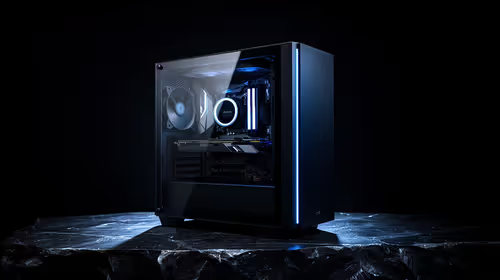
For a clean showcase build inside a tempered glass mid-tower, daisy-chained fans are clearly the better aesthetic choice. Fewer cables from the radiator zone mean cleaner routing and a less cluttered top section, one of the most visible areas when viewed from the front. For a utility build where aesthetics are secondary, separate fans provide slightly more tuning flexibility without significant downside. When buying an AIO in South Africa, check the product specification for fan connection type. Models with daisy-chain integration have become standard on premium 360mm AIOs, while some budget models still ship with individual cables to keep costs down.
Route the Daisy-Chain Exit Closest to the Grommet ⚡
When mounting the radiator, position the fan chain so the single exit cable is closest to the routing grommet you will use. On a top-mounted 360mm radiator, the rear fan position is typically closest to the top-rear grommet. Planning fan orientation before tightening radiator screws avoids rerouting the cable across the full radiator length after mounting.
FAQ
Can daisy-chained fans be controlled individually?
In hardware, daisy-chained PWM fans share a single control signal and cannot be individually speed-regulated at the motherboard level. Some AIO companion software platforms (NZXT CAM, Corsair iCUE) provide software-layer individual fan control through the USB link to the pump controller, emulating independent control via software.
Are daisy-chained AIO fans more expensive than models with separate cables?
Not as a separate cost factor; daisy-chain capability is a design feature included in the AIO package price. Budget AIOs are more likely to include separate cable fans to reduce manufacturing costs.
Does a daisy-chain setup affect fan performance compared to direct header connections?
No. The PWM control signal and power delivery through a daisy-chain are electrically identical to direct connections. Fan speed, noise, and airflow output are determined by the fan's motor and blade design, not the cable routing method.
Building a clean AIO setup and want daisy-chained fans from the start?
Browse Evetech's 360mm AIO cooler range to find models with integrated daisy-chain fan connections for the cleanest possible build, stocked locally with fast delivery.