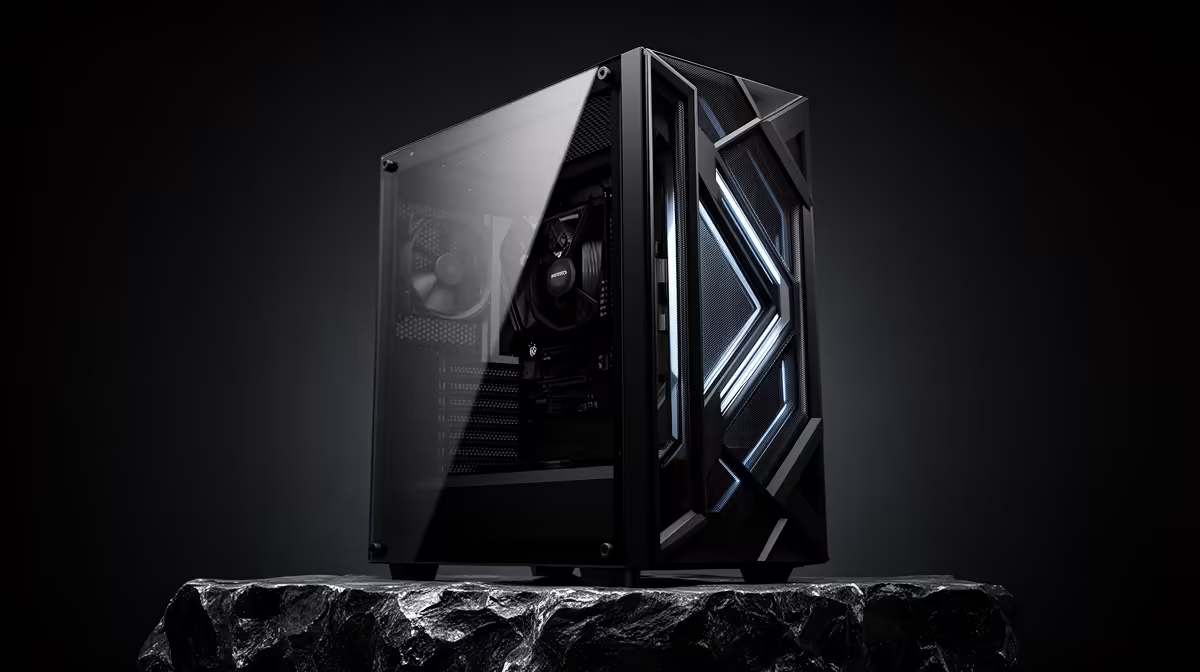
Ryzen 5 5500 at R1,100 suits a data science student building an entry gaming pc around coding, coursework, light modelling, and a sensible mid-tower upgrade path. Start with the parts that decide heat, space, and budget before worrying about flashy case extras.
Mid-tower parts to prioritise first
The MSI A520M-A Pro at R700 is the base that keeps the build practical. Its A520M board size suits many mid-tower layouts, leaving room for cleaner cable routing and easier access when a student later adds storage or improves cooling.
The ASUS RX 7600 8GB at R4,650 gives the build a real graphics card target. That 8GB spec matters because a mid-tower case should have enough GPU clearance and front airflow for a card used across study, gaming breaks, and visual workloads.
Student desk case choice in South Africa
On a student desk, the case should be easy to open, simple to clean, and not so cramped that upgrades become a weekend project. Ryzen 7 7800X3D at R4,800 is a stronger CPU option, so a mid-tower with tidy airflow makes more sense than chasing the smallest possible box.
Palit RTX 5060 at R4,800 is another graphics option to plan around. A mid-tower choice should leave comfortable card space, keep the power area tidy, and avoid blocking airflow when the desk setup has books, notes, and peripherals around it.
Ready to choose the right gaming pc?
Use Ryzen 5 5500 at R1,100 as the student desk benchmark, then check whether its listed spec matches the space, workload, and upgrade path.