Quick Answer
The features that genuinely matter on a premium 32-inch 4K OLED gaming monitor are panel type (WOLED vs QD-OLED), refresh rate (240Hz minimum), HDR certification (DisplayHDR True Black 400 or higher), OLED care functions, connectivity (DisplayPort 2.1 and HDMI 2.1), and stand ergonomics. Everything else is secondary.
OLED Panel Type: WOLED vs QD-OLED 🖥️
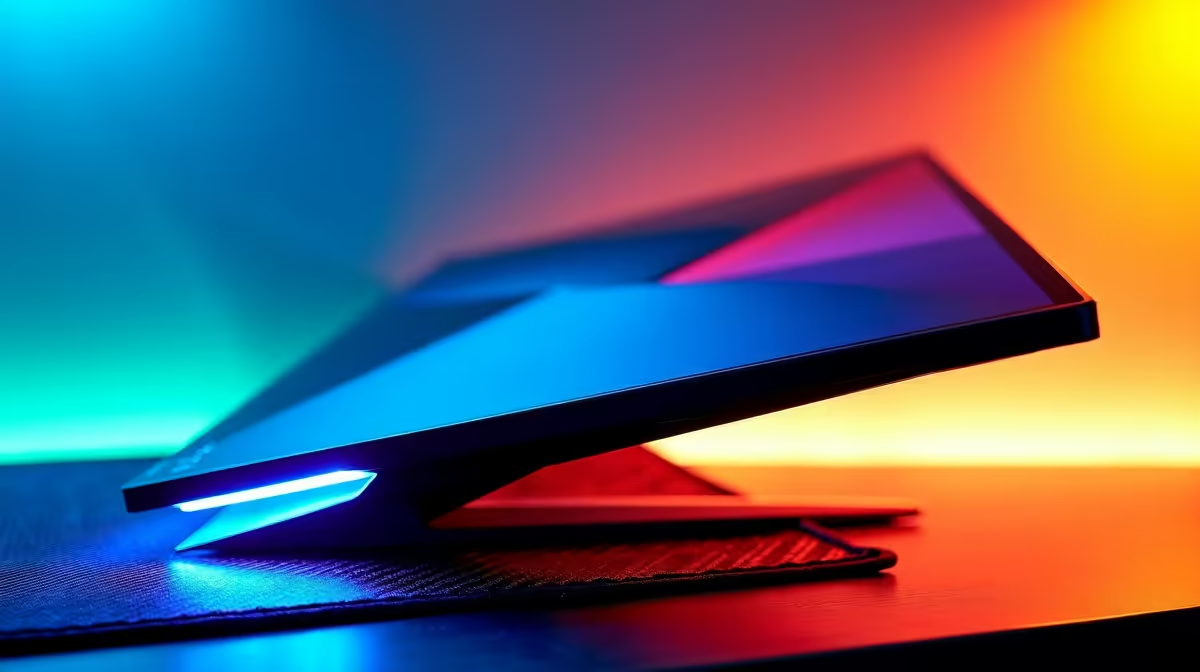
The two competing OLED architectures at 32 inches are LG's WOLED (White OLED with colour filters) and Samsung's QD-OLED (quantum dot layer over blue OLED). WOLED delivers more uniform brightness across large colour fields and is more widely available at 32-inch 4K. QD-OLED achieves higher peak brightness (up to 1,300 nits in highlights) and typically covers a wider colour gamut, benefiting HDR scenes with specular highlights. Both deliver infinite contrast and under-0.03 ms response. For most buyers the choice comes down to brand ecosystem and price rather than a meaningful image quality gap. Monitors in this category start at R18,000 and reach R28,000 at Evetech depending on features.
Refresh Rate, HDR Certification and OLED Care 🎮
At the premium tier, expect 240Hz as a minimum with some panels offering 480Hz via Dual Mode. DisplayHDR True Black 400 is the correct certification for OLED displays, requiring 400 nits peak HDR brightness and a black level below 0.0005 nits. OLED care features to look for include automatic pixel refresh cycles, pixel shift (micro-movement preventing static image retention), ABL (automatic brightness limiter), and screensaver activation on idle. These functions are non-negotiable on an OLED panel used 4 to 8 hours daily.
Connectivity, Stand and Practical Details 📡
For a 32-inch 4K 240Hz OLED, connectivity must include DisplayPort 2.1 for native 4K 240Hz 10-bit and HDMI 2.1 for PS5 or Xbox Series X at 4K 120Hz. A built-in USB 3.0 hub with 2 to 4 downstream ports plus USB-C upstream adds desk convenience. On the stand, height adjustment of at least 100 mm, tilt from -5 to 20 degrees, and 90-degree pivot differentiate premium from budget models. A 100x100 mm VESA pattern for third-party arm mounting is practical for South African home-office desks where cable management matters.
Run the Factory Calibration Profile From Day One ⚡
Premium 32-inch 4K OLED monitors often ship with a factory calibration report and a bundled ICC colour profile. Install the ICC profile in Windows Colour Management on day one to get accurate colours instead of the default factory preset. This makes a visible difference for colour grading, photo editing, and HDR gaming accuracy.
FAQ
Is DisplayHDR True Black 400 necessary, or will DisplayHDR 400 suffice?
DisplayHDR True Black 400 is specific to self-emissive displays like OLED and requires black level below 0.0005 nits. Standard DisplayHDR 400 applies to LCD panels and does not meet this threshold. On any OLED monitor, look for DisplayHDR True Black certification.
How important is the USB hub on a premium OLED monitor?
Very practical. A 32-inch 4K OLED is typically the centrepiece of a premium desk setup. A USB 3.0 hub eliminates reaching behind a PC tower for peripheral connections, simplifying cable management in South African home-office setups where PC placement is often under the desk.
Does a premium 32-inch 4K OLED need a separate KVM switch?
Not if the monitor includes Auto KVM. Auto KVM automatically routes keyboard and mouse input to whichever device has screen focus, allowing seamless switching between a gaming PC and a work laptop through the monitor without a separate switch.
Looking for a premium 32-inch 4K OLED gaming monitor?
Evetech stocks top-tier OLED gaming monitors with full certification and local warranty, browse the range online or visit the Evetech store.