Quick Answer
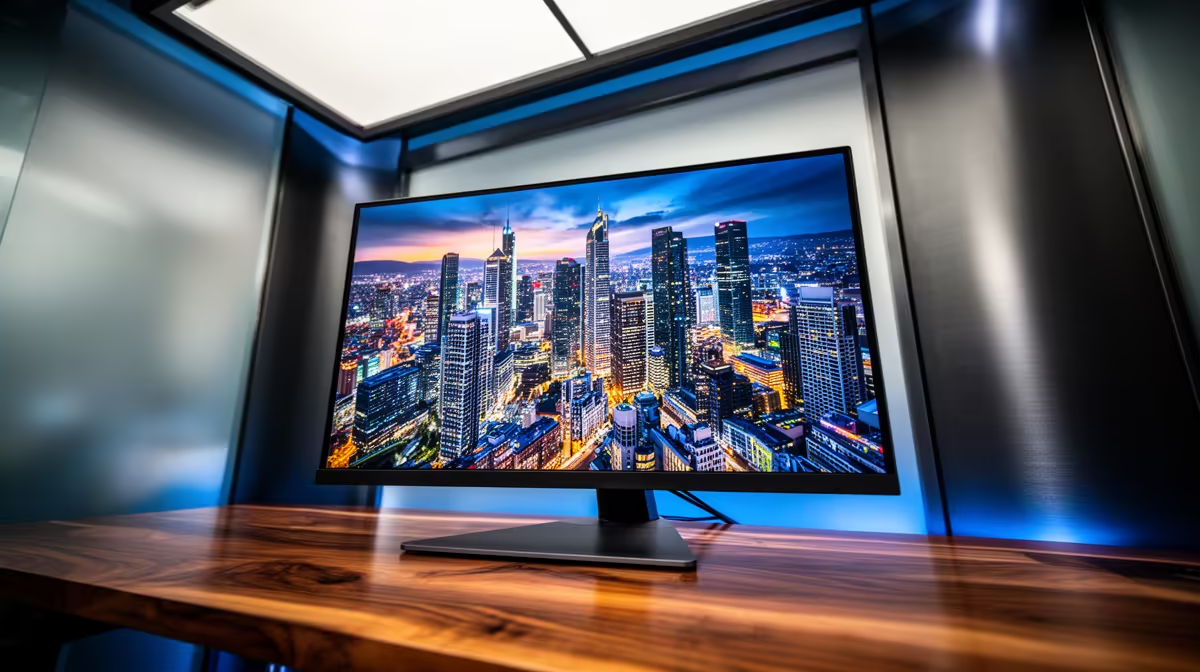
QHD IPS monitors are the most practical upgrade for South African work-from-home professionals who also game. The combination of 1440p resolution, accurate wide-angle colours, and 144Hz or higher refresh rates handles video calls, design work, and gaming without needing separate displays.
Why WFH and Gaming Demand the Same Things From a Monitor 🖥️
Work-from-home setups in South Africa are permanent fixtures across Johannesburg, Cape Town, and Durban. Most single-monitor desks need one screen that handles Zoom calls (which benefit from colour accuracy), document editing (which needs sharp text), and gaming after hours (which needs fast response). QHD IPS panels deliver on all three. Text at 1440p on a 27-inch screen is noticeably crisper than 1080p, reducing eye fatigue during long video sessions. IPS panels maintain colour accuracy across viewing angles wider than 30 degrees, which matters when sharing your screen with colleagues or clients. The response time on modern IPS panels reaches 1ms GtG with gaming mode enabled, so switching from a Teams meeting to a gaming session needs no display change.
The South African WFH Context 🇿🇦
Fibre from providers like Vumatel, Openserve, and Frogfoot has made high-quality video calling accessible in most urban SA suburbs. At 1440p, screen sharing over Zoom or Teams is sharp enough that clients can read 10-point text in a shared document. SA-standard warranties of two to three years through local distributors ensure panel faults have a resolution path without international shipping hassle.
What to Prioritise When Buying 🔧
For a dual WFH and gaming role, prioritise features in this order. Resolution: QHD at 27 inches. Colour: 95 percent sRGB minimum with Delta E below 2. Refresh rate: 144Hz minimum with FreeSync Premium or G-Sync Compatible. Connectivity: DisplayPort 1.4 for the gaming GPU, HDMI 2.0 or higher for a laptop, and a built-in USB hub. Ergonomics: height adjustment, tilt, and swivel since WFH users sit eight or more hours at a desk. Panels from brands stocked at Evetech in this category range from R5,500 for a solid 144Hz IPS to around R10,000 for a 165Hz model with HDR and USB-C.
Use sRGB Mode for Work, Gaming Mode for Play ⚡
Most QHD IPS monitors have colour-profile presets. Set sRGB as your default for work to keep colour accurate for client-facing tasks. When switching to gaming, change to the Game preset which enables lower input lag and faster overdrive. Many panels remember the last preset per input, so plugging your gaming PC into DisplayPort and work laptop into HDMI lets the monitor switch profiles automatically.
FAQ
Is a 144Hz QHD IPS monitor noticeably faster than a 60Hz panel for non-gaming work?
Yes. Scrolling through documents and spreadsheets at 144Hz is visually smoother than at 60Hz, reducing eye strain from staccato scroll motion. Most users who switch from 60Hz notice the difference within minutes, even in non-gaming tasks.
Do I need USB-C on a WFH gaming monitor in South Africa?
USB-C with Power Delivery lets modern laptops connect with a single cable for display, data, and charging. Many SA professionals carry a laptop between home and office, and a single-cable desk connection saves setup time. Gaming monitors with USB-C often support 65W to 90W PD, enough to power most work laptops.
How does IPS glow affect work tasks?
IPS glow appears as a milky haze in corners on dark backgrounds. For document and spreadsheet work on white backgrounds it is essentially invisible. It is most noticeable when watching content in a dark room. If dark-scene glow bothers you, a VA panel offers superior contrast but with slower pixel response for gaming.
Working from home and gaming in the same chair?
Evetech stocks QHD IPS monitors from 144Hz to 240Hz that handle both roles without compromise, available for delivery across South Africa.