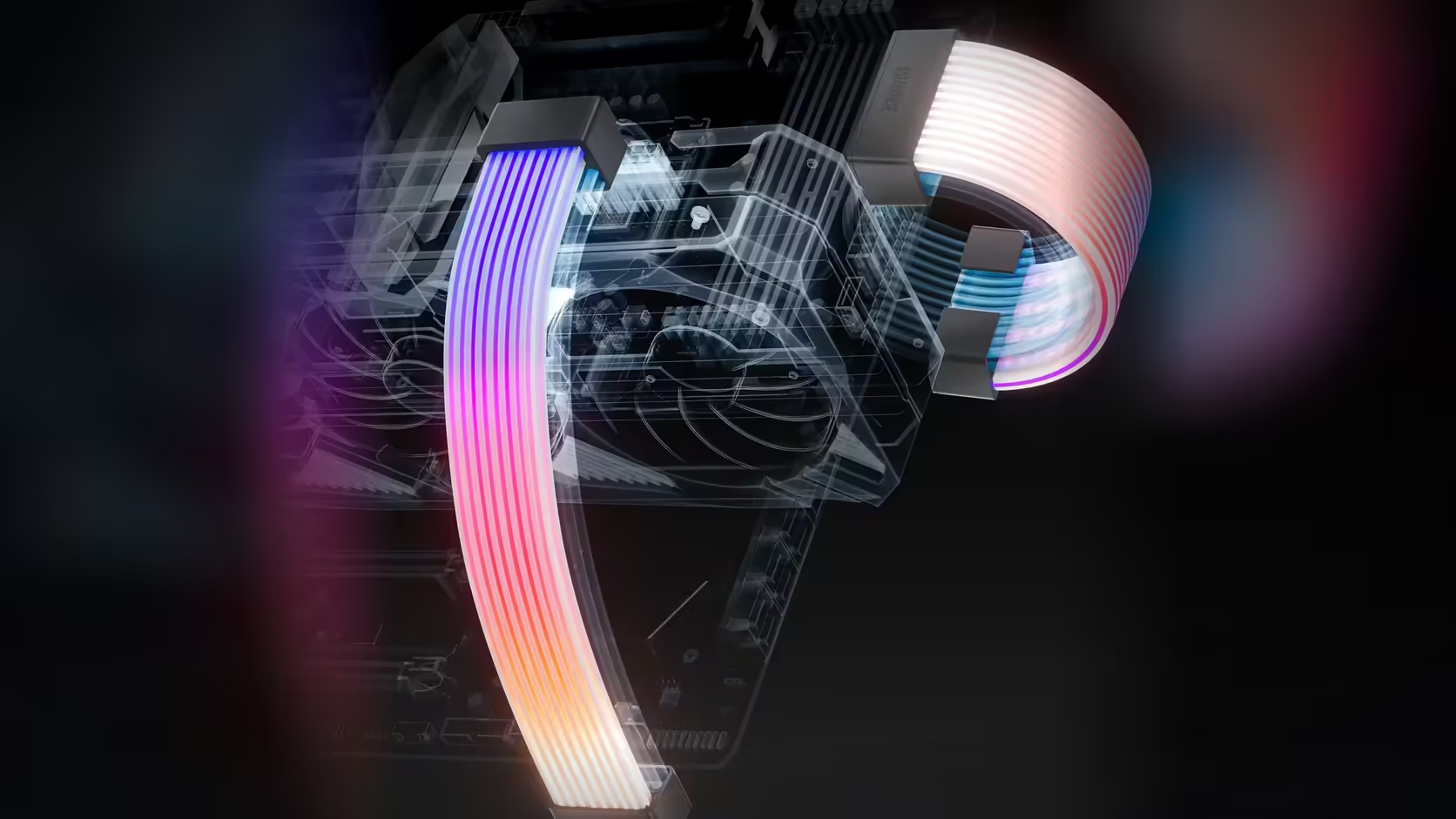
Addressable lighting can go in more than one visual direction even when the LED count and the connection method are identical. AsiaHorse's Aurora ARGB cover kit chose texture over a solid block of colour, styling its LEDs as individually glowing strands rather than one continuous bar of light - a decision that shapes how the whole product reads once it's clipped onto a cable run and switched on.
Quick Answer
Aurora's addressable LEDs are styled as individually glowing strands rather than a single solid light bar. The 24-pin cover carries 81 of them and the eight-pin GPU cover carries 80, each individually controllable rather than fused into one continuous block. On a long span like the graphics cover, that styling difference between strand and bar is easy to see once the lighting is running.
✨ What the strand styling actually looks like
Rather than one uninterrupted band of colour running the length of the shell, Aurora presents separate, distinct points of light along it. The visual result is texture rather than a solid mass - a run that reads as individual strands laid side by side, each glowing on its own, instead of a single lit surface with no internal structure to it.
🔢 The LED counts behind the effect
81 addressable LEDs populate the 24-pin cover, and 80 populate the graphics cover - close enough between the two that they read as a genuinely matched pair, even though the numbers aren't identical. Each LED is independently controllable, which is what makes patterns able to travel along a shell rather than the whole span simply changing colour all at once.
📏 Why strand styling suits long spans particularly well
A long, uninterrupted bar of solid colour can start to dominate a case interior once it runs the full length of something like the graphics cover - it becomes a single overwhelming block rather than something the eye can read as detail. Separated strands avoid that; even at length, the run still reads as a cable being lit rather than turning into a slab of colour with no texture to it.
Can the effect still be made to look like a solid bar?
Yes, if that's the preference - the lighting software driving the LEDs can set every one of them to an identical colour and brightness, producing something close to a uniform band even though the underlying hardware is built from individually addressable points. The strand styling is a default look, not a hard limit on what's achievable.
🎨 How shell colour changes the effect
Against a black shell, the strands show strong contrast against a dark background - each one reads clearly as an individual point of light. Against white, the effect diffuses more, with the shell itself brightening and the strands blending into a lighter overall surface rather than standing out sharply. Neither is better than the other outright; it comes down to what the rest of the interior looks like and how much contrast is wanted.
🔗 Are the two shells' effects synchronised?
Yes - both draw from the same shared 5V 3-pin header, so they run the same lighting scheme together rather than displaying independently. A pattern set to travel along the board cover will also travel along the graphics cover, rather than the two running separate, unrelated effects.
🔍 Does the strand count really differ between the two shells?
By one - 81 on the board cover against 80 on the graphics cover. That small gap is a function of each shell's own length rather than any intentional asymmetry, and it's close enough that the pair reads as matched rather than mismatched once both are running.
🕹️ Setting a pattern rather than a static colour
Because every LED in both shells is individually addressable, the kind of effect a board's own lighting software offers - a colour wave travelling end to end, a slow breathing fade, a sequence that cycles through several hues - plays out visibly on this hardware in a way it simply can't on a fixed, single-colour strip. Whether that's worth using day to day is a matter of taste; a static colour set once and left alone is a perfectly reasonable choice too, and it's the one that tends to read as calmer in a build already carrying several other lit components. The strand styling means either approach - a moving pattern or a fixed colour - looks deliberate rather than accidental, since the individual points of light hold their shape clearly in both states.
Evetech's case lighting range shows how this strand-based styling stacks up next to other addressable products, and the cable management accessories cover tidying the run around wherever the strands end up sitting.
A build already carrying several lit components in a single style - a matching row of fans, say, all running the same strobe or fade - might find a strand-based cable cover looks slightly out of place unless the effect is set to match. Deliberately syncing the pattern across every lit part, rather than leaving each to default to its own scheme, is usually what separates a build that reads as coordinated from one that simply has a lot of individual light sources switched on.
Frequently Asked Questions
What does the strand styling actually look like once lit?
Separate points of light spaced along the shell, rather than one uninterrupted band, giving the run a textured rather than solid appearance.
How many LEDs are involved across the kit?
The 24-pin cover carries 81 addressable LEDs and the graphics cover carries 80, each independently controllable.
Does strand styling suit long cable spans?
Generally, yes - a long run of solid light can dominate a case, where separated strands keep the span readable as a cable rather than a block.
Can the strands be made to look like one solid bar?
Yes - the lighting software can set all the LEDs to a matching colour and brightness, producing a near-uniform effect if that's preferred.
Does shell colour affect how the strands appear?
Black gives the strands stronger contrast against a dark interior, while white diffuses them into a brighter, more blended overall surface.
Are both shells synchronised together?
Yes - they share one header connection, so both follow the same lighting scheme rather than running two independent effects.
Does the strand count genuinely differ between the two shells?
By one - 81 on the 24-pin cover against 80 on the graphics cover, close enough that the pair reads as matched.
Curious how strand lighting looks on a real cable run?
Browse Evetech's case lighting range to compare styles before committing to a colour.