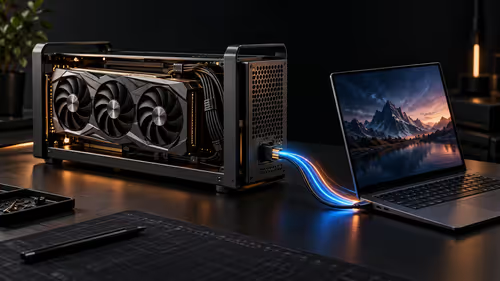
Staring at a sluggish viewport or a render progress bar that barely moves? For South African digital artists, 3D modellers, and video editors, that frustration is all too real. Your Graphics Processing Unit (GPU) is the heart of your creative machine, and choosing the right one can feel like a high-stakes decision. This guide breaks down the best GPU for artists in South Africa, helping you find the perfect balance between raw power and your hard-earned Rands. 🎨
Why Your GPU Is More Than Just a Gaming Toy
While many GPUs are marketed for gaming, their role in creative workflows is fundamentally different. For artists, a powerful graphics card accelerates everything from real-time 3D rendering in Blender and fluid video scrubbing in Premiere Pro to applying complex filters in Photoshop. It’s about speeding up your entire creative process, not just hitting high frame rates.
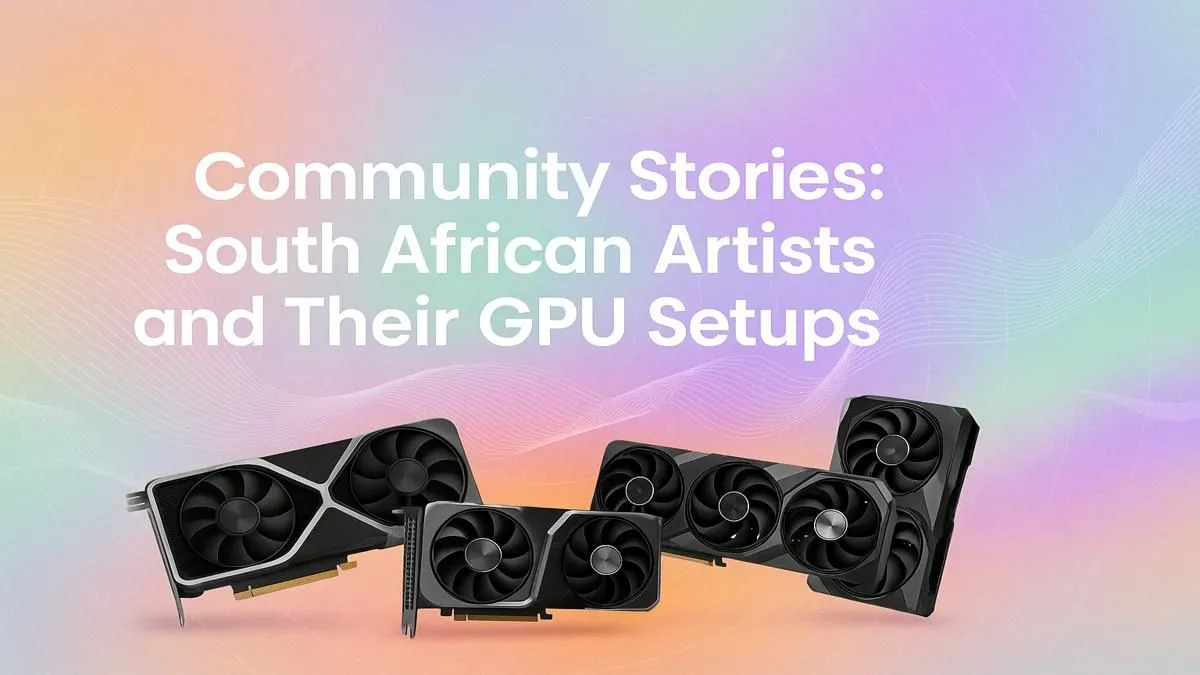
A good creative GPU cuts down waiting time and removes technical barriers, letting your ideas flow without interruption. Investing in the right card means more time creating and less time staring at loading screens. Understanding the landscape of available NVIDIA and AMD graphics cards is the first step toward a smoother workflow.
Gaming vs. Workstation GPUs: The SA Breakdown
The biggest question for any artist is where to invest: a high-end gaming card or a specialised professional one? The answer depends entirely on your work and budget.
The Powerhouse Value of Gaming Cards
For most freelancers and small studios in South Africa, a gaming GPU offers unbeatable performance-per-Rand. Modern cards from NVIDIA and AMD are incredibly powerful and handle a huge range of creative software with ease.
- NVIDIA GeForce: Thanks to its CUDA core architecture, NVIDIA's GeForce lineup is often the top choice for artists using software like Adobe Creative Suite, Blender (Cycles renderer), and V-Ray. The Tensor Cores in RTX cards also offer AI-powered features like denoising, which dramatically speeds up render previews.
- AMD Radeon: Don't count AMD out. AMD's Radeon cards provide competitive performance, especially in programs like DaVinci Resolve and certain DirectX-based applications. They often represent excellent value, giving you a lot of graphical horsepower for your money.
When to Go Pro with a Workstation Card
So, when does it make sense to spend more on a professional card? If your livelihood depends on absolute stability and certified performance in niche software, a workstation GPU is a wise investment. These cards are built for marathon rendering sessions and complex scientific or CAD workloads.
The key benefits of professional workstation GPUs include optimised drivers for stability in apps like SOLIDWORKS, CATIA, and Siemens NX, plus features like ECC VRAM for error correction. For large-scale architectural visualisation or high-end VFX, this reliability is non-negotiable. ✨
Check Your Software's Pulse ⚡
Before you buy, do a quick search for "Puget Systems [Your Software Name] GPU benchmarks". Puget Systems provides incredibly detailed, real-world performance comparisons for creative applications. This data can reveal whether your primary program prefers NVIDIA's CUDA or AMD's architecture, helping you make a much more informed decision.
Key Specs to Look for in a GPU for Artists
When comparing cards, it's easy to get lost in the jargon. Here are the three things that matter most for a creative GPU for artists in South Africa.
1. VRAM (Video RAM)
Think of VRAM as your GPU's personal workspace. The more you have, the larger and more complex the scenes, textures, and video timelines it can handle at once.
- 8GB: The absolute minimum for 1080p/1440p video editing and basic 3D work.
- 12GB - 16GB: The sweet spot for most artists, comfortably handling 4K video, high-resolution texturing, and moderately complex 3D scenes.
- 24GB+: Essential for professionals working with 8K video, photogrammetry, or massive 3D environments.
2. Core Count & Architecture
This is the raw muscle. For NVIDIA, you're looking at CUDA Cores; for AMD, it's Stream Processors. More cores generally mean faster rendering. Just as important is the card's architecture (e.g., NVIDIA's Ada Lovelace or AMD's RDNA 3), as newer generations are more efficient and powerful, even with similar core counts.
3. Software Optimisation
As mentioned, some software is simply built to run better on specific hardware. Adobe and most 3D renderers have a long history of favouring NVIDIA's CUDA platform. Always double-check which brand your most-used applications are optimised for before making a final choice. This is a critical factor when choosing a GPU for artists. 💻
Ready to Build Your Creative Powerhouse?
Choosing the right GPU is a critical step, but it's just one part of a PC that can keep up with your imagination. From first renders to final exports, the perfect setup is waiting. Explore all PC Components and build the machine for your next masterpiece.