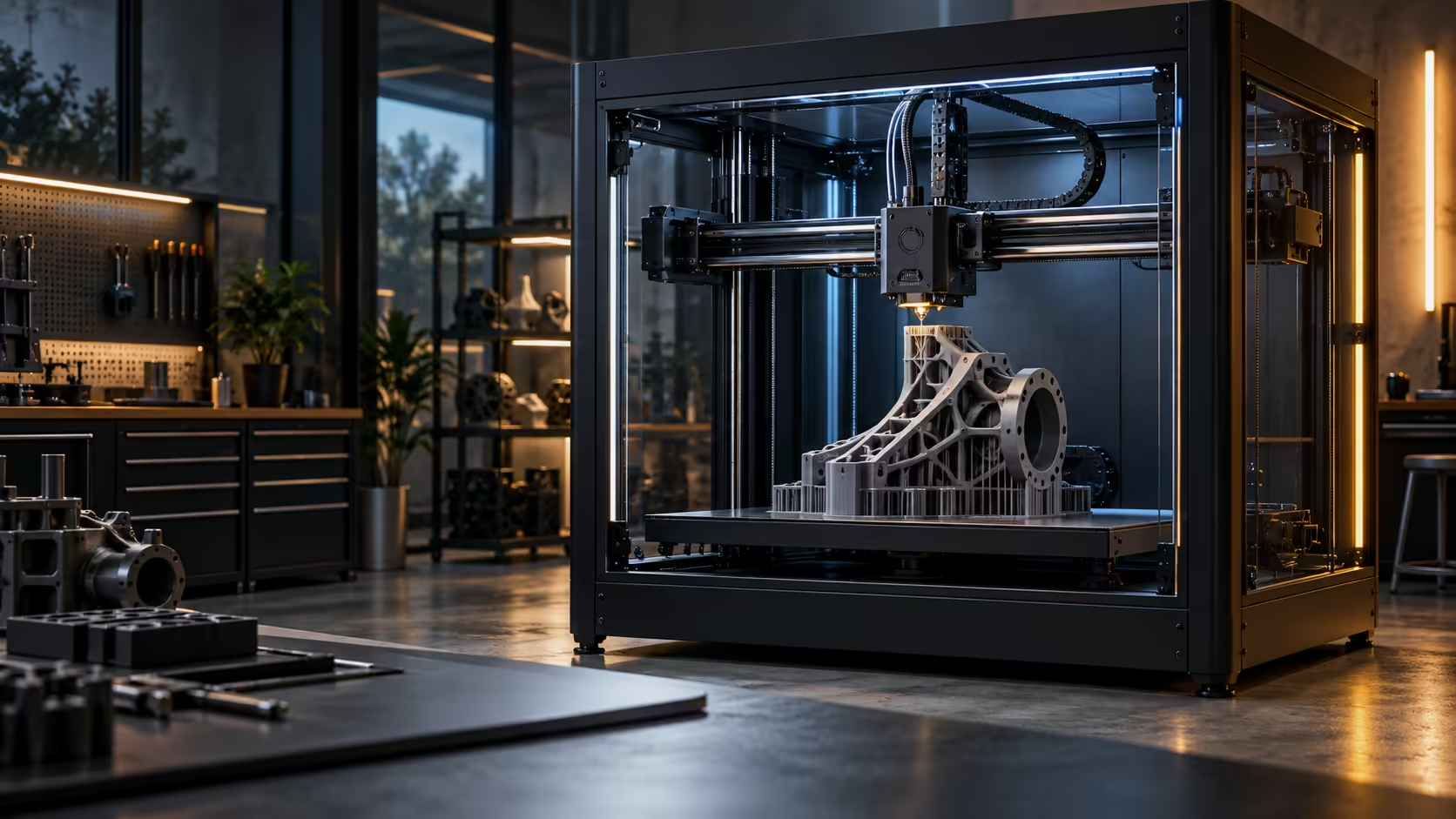
The printer's price tag is the number everyone quotes and the one that undercounts the real cost by the most. Budgeting for a large high-speed 3D printer properly means pricing the printer and everything it consumes in its first few months, not just the box.
Quick Answer
Set aside roughly R18,000 to R20,000 all in for the first few months of real ownership, of which R13,999 is the Creality K1 Max itself. The rest covers a few spools of filament, a spare hardened nozzle and a second build plate, all of which get used within the first few months regardless of how carefully you print. Buying locally keeps the warranty local too, where a private import means paying customs and shipping a second time on every return trip.
💰 Where the extra R4,000 to R6,000 actually goes
Filament is the recurring cost nobody budgets for properly. A 1kg spool runs through faster than expected once you are printing large parts regularly, and 3 or 4 spools of a mix of PLA, PETG and something more specialised covers a realistic first few months without constantly re-ordering.
A spare hardened nozzle belongs in that budget from day one rather than after the first one wears out, since abrasive filaments and high-temperature materials both shorten a nozzle's life, and being without one mid-project stalls work longer than the part costs. A second build plate, PEI or glass depending on preference, means one can be swapped in while the other cools or gets cleaned, which matters more on a machine you are actually using often.
🛃 Local warranty versus the private-import maths
A private import can look cheaper on the printer line alone, until something needs sending back. Every return trip through customs adds duties and shipping again, on top of the weeks a shipment takes each way, and a large printer is not a cheap or fast thing to post overseas twice.
Buying through a local retailer keeps that whole process inside South Africa, and a claim resolved by courier here takes days rather than the weeks an international return usually costs. Browse the 3D printer range alongside your filament budget rather than in isolation, check filament pricing locally before assuming an import saves money once postage on consumables is added in, and open box deals are worth checking if the printer line item is the part of the budget under the most pressure.
📅 Spreading the spend across the first three months
Buying everything on day one is not the only approach, and for many buyers it is not the best one either. The printer itself, the essential first plate and a couple of starter spools are the only genuinely day-one purchases; a spare nozzle, a second plate and a wider filament selection can reasonably wait until the first month of actual use reveals what you are printing most.
This staged approach, spread across the first 2 to 3 months, also protects against buying the wrong spares before you know your own habits. Someone printing mostly small PLA prototypes has very different second-month needs to someone running ABS enclosures daily, and guessing at both in the first week often means money spent on a spare that never gets used while something that actually breaks down early was never budgeted for at all.
Keep a running note of what actually gets used up in those first weeks rather than trying to predict it from the spec sheet alone. A drawer of unopened spares bought on a guess is money sitting idle, while the same amount spent on the specific nozzle hardness or the specific filament colour a project actually needs is money that keeps a real job moving.
🧮 What a full first year realistically costs
Beyond the first few months, ongoing costs settle into a rhythm: filament use tracks roughly with how often the machine runs, a nozzle every few months under moderate abrasive use, and an occasional belt or fan replacement as the machine accumulates hours. None of these are large individually, but added up they typically run to a further R3,000 to R5,000 across a first full year for a printer used several times a week.
Treating the printer as a R13,999 purchase and nothing more is the single most common budgeting mistake buyers make, and it is also the one most easily avoided simply by planning the first year's consumables alongside the machine itself rather than reacting to each cost as it appears, one surprise invoice at a time, whenever a spool runs dry or a nozzle finally gives out mid-project.
Frequently Asked Questions
Is R13,999 the real cost of owning a large 3D printer?
No, it is the starting cost; budget an additional R4,000 to R6,000 for filament, a spare nozzle and a second plate in the first few months.
Does buying locally actually save money over an import?
On the printer price alone, not always; once a warranty claim or a customs charge on a return is factored in, local ownership usually wins.
How much filament does a large printer use in a typical month?
It varies with how often you print, but three to four kilogram spools covers a realistic first few months of regular use.
Is a spare nozzle really necessary from day one?
It is worth having on hand, since a worn nozzle mid-project stops work for longer than the part itself is worth.
Should I buy everything at once or spread purchases out?
Spread most of it out; buy the printer, a starter plate and a couple of spools immediately, then add a spare nozzle and a wider filament range once your first month of actual use shows what you print most.
What does a full first year of ownership typically add up to?
Beyond the initial R18,000 to R20,000, expect a further R3,000 to R5,000 in filament, an occasional nozzle and small wear parts across a full year of regular use, more if the machine runs daily rather than a few times a week.
Does the printer's warranty cover consumables like nozzles and filament?
No, a standard warranty covers manufacturing defects in the machine itself; nozzles, filament and build plates are wear items and consumables that fall outside what any printer warranty typically protects.
Working out a real budget before you buy?
Price the printer alongside its first few months of filament and spares, not on its own.