Quick Answer
For most South African gaming builds, spending R1,500 to R2,500 on a mid-tower ATX case delivers the best balance of features, airflow, and build quality. Budget cases under R1,000 compromise on cable management, fan quality, and panel stiffness. Spending above R3,500 adds premium aesthetics and ergonomics but delivers no measurable performance gain for gaming.
What R700 to R1,200 Cases Offer and Where They Fall Short 💰
Entry-level mid-tower ATX cases in this range are built from thinner gauge steel (0.5mm to 0.6mm), which flexes noticeably when the side panel is removed or the case is carried. Fan quality tends to be the weakest link: pre-installed fans in budget cases often use sleeve bearings that become noisier after 12 to 18 months. Cable management channels are shallow, typically under 15mm, making it difficult to route a full modular PSU cable set cleanly behind the motherboard tray. For a student build with an RTX 5060 and a Ryzen 5 9600, a R900 case is functional and keeps build cost down, leaving budget for the GPU and RAM where it matters.
The R1,500 to R2,500 Mid-Range Sweet Spot 🔧
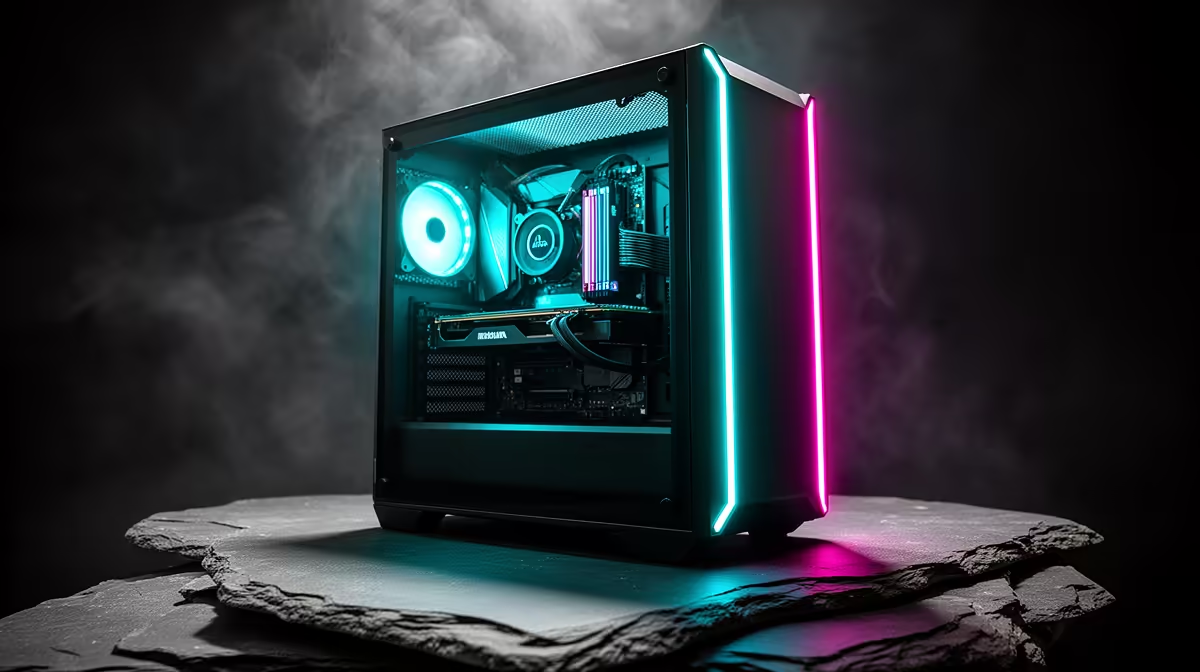
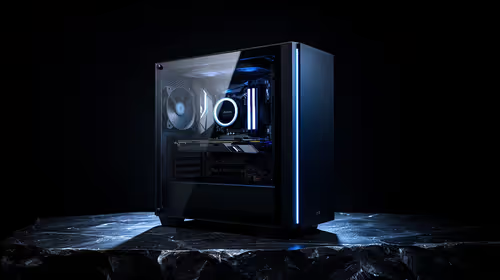
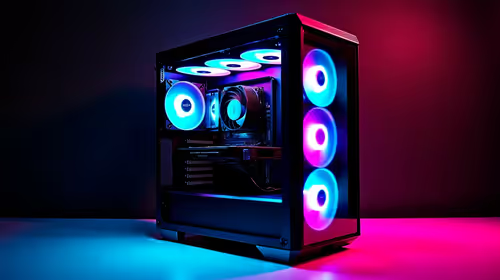
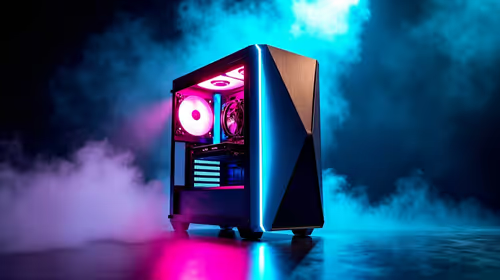
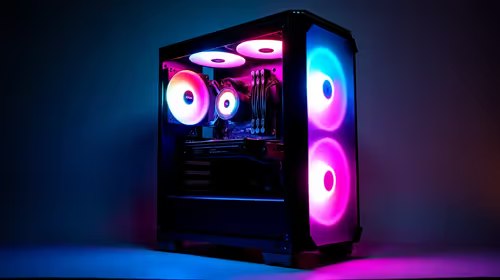
In this price band, cases step up to 0.7mm to 0.8mm steel or aluminium accents, tempered glass side panels, ARGB fans with 5V 3-pin headers, mesh front panels for strong intake airflow, and cable management zones of 20mm to 30mm. GPU clearance reaches 380mm to 420mm, accommodating RTX 5080 and RTX 5090 partner cards without concern. Radiator support commonly includes 360mm front and 240mm or 360mm top options. For a gaming build in the R20,000 to R35,000 total budget range, this mid-range case bracket is the appropriate allocation, freeing funds for components that directly affect frame rates.
When the Premium R3,000 to R5,000 Tier Makes Sense 🌟
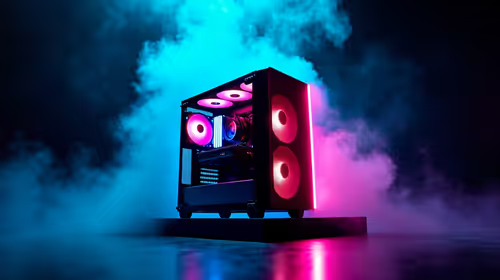
Premium cases justify their cost in specific situations. Creator and workstation builds that are opened frequently for drive swaps or GPU upgrades benefit from tool-less panel removal, modular drive trays, and wider cable management zones. Quiet builds prioritising low noise use sound-dampened panels and larger slow-spinning fans. Showpiece builds displaying under desk lighting or at LAN events benefit from curved tempered glass, dual glass panels, and integrated ARGB controllers. For a pure gaming build used daily on a desk, a R1,800 to R2,500 case is the ceiling of value, with any additional spend delivering aesthetic rather than functional returns.
Allocate Case Budget Last ⚡
When planning a PC build budget, lock in GPU, CPU, RAM, and storage costs first. The case is the last component to finalise. A case cannot overclock your CPU or add frames, but it can consume budget that would otherwise fund a meaningful GPU tier upgrade. Spend the minimum that meets your airflow, clearance, and aesthetic requirements.
FAQ
Do more expensive cases improve gaming performance?
No directly measurable impact on gaming frame rates. Better airflow in a mid-range case can reduce GPU throttling by 1 to 3 degrees compared to a sealed budget case, which may add a fraction of sustained boost performance, but this is marginal compared to GPU or RAM upgrades.
Is a second-hand case a good option in South Africa?
Potentially, if the tempered glass panel is intact and the case was not dropped. Check the fan headers, front panel connectors, and cable routing channels before buying. A quality used case in good condition at R600 to R1,000 is a reasonable saving for a budget build.
Are local warranty terms important for PC cases in South Africa?
Yes. Cases from brands with local warranty support through Evetech cover defects in panels, hinges, and pre-installed fans. Grey-market cases without local warranty require international support for any defects, which is impractical.
Ready to choose the right case for your SA gaming build?
Evetech stocks mid-tower ATX cases from entry to premium tiers, all with local warranty and delivery across South Africa.