Quick Answer
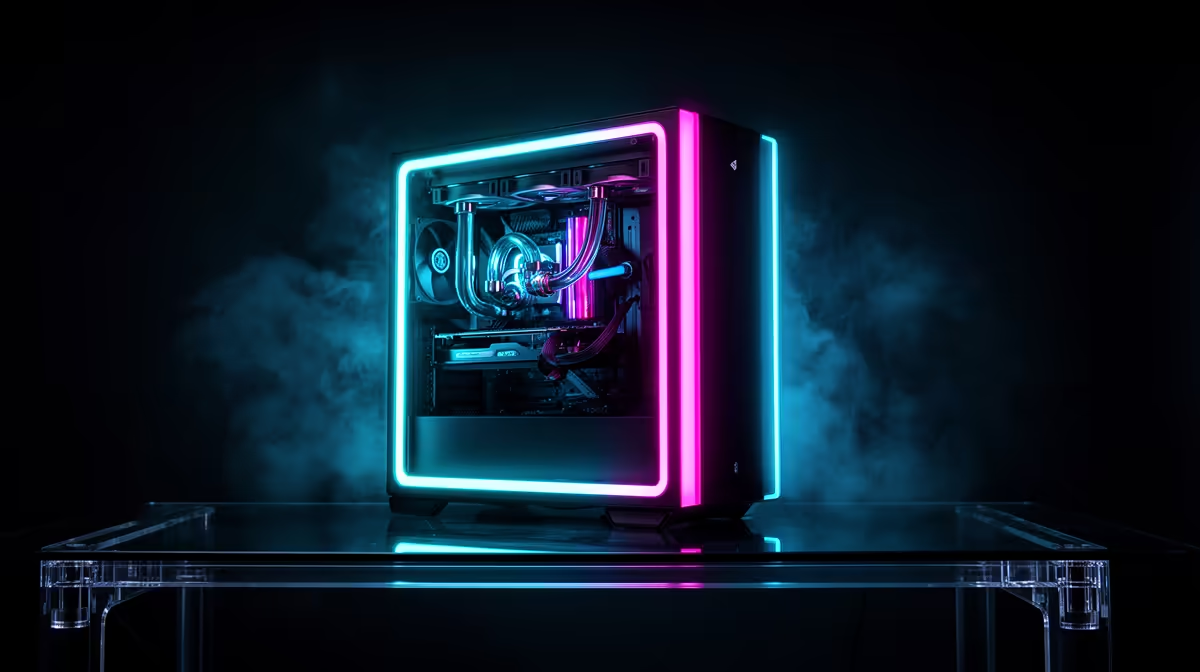
The balance point for most SA gaming builds is a case with a mesh or perforated front for airflow, a single tempered glass side panel for showcase viewing, adequate internal volume for current and one generation of future hardware, and a minimum of three fan positions beyond the AIO mounting zone. This combination preserves aesthetics without the thermal penalty of full dual-glass designs and leaves room for GPU and cooler upgrades without replacing the case.
Defining the Right Showcase Standard for SA Conditions 🎮
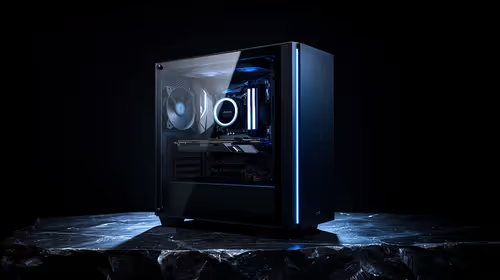
Showcase aesthetics in PC building typically mean visibility of RGB components from at least one viewing angle, a clean cable run visible through the glass panel, and a coherent colour theme. For South African gamers who often build in warmer rooms or shared living spaces without dedicated air conditioning, the showcase standard that works is: maximum visibility from the glass side, adequate ventilation from the front and top.
The compromise that breaks down is full dual tempered glass around the front and sides. At 30 degree plus ambient in a Gauteng summer bedroom, a fully sealed glass build with an RTX 5080 running open-world titles at 1440p can sustain GPU temps above 87 degrees Celsius, which triggers clock speed throttling and costs perceptible frames in the 10 to 15 fps range during the most GPU-intensive scenes.
Cooling Without Sacrificing the View 💨
The practical cooling standard for an SA gaming showcase build is three 120mm or two 140mm intake fans with a mesh or perforated front panel, plus the AIO radiator (240mm minimum, 360mm preferred for any CPU above 65W TDP), plus at least one dedicated rear 120mm exhaust fan. This configuration keeps GPU temps on an RTX 5070 Ti in the low to mid 70s Celsius at 30 degree ambient, which is well within safe operating range.
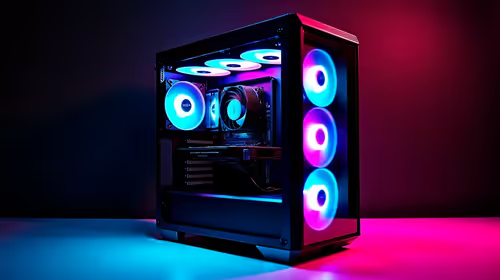
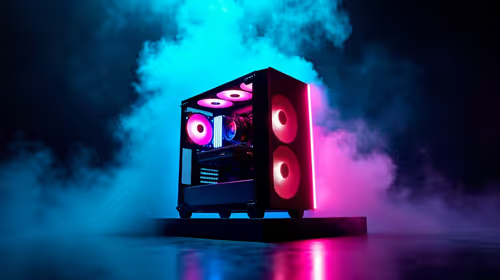
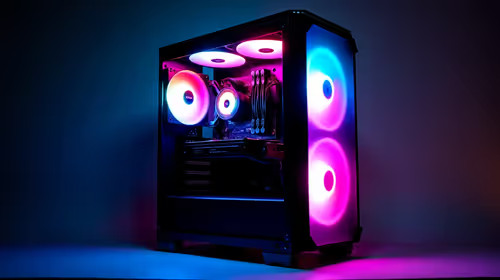
For the showcase side, a single high-clarity 4mm tempered glass left panel from a brand like Lian Li, Fractal, or Corsair stocked at Evetech gives you full RGB component visibility with minimal colour tint. Pair it with white or ARGB-transparent bladed fans that look good from the side glass, and the showcase quality is excellent without closing off the front airflow.
Future Upgrade Space: What to Check Before Buying 📐
Upgrade headroom in a case comes from four dimensions. First, GPU clearance: choose a case with at least 380mm clearance to accommodate the next generation of GPU without case replacement. Current RTX 5080 cards reach 360mm, so 380mm gives one generation of headroom. Second, radiator size support: a case supporting 360mm or 420mm AIOs means you can move from 240mm to 360mm cooling on a future CPU upgrade without a new case. Third, PCIe expansion slots: ensure the case supports standard ATX or E-ATX depending on your planned motherboard upgrades.
Front Panel Upgrade Hack ⚡
Some popular mid-tower cases sell replacement mesh front panels as accessories for R150 to R350. If you buy a glass-front model for its aesthetics and find thermals are an issue in SA summer, check if the manufacturer sells a mesh replacement front before replacing the entire case. Lian Li, Corsair, and Fractal Design all offer this option for several of their popular showcase models.
FAQ
How much should an SA gamer spend to get good aesthetics and good cooling in one case?
The R2,000 to R3,500 range hits this balance well. At this price, quality mesh-front mid-towers with glass side panels, ARGB fan pre-installs, and 360mm AIO support are available from brands stocked at Evetech.
Do ARGB fans look good through a mesh front panel?
Yes. Mesh panels have small perforations that diffuse RGB fan glow attractively from the front of the case.
Is it worth upgrading the case fans that come with a mid-range showcase case?
Often yes. Bundled fans in the R1,800 to R2,500 case tier are frequently lower quality than the case itself.
Want a gaming build that looks great and stays cool in SA heat?
Browse showcase PC cases with strong airflow designs at Evetech, with options to match any build theme and budget.