Quick Answer
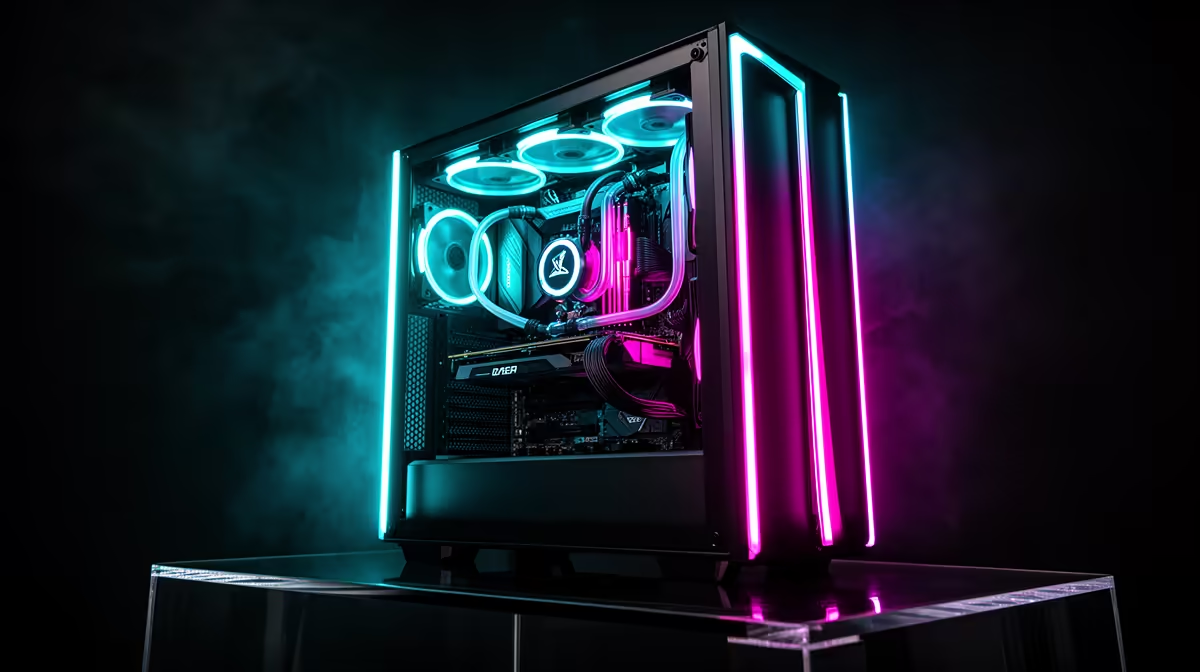
For an EATX mid-tower gaming case, the most effective cooling layout is front intake with a 360mm or 420mm AIO radiator, combined with a rear 120mm or 140mm exhaust. This configuration draws cool air directly across the GPU and CPU zone and exhausts heat efficiently without requiring additional top fans for most gaming workloads.
Understanding the EATX Mid-Tower Cooling Challenge 🌬️
An EATX mid-tower houses a wider motherboard than standard ATX, which reduces the horizontal space between the board edge and the side panel. This tighter clearance means GPU fans have less room to draw fresh air from the side and makes front-to-rear airflow even more critical. A 360mm AIO at the front intake is the baseline cooling choice, providing CPU cooling and pulling cool air past the GPU simultaneously. For builds running an RTX 5080 with a Ryzen 9 9900X in this configuration, CPU temperatures stay below 78 degrees Celsius and GPU temperatures remain under 82 degrees Celsius under combined gaming and streaming load at typical South African ambient temperatures of 22 to 28 degrees Celsius.
Radiator Placement Options and Their Trade-offs 💧
Front mount is the default and most effective radiator position for an EATX mid-tower. The radiator fans draw outside air through the front panel mesh, through the radiator core, and into the case, creating positive pressure. Top mount is a secondary option where the radiator exhausts hot air upward, but on EATX boards the VRM heatsink placement at the top of the board can obstruct top-mount radiators unless you verify the specific board-to-mount distance. Bottom mount is available in some cases and works for GPU-focused cooling but complicates dust filter access. If the case supports 420mm at the front, choosing a 420mm AIO over a 360mm unit reduces fan noise by allowing lower RPM operation while maintaining the same heat transfer rate.
Fan Configuration for EATX Mid-Towers Without an AIO 🔧
If air cooling is preferred, an EATX mid-tower benefits from three front intake fans and one rear exhaust as the baseline. A 140mm air tower cooler like the Noctua NH-D15G2 or be quiet! Dark Rock Pro 5 fits most EATX mid-tower cases without panel clearance issues. Confirm that your chosen tower cooler clears the wider board's VRM heatsink and does not overhang into the RAM slot area, as EATX boards sometimes place the top RAM slots closer to the CPU socket edge. Three quality 140mm PWM front fans with a single rear exhaust maintain case pressure without requiring top exhaust fans for most gaming-only workloads.
Map Your Board Before Buying the Case ⚡
Download your chosen EATX motherboard's diagram and overlay it against the case specification sheet's internal dimensions. Identify where the VRM heatsink, top fan headers, and PCIe slots land relative to the case's radiator brackets. This exercise takes 10 minutes and prevents discovering a clearance conflict after the components arrive.
FAQ
Can I run a 420mm AIO in an EATX mid-tower?
Some EATX mid-towers support 420mm at the front, but it is less common than in full-tower cases because the front mount depth on mid-towers is often shallower. Confirm the spec explicitly states 420mm support rather than inferring it from the case size.
Does an EATX board run hotter than ATX because of its size?
Not inherently. An EATX board occupies more area but does not generate more heat than an ATX board with similar VRM design. Heat output depends on the specific chip and power delivery components, not the board's physical dimensions.
How do I know if a tower CPU cooler will clear an EATX board's VRM heatsink?
Check the cooler's clearance map document, which reputable brands include on their website. Compare the cooler's overhang radius from the CPU socket against your EATX board's VRM heatsink position, which is always shown in the board manual's component layout diagram.
Finding the right cooling layout for your EATX build?
Evetech stocks EATX-compatible mid-tower cases, 360mm and 420mm AIO coolers, and the tower coolers to match every thermal scenario.