Quick Answer
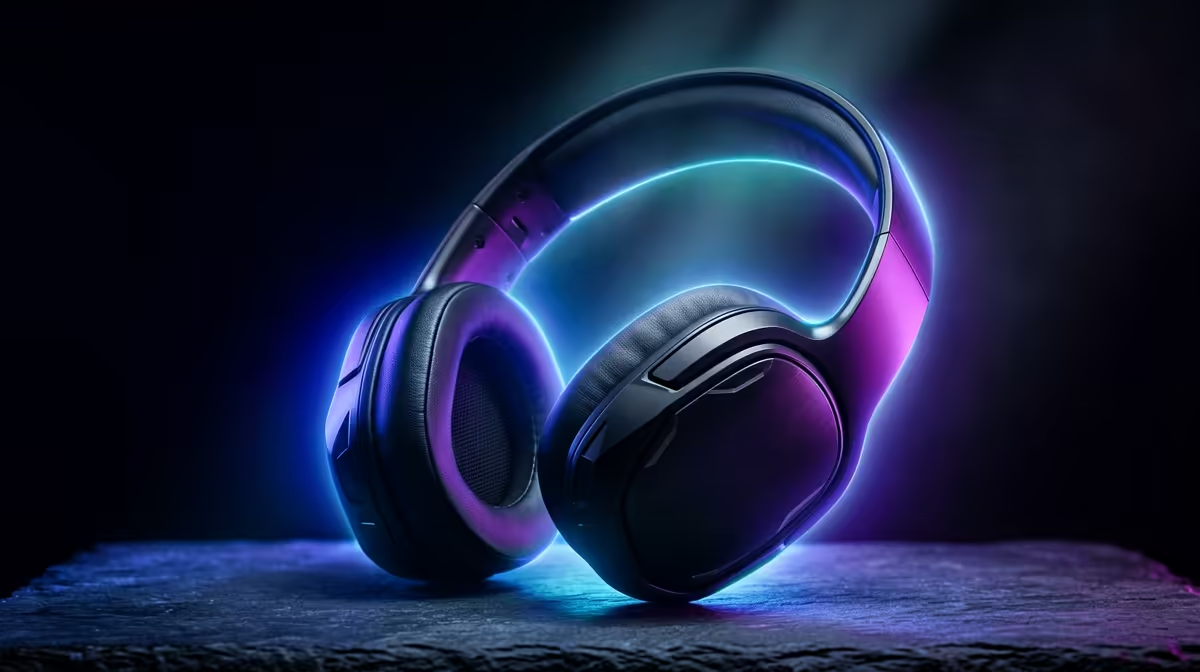
Audio lag on a wireless gaming headset is lowest over a dedicated 2.4GHz USB dongle, which delivers around 12 to 20 milliseconds of latency. Bluetooth in A2DP mode runs 100 to 200 ms with standard SBC codec, though aptX Low Latency drops this to around 40 ms if both devices support it. For competitive gaming, always use the 2.4GHz dongle if your headset includes one.
Why Wireless Protocols Differ in Latency 📡
Bluetooth manages bandwidth by buffering audio in packets before playback. The larger the buffer, the more stable the connection but the higher the delay. Standard SBC codec buffers add 100 to 150 ms, perceptible as a lip-sync mismatch and a footstep delay in FPS games. The 2.4GHz RF protocol used by headsets like the Razer BlackShark V2 Pro uses a dedicated channel with minimal buffering, transmitting at latency figures comparable to wired audio. The trade-off is that 2.4GHz requires a USB dongle and does not pair natively to phones.
Software Settings That Reduce Perceived Lag 🔧
On PC, disabling audio enhancements in Windows for the headset output device removes processing stages that add 10 to 30 ms of additional delay. Right-click the headset in Sound then Playback Devices, open Properties, go to Enhancements, and tick Disable All Sound Effects. In-game, set audio output to the headset directly rather than through a virtual surround application unless that software is certified low-latency. For console use, connect the dongle to the PS5's USB port directly; routing through a headphone jack adds the controller's own ADC latency.
Bluetooth Low Latency Codecs and Compatibility 🎧
If you must use Bluetooth, check whether your headset and source support aptX Low Latency or LC3 (Bluetooth LE Audio). LC3 is included in Bluetooth 5.2 and later and achieves around 30 to 40 ms latency, acceptable for casual gaming. Samsung Galaxy and Google Pixel phones support LC3 natively. On a South African fibre gaming setup where you switch between a desktop PC and a mobile device, a headset with both 2.4GHz for PC and Bluetooth 5.3 for phone calls covers both use cases. Razer Barracuda X and similar dual-wireless headsets start at around R2,000 to R2,500 at Evetech.
USB Port Placement for Lowest Latency ⚡
Plug the 2.4GHz dongle into a rear motherboard USB port rather than a front-panel header or a USB hub. Front-panel headers introduce electrical noise and longer signal paths. Rear ports connect directly to the chipset controller and give the most consistent 1 ms polling interval.
FAQ
Does wireless headset audio lag affect my reaction time in FPS games?
At 150 ms of Bluetooth SBC lag, yes. Audio cues like footsteps arrive late enough to cause missed responses at that delay. At 20 ms via 2.4GHz the lag is below human perception thresholds and has no practical effect on reaction time.
Why does my wireless headset lag on PS5 but not on PC?
PS5 defaults to SBC codec for third-party Bluetooth headsets. Connecting the 2.4GHz dongle via the PS5's USB-A port bypasses Bluetooth entirely and restores the low-latency 2.4GHz connection. Most gaming headsets that include a dongle support this configuration.
Can I reduce audio lag without buying a new headset?
If your headset supports aptX Low Latency on Bluetooth, enabling it on your source device cuts latency from 150 ms to around 40 ms. On PC, install the manufacturer's companion app and update firmware, as firmware updates have reduced processing latency by 10 to 15 ms on some models.
Need zero-lag wireless audio for competitive gaming?
Evetech stocks 2.4GHz wireless gaming headsets from Razer, SteelSeries, and more, with dedicated dongles that deliver near-wired latency for every session.