Quick Answer
Yes, 420mm GPU clearance is more than enough for every modern consumer graphics card currently on the market. The longest production AIB GPU available in 2025 and 2026, the MSI Gaming Trio RTX 5090, measures approximately 346mm.
How Modern GPU Lengths Compare to 420mm 🖥️
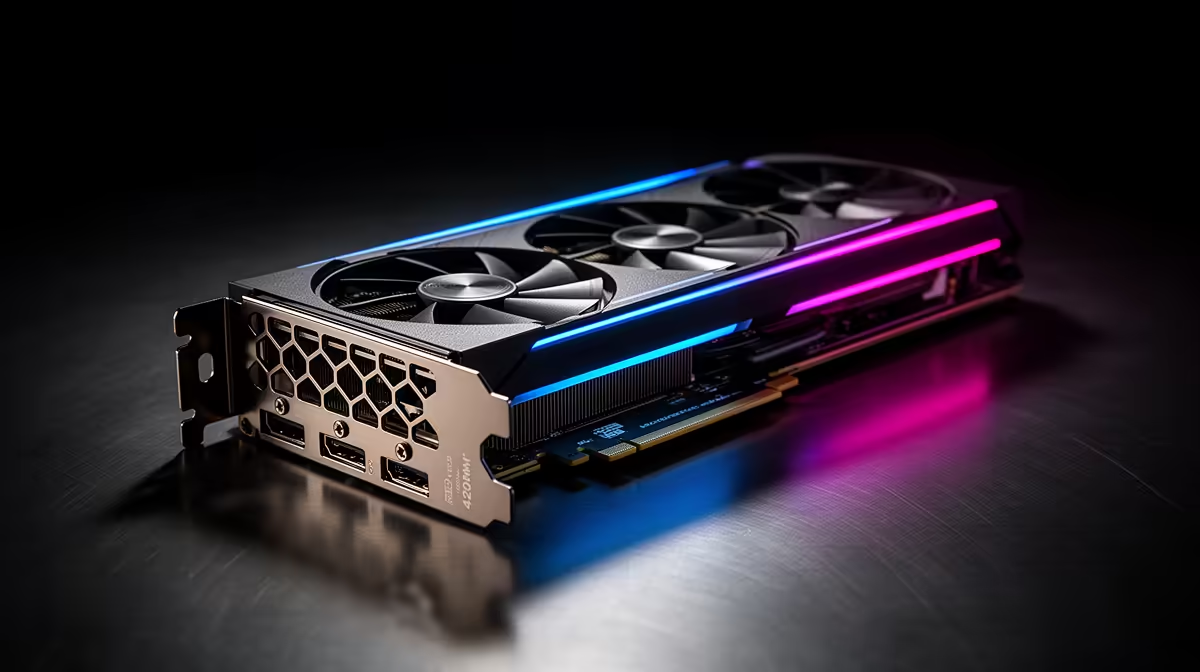
Current flagship GPUs land well within the 420mm envelope. The RTX 5090 in its longest AIB design sits around 340 to 346mm. RTX 5080 AIB cards range from 310 to 340mm. The AMD RX 9070 XT in triple-fan configurations from MSI, Sapphire, and PowerColor sits between 290 and 340mm depending on the partner cooler design. Even the physically large RX 9070 XT Nitro Plus from Sapphire stays under 360mm.
Where 420mm Clearance Makes a Real Difference 💨
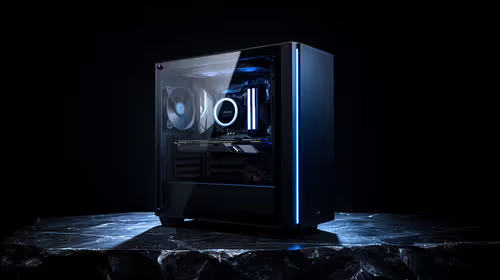
The meaningful benefit of 420mm clearance over a case listing 330mm or 350mm clearance is future-proofing. GPU form factors have expanded generation over generation, and the next-generation GPUs beyond the current RTX 50-series and RX 9000-series may be larger again. Building into a case with 420mm clearance today means you will not face a compatibility wall when upgrading in two to three years. It also matters for vertical GPU mounting: when a GPU is mounted vertically via a PCIe riser cable, the distance from the front panel to the mounting point is effectively reduced, and cases with 420mm horizontal clearance give more room to work with in vertical configurations.
When to Worry About GPU Clearance in SA Builds 🔧
The clearance figures that catch SA builders out are typically in the 300mm to 350mm range, particularly in budget mid-tower cases under R800. At that clearance, a triple-fan RTX 5070 or RX 9070 XT may technically fit but leave insufficient space for the 16-pin cable to route cleanly. Stress on the 12VHPWR connector is a known risk with tight cable routing, and replacing a GPU or a case because of a connector issue is an expensive lesson. Any case listing 380mm or above handles current-gen cards safely. At 420mm, you are genuinely future-proof for consumer GPUs.
Measure GPU Length from Connector to Tip ⚡
GPU clearance specifications measure from the PCIe slot bracket to the furthest point of the GPU body. Some manufacturers measure GPU length excluding the metal backplate notch at the bracket end, which can add 5 to 8mm to the true installed length. When checking compatibility, use the GPU manufacturer's full dimension spec from their product page rather than aftermarket listing measurements, which sometimes omit this detail.
FAQ
Do all mid-tower ATX cases support 420mm GPU clearance?
No. Mid-tower GPU clearance varies from 290mm in compact mini-tower designs to 420mm or more in purpose-designed large mid-towers. Check the specific case specification before buying, especially if you have a long triple-fan GPU already in hand. Cases with 360mm to 420mm clearance are widely available in the R900 to R2,000 range at Evetech.
Does GPU length affect case airflow?
A very long GPU extending close to the front panel reduces the gap between the GPU shroud and front intake fans, which can slightly restrict airflow to the GPU intake fans. At 420mm GPU clearance with a 340mm GPU installed, you retain 80mm of clearance, which is well beyond the minimum needed for unobstructed intake. Only at under 20mm gap does GPU proximity to the front panel meaningfully affect GPU fan intake flow.
Should I leave extra space beyond the GPU length for cables?
Yes, at least 30mm beyond the GPU tip is recommended to allow the PSU or SATA cables routed in the PSU shroud area to clear the GPU without pressing against it. In practice, this means that for a 340mm GPU you want at least 370mm of case clearance, making the 420mm spec more than generous.
Got a long triple-fan GPU or planning one?
Browse ATX cases at Evetech with 380mm to 420mm GPU clearance to ensure your next graphics card fits perfectly with room to route cables cleanly.