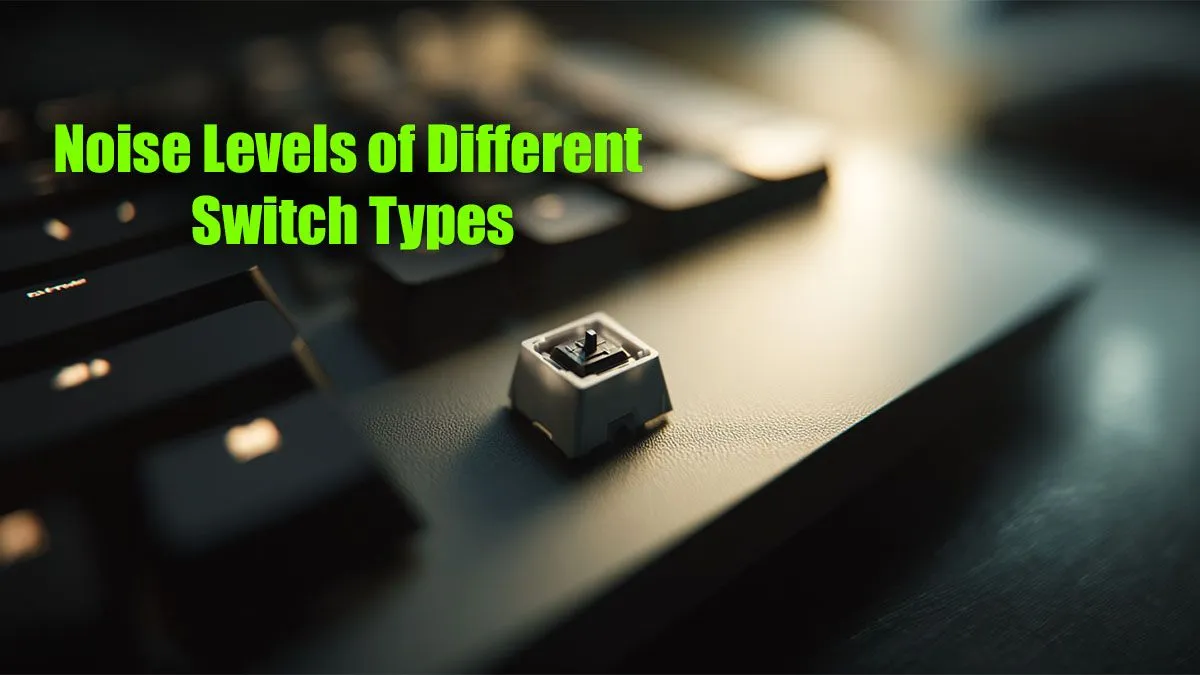
That satisfying clack is music to a gamer’s ears… but maybe not to your family’s at 2 AM. Choosing a new mechanical keyboard can be confusing, especially when it comes to sound. Are you team Clicky, Tactile, or Linear? This guide breaks down mechanical keyboard switch noise levels in simple terms, helping you find the perfect sound profile for your setup. Let’s dive in and find your perfect match. 🚀
Understanding the Spectrum of Switch Sounds
Before we get into the nitty-gritty, what even makes the noise? It’s the switch—the small mechanical component beneath each keycap. Different switch designs create vastly different sounds and feelings. The debate over mechanical keyboard switch noise levels really boils down to three main categories: Clicky, Tactile, and Linear. Each one is designed for a specific type of user, from hardcore typists to esports pros.
Clicky Switches: Loud and Proud 🔊
As the name suggests, these are the loudest of the bunch. A clicky switch, like the famous Cherry MX Blue, has a special mechanism that creates a sharp, high-pitched "click" sound every time you press the key.
- Sound Profile: Sharp, loud, and distinct. Think of a classic typewriter.
- Best For: Typists who love audible feedback and gamers who want absolute confirmation that a key has been pressed.
- Heads-Up: This is not the switch for a quiet office or a shared dorm room. If you want that classic feel, many of the most affordable gaming keyboards in South Africa offer excellent clicky options.
Tactile Switches: The Balanced All-Rounder
Tactile switches are the happy medium. They provide a noticeable "bump" you can feel when the key press registers, but without the extra audible click. This makes them a fantastic, versatile choice.
- Sound Profile: A much quieter, lower-pitched "thump" compared to clicky switches.
- Best For: Just about everyone. It’s a great starting point for newcomers and a favourite for gamers and typists who want feedback without the noise. Many premium keyboard and mouse combos feature tactile switches for this reason.
Linear Switches: Smooth and Silent Assassins
Linear switches are the ninjas of the keyboard world. They travel straight down without any bump or click, offering the smoothest and quietest experience possible. The only sound you'll hear is the keycap "bottoming out" when it hits the keyboard plate.
- Sound Profile: Very quiet, with a soft thud on full depression.
- Best For: Competitive FPS or action gamers who need lightning-fast, uninterrupted keypresses. They're also perfect for streamers or anyone working in a shared space. For enthusiasts, you can even buy individual keyboard switches to build a custom board for ultimate silence.
Quick Tip for Quieter Keystrokes 🤫
For a cheap and easy way to reduce the sound of your keys bottoming out, try installing rubber O-rings. You place these tiny rings on the stem of each keycap. They act as a shock absorber, dampening the sound without changing the fundamental feel of the switch too much. It's a fantastic mod for any mechanical keyboard.
More Than Just a Switch: Other Factors in Keyboard Noise
The switch is the biggest factor, but it’s not the only one. The overall keyboard switch sound is a combination of parts working together.
- Keycaps: The material and thickness of your keycaps matter. Denser PBT plastic often produces a deeper, more satisfying "thock" than standard ABS plastic. Upgrading to a set of custom keycaps can completely change your keyboard's acoustics.
- Keyboard Case: The case material (plastic vs. aluminium) and its internal construction can amplify or dampen sound.
- Desk Mat: A simple one, but effective! A thick desk mat under your keyboard will absorb a lot of vibrations and noise.
- Comfort: While you're optimising your sound, don't forget about ergonomics. Pairing your board with quality wrist rests can make those long gaming sessions much more comfortable. ✨
So, Which Switch Sound is Right for You?
Choosing the right switch comes down to personal preference and your environment. Are you a streamer needing crystal-clear audio? A writer who thrives on that clicky feedback? Or a competitive gamer where every millisecond of smooth travel counts?
Ultimately, the best way to understand mechanical keyboard switch noise levels is to experience them, but this guide should set you on the right path. When you're ready to make a choice, exploring the latest gaming keyboard deals is the perfect next step to find a board that fits your style and your budget.