


PCIe 5.0 vs PCIe 4.0 for Strategy and Sim Games in SA
PCIe 5.0 and PCIe 4.0 differ most in lane support, compatibility, and upgrade value for strategy and sim games. SA buyers should match the choice to their actual hardware and games.
Read moreMini PC choices for Recording Lectures should match the workflow before chasing extras. Compare ports, compatibility, comfort, space, and upgrade room with SA buyer context so the final setup fits real daily use.
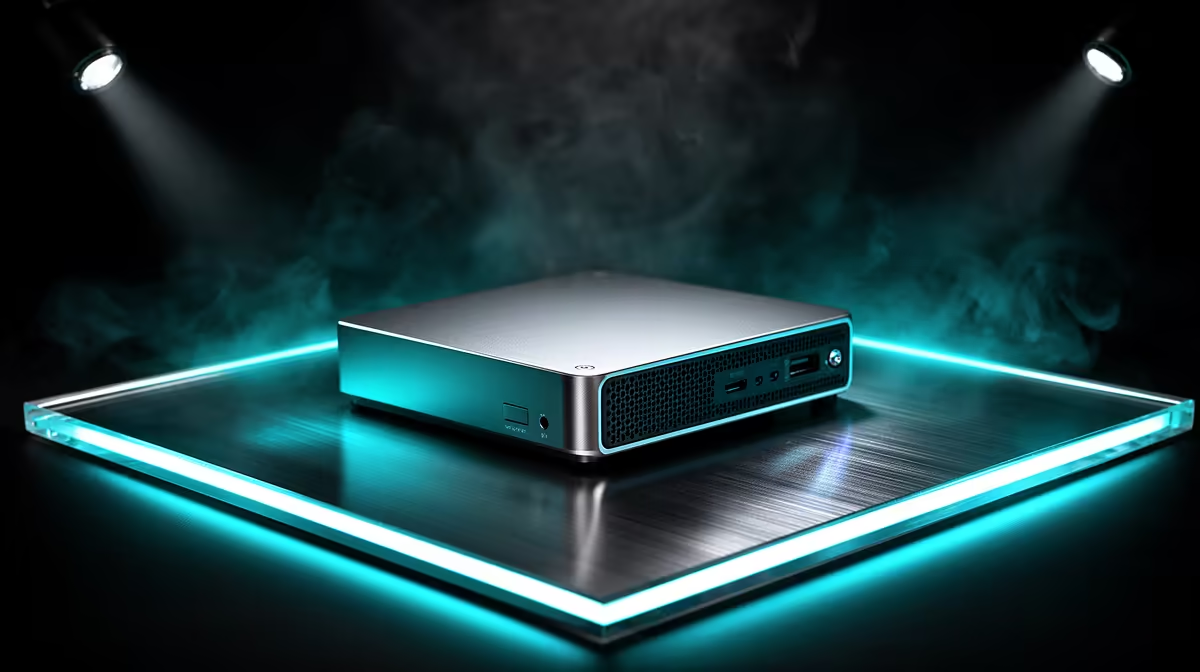
Use a checklist for mini PC buys because one missed compatibility detail can waste more money than a small spec upgrade. For recording lectures, start with RAM upgrade access, Wi-Fi, USB ports, VESA mount and fan noise before comparing brand, lighting or cosmetic extras.
For recording lectures, the strongest buy is not always the most expensive one. Start with the daily task: Teams, Zoom, OBS and quiet voice capture for class notes. That tells you whether to spend on speed, comfort, ports, battery life, storage or quiet operation. A named comparison point such as Intel NUC-style mini PC, Ryzen 5 mini PC or Core i5 mini desktop is useful because it gives the shortlist a real spec level instead of a vague label.
The minimum check is simple: confirm RAM upgrade access, Wi-Fi, USB ports, VESA mount and fan noise. If one of those points fails, the cheaper option can become the expensive one after adapters, returns or an early replacement.
Use the price band as a sanity check, not as a promise of live stock. A cautious local band is R6,000-R18,000 for compact productivity mini PCs. If a listing is far below that, inspect condition, warranty notes and included accessories. If it is far above that, make sure the premium buys something measurable such as 16GB RAM is the floor; 32GB and 1TB NVMe are better for VMs, data work or CAD viewers.
For gaming or creator-adjacent setups, also check the screen target. A 1080p 144Hz monitor, a 4K TV and a basic classroom display do not need the same spend. In South Africa, warranty handling and quick local support can matter as much as a small benchmark gap.
Avoid buying on a single headline number. RGB, a bigger model name or one impressive spec can hide weak storage, limited ports, poor cooling or a warranty mismatch. For shared homes, campus rooms and small offices, also check noise, cable reach and the space around the desk.
If the product is open-box or discounted, compare the exact condition with a sealed alternative. Keep the purchase focused on the part that solves the real limit today and still leaves room for a sensible upgrade later.
Check compatibility first: RAM upgrade access, Wi-Fi, USB ports, VESA mount and fan noise. After that, compare price and warranty because a strong spec is not useful if it does not fit your current machine, room or workflow.
No. The premium option is worth it only when it gives a clear benefit such as 16GB RAM is the floor; 32GB and 1TB NVMe are better for VMs, data work or CAD viewers. If your use is lighter, spend the difference on storage, a better monitor, a desk mat or another accessory you will notice every day.
Use R6,000-R18,000 for compact productivity mini PCs as a broad planning band, then confirm current Evetech stock and exact specs before buying. Prices move, so the safer decision is to compare the full spec, warranty and included accessories.
PCIe 5.0 and PCIe 4.0 differ most in lane support, compatibility, and upgrade value for strategy and sim games. SA buyers should match the choice to their actual hardware and games.
Read more
AM5 vs AM4 for video editing in 4K Difference explained is mostly about compatibility, budget, upgrade path, and setup fit. SA buyers should check device support and real needs before expecting a clear win from either option.
Read more
OLED vs QD-OLED for strategy and sim games buyers - what changes is mostly about compatibility, budget, upgrade path, and setup fit. SA buyers should check device support and real needs before expecting a clear win from either option.
Read more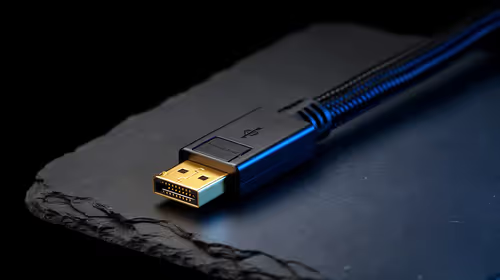
DisplayPort 2.1 and 1.4 differences matter when SA PC builders match GPUs, monitors, and refresh targets. Use this difference between displayport 2 1 and displayport 1 4 explained pc builders guide to avoid mismatched parts.
Read more
Ray tracing vs Path tracing depends on Strategy and sim games needs, platform limits, and budget fit. Compare compatibility, latency, upgrade path, and real setup constraints before choosing for an SA build.
Read more
wireless mouse guide for Gqeberha gamers should be shortlisted around the job it must do. South African buyers should compare sensor, shape, weight, and wireless latency, warranty path, and upgrade room before treating any pick as best.
Read more
From 1 October 2026, WhatsApp Business Platform service replies in South Africa are expected to cost about $0.0076, or 12 cents, per delivered message.
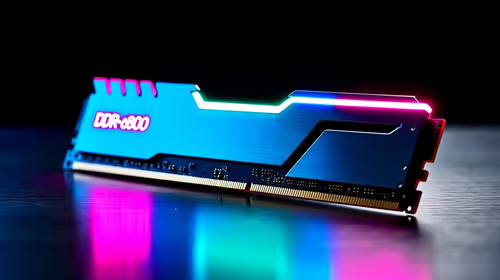
DDR5-8000 RAM Kits pros and cons depend on the build, budget, and workload. Weigh gaming needs, platform fit, power, cooling, warranty support, and South African pricing context before shortlisting it.
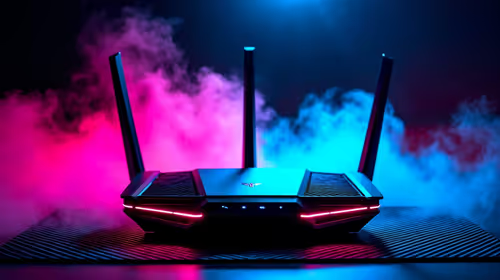
Wi-Fi 6E vs Wi-Fi 6 depends on AAA single-player gaming needs, platform limits, and budget fit. Compare compatibility, latency, upgrade path, and real setup constraints before choosing for an SA build.
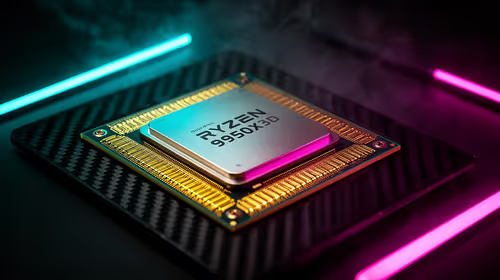
Ryzen 9 9950X3D dead pixel checks should isolate the panel first. Run colour fills, inspect the monitor menu, test another cable or input, and capture proof before linking it to the SA CPU upgrade.

YouTube will count public views from the first frame across video formats from 24 August, while earnings and eligibility remain tied to engaged viewing.
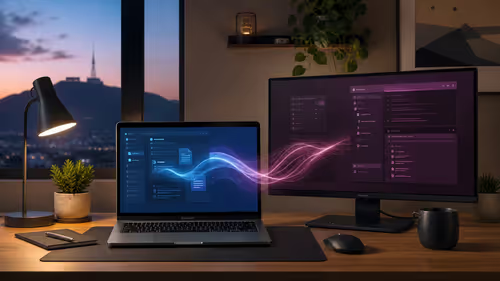
Canonical expects Ubuntu on WSL users to outnumber native Ubuntu desktop users before the end of 2026. The software is open source and runs inside supported Windows PCs.
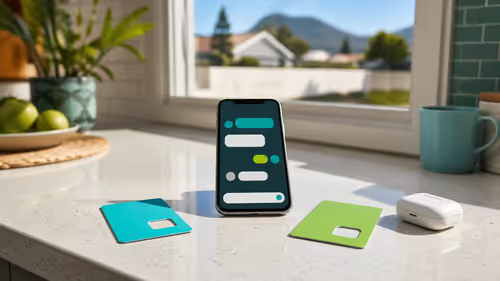
Telkom's daily bundles pair WhatsApp access with 10 all-network voice minutes. The R15 option includes 300MB, while the R17 option uses a fair-use threshold.
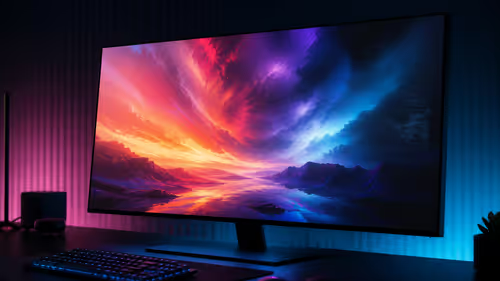
A 10,000-hour test found similar image retention across older and newer OLED TVs, while newer panels were brighter and more efficient. Local OLED monitors started at R9,999.
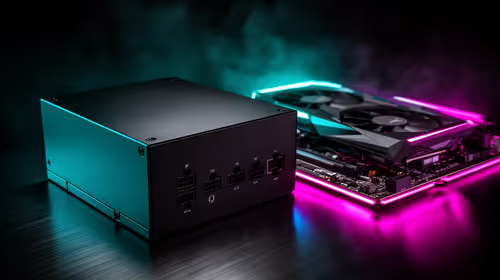
650W for RTX 5090 needs a full-build check, not a simple yes. Review GPU guidance, CPU draw, transient load, connectors, PSU quality, and upgrade plans before deciding.
PCIe 5.0 and PCIe 4.0 differ most in lane support, compatibility, and upgrade value for strategy and sim games. SA buyers should match the choice to their actual hardware and games.
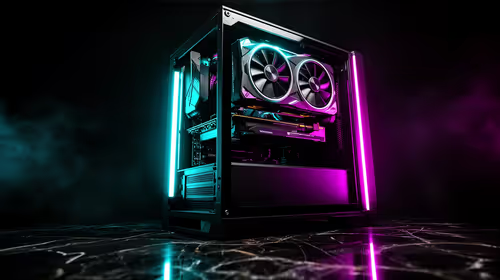
How to fix FPS drops Windows 11 RX 9070 XT starts with GPU drivers, overlays, power plans, and frame pacing checks. For SA gaming PCs, verify chipset updates, HAGS, refresh rate, thermals, and per-game graphics settings.
AM5 vs AM4 for video editing in 4K Difference explained is mostly about compatibility, budget, upgrade path, and setup fit. SA buyers should check device support and real needs before expecting a clear win from either option.