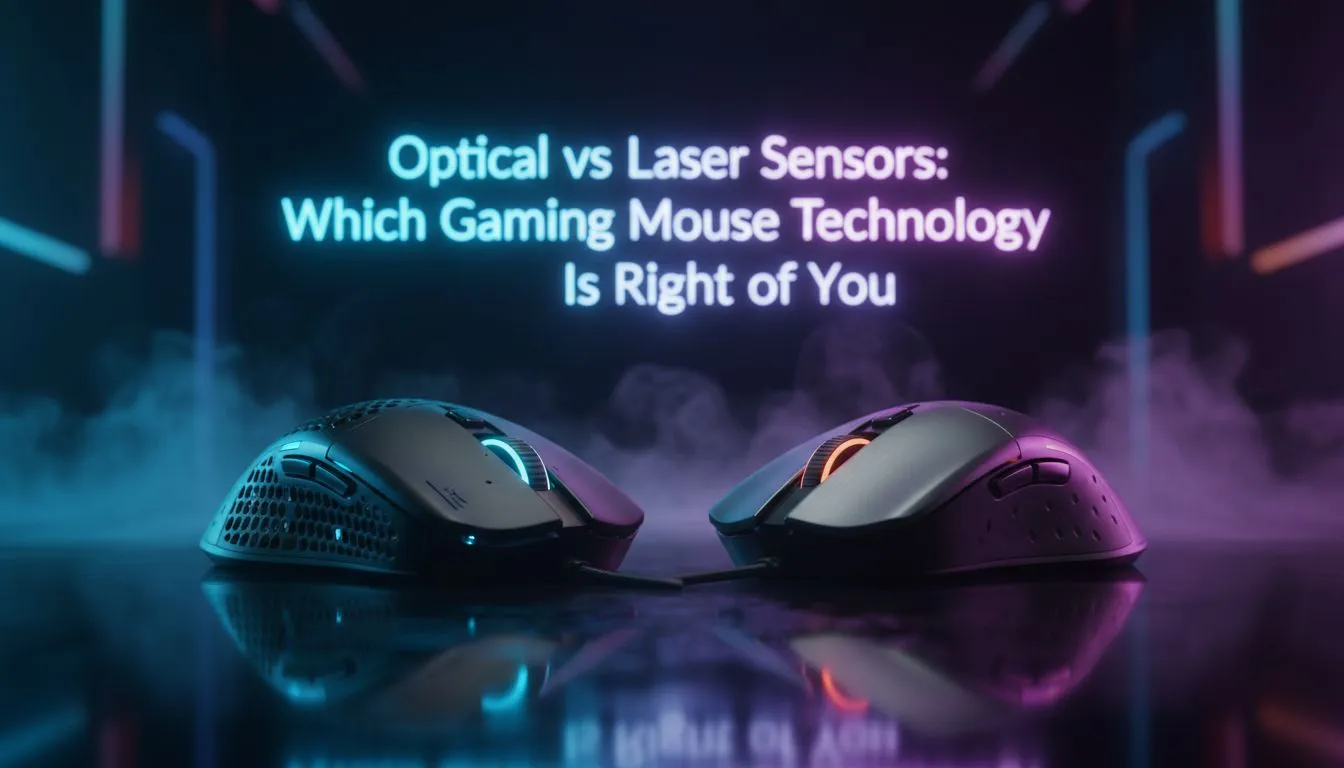
Understanding the Optical vs Laser Gaming Mouse Debate
You’re lining up the perfect shot in a high-stakes Valorant match, but your cursor jitters at the last second. In the heat of South African competitive play, your gear is your lifeline. Choosing between an Optical vs Laser Gaming Mouse isn’t just about specs... it’s about how that sensor interacts with your desk to ensure every flick is pixel-perfect. 🔧
When you browse the comprehensive range of gaming mouse options at Evetech, the technical jargon can feel overwhelming. At its core, both sensors are actually "optical" because they use a camera to take thousands of tiny pictures of your surface per second. The difference lies in the light source. Optical sensors use an LED, while laser sensors use a coherent light beam to illuminate the surface below.
Why Optical Sensors Rule the Competitive Scene
Most professional esports athletes in South Africa prefer optical sensors. Why? Because they tend to be more reliable on cloth surfaces. An optical sensor doesn't penetrate the surface of your mousepad... it only tracks the top layer. This results in a "raw" feel without the artificial smoothing or acceleration often found in older laser models.
If you prefer a traditional wired mouse setup for maximum latency reduction, you’ll find that almost every top-tier model uses a high-end optical sensor like the PixArt PMW3389 or the HERO sensor. These sensors provide 1:1 tracking, meaning the distance you move your hand is exactly what happens on screen.
Sensor Surface Pro Tip ⚡
match your sensor to your surface. Optical sensors perform best on non-reflective cloth pads, while laser sensors are the only viable option if you insist on gaming on a glass desk or a highly polished wooden surface. To keep your tracking consistent, ensure you have the right [mouse accessories](https: www.evetech.co.za buy-mouse-accessories x 1595.aspx) like a high-quality micro-weave pad.
When to Consider a Laser Gaming Mouse
Laser technology hasn't disappeared... it has evolved. The primary advantage of a laser sensor is its versatility. Because the laser beam is more intense, it can "see" deeper into the texture of a surface. This makes it perfect for gamers who don't always use a mousepad. If you are often on the move, perhaps using the latest wireless mouse technology at a coffee shop or on a shiny boardroom table, a laser sensor will track where an optical sensor might fail. 🚀
However, this sensitivity can be a double-edged sword. On soft cloth pads, laser sensors can sometimes pick up "too much" information, leading to slight jitters during slow movements. For the average gamer, this is barely noticeable, but for those chasing the highest ranks in Apex Legends, it’s a vital distinction.
Finding the Best Value in South Africa
Choosing the right sensor often comes down to your budget and your environment. High-end optical sensors have become much more affordable recently, meaning you don't have to spend a fortune to get "pro-grade" tracking. You can often find incredible gaming mouse deals starting from under R500 that still offer enough precision to climb the competitive ladders. ✨
Ultimately, the best sensor is the one that disappears in your hand. If you play on a standard gaming mat, go optical. If you need a mouse that works on any surface imaginable, laser is your friend.
Ready to Find Your Perfect Match?
Whether you need the raw precision of an optical sensor or the go-anywhere versatility of a laser, we have the hardware to level up your game. Explore our massive range of gaming mouse specials and find the perfect tool to conquer your next match.