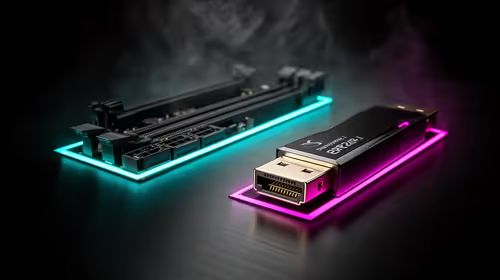
Load shedding tests our patience enough in South Africa... you shouldn't have to wait for your games to load too. When building a rig, storage speed is crucial. But when comparing PCIe Gen 4 vs PCIe Gen 3 NVMe SSDs, does the newer tech actually justify the extra ZAR? Let us break down the real-world performance difference to help you plan your next upgrade.
Understanding the Bandwidth Leap 🚀
On paper, the numbers look absolutely massive. A standard Gen 3 drive caps out around 3,500 megabytes per second. Step up to Gen 4, and you are looking at blistering speeds up to 7,000 megabytes per second. That is double the raw bandwidth.
However, raw speed does not always equal instant real-world results. Booting up Windows feels incredibly snappy on both generations. You will reach your desktop in mere seconds either way. If you only browse the web or do light office work, you might not notice the massive jump in speed.
Real-World Gaming Performance
So, how does this affect your late-night gaming sessions? For older titles, the load time difference is often just a few seconds. But the gaming landscape is shifting rapidly.
Modern games are starting to use DirectStorage technology. This streams assets directly to your graphics card. Here, the extra bandwidth of Gen 4 truly shines. It prevents texture pop-in and keeps your gameplay smooth. If you are hunting for top-tier gaming PC deals, ensuring your motherboard supports the latest interface is a very smart future-proofing move.
Compatibility Check 🔧
Before buying a new drive, check your motherboard or laptop specifications. Plugging a Gen 4 drive into a Gen 3 slot will work perfectly fine, but it will throttle down to Gen 3 speeds... wasting your hard-earned Rands!
Content Creation and Heavy Workloads ✨
Where the PCIe Gen 4 vs PCIe Gen 3 NVMe SSDs debate truly ends is in professional productivity. If you edit 4K video or compile massive codebases, the time saved by Gen 4 is staggering. Moving massive project files takes half the time.
Mobile creators are also benefiting from this tech leap. Many modern high-performance laptops in South Africa now feature Gen 4 drives as a standard inclusion. This helps professionals handle intense rendering tasks while on the move. Time is money, and faster storage saves both.
Which Drive Should You Actually Buy?
Building a rig is all about balancing your budget. Allocating funds correctly ensures you get the best value per Rand spent. If you are on a strict budget, Gen 3 still offers incredible value today. It remains miles ahead of older SATA technology.
However, prices for newer storage tech have dropped significantly recently. If you keep a close eye on our weekly tech specials, you can often snag a Gen 4 drive for nearly the same price as older models. Maximising your system speed has never been more affordable.
Ready to Supercharge Your Storage?
The PCIe Gen 4 vs PCIe Gen 3 NVMe SSDs debate ultimately comes down to your budget and workload. For maximum power and future-proofing in South Africa, Gen 4 is the way to go. Explore our massive range of SSDs and find the perfect drive to conquer your load times.