


PCIe 5.0 vs PCIe 4.0 for Strategy and Sim Games in SA
PCIe 5.0 and PCIe 4.0 differ most in lane support, compatibility, and upgrade value for strategy and sim games. SA buyers should match the choice to their actual hardware and games.
Read moreBoth options work; PCIe 5.0 lane count, slot reinforcement, and motherboard support decides PCIe Gen 5 Graphics Cards vs PCIe Gen 4 Slots: Will You Noti. We line up specs side by side so the trade-offs are obvious.
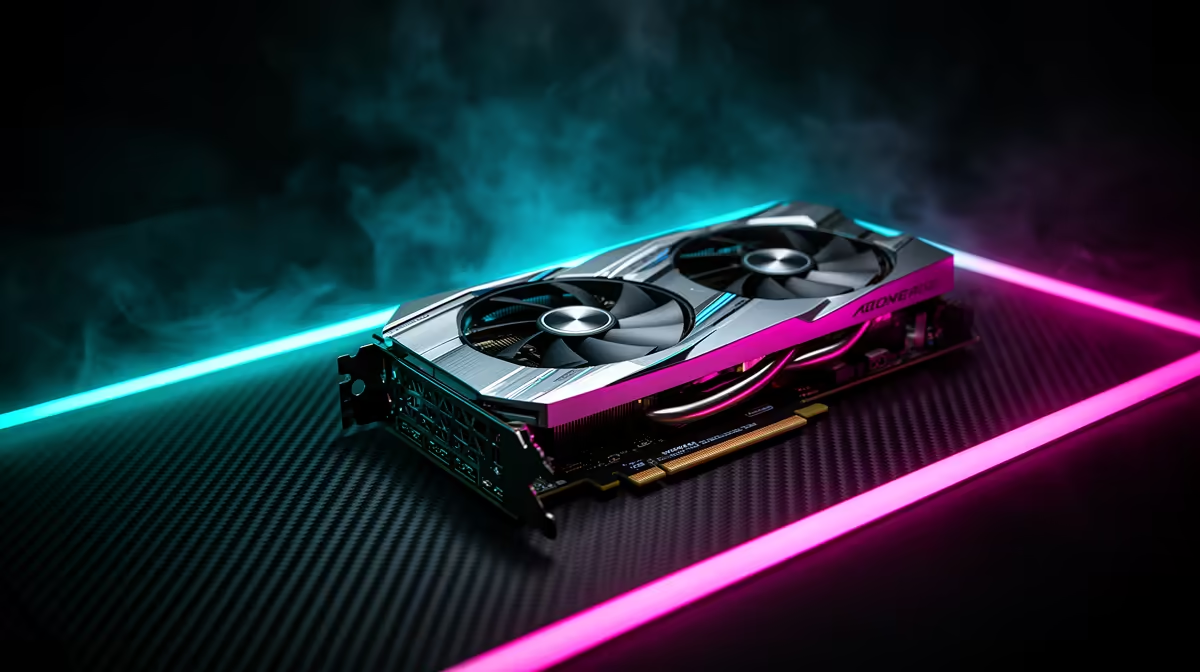
No noticeable gaming performance difference exists between a PCIe Gen 5 GPU running in a Gen 4 slot versus a Gen 5 slot. Current GPUs including the RTX 50-series and RX 9000-series do not saturate PCIe Gen 4 x16 bandwidth during gaming. Backward compatibility is a non-issue for frame rates.
PCIe Gen 4 x16 offers 64 GB/s bidirectional bandwidth. Gen 5 x16 doubles that to 128 GB/s. However, the GPU-to-CPU data transfer during gaming is far smaller than these limits. A GPU renders frames and stores them in its own VRAM; only textures, geometry, and draw calls cross the PCIe bus. Even an RTX 5090 does not approach 64 GB/s sustained bus usage during gaming.
Independent testing confirms running RTX 40-series and RTX 50-series cards in PCIe Gen 3 x16 slots causes frame rate losses of under 2% in most games. The Gen 4 to Gen 5 difference is even smaller because the bandwidth floor already exceeds what games need.
PCIe generation matters meaningfully for high-speed NVMe SSDs and professional AI inference workloads where the GPU streams large datasets from system RAM repeatedly. For gaming, it is irrelevant. SA gamers upgrading a 2020 to 2022 board with PCIe Gen 4 support can install an RTX 5070 or RX 9070 XT and get identical gaming performance to those cards in a Gen 5 board.
The only risk case is PCIe Gen 3 x8 electrical slots, which exist on some older Intel boards. That configuration can cost 2 to 5% in bandwidth-sensitive scenes. Gen 4 x16 with full 16 electrical lanes is universally fine for all current gaming GPUs.
Not specifically for the GPU. If you are building a new Ryzen 9000-series or Core Ultra 200-series system, PCIe Gen 5 comes with the platform at no extra cost and benefits NVMe SSD speeds significantly. Gen 5 NVMe SSDs deliver 12,000 to 14,000 MB/s sequential reads versus 7,000 MB/s for Gen 4.
Buying a new motherboard purely to unlock a PCIe Gen 5 slot for your GPU wastes R1,500 to R3,000. That money is better spent on a GPU tier upgrade, which will have a far larger effect on your gaming frame rates.
Open GPU-Z and check the Bus Interface field. It shows your actual link speed and width, for example PCIe 4.0 x16. If your card shows PCIe 3.0 x8, that is worth investigating as it can cause minor frame rate reduction. Gen 4 x16 at any lane width is fine for all current gaming GPUs.
Yes. PCIe uses the same physical connector across all generations and is fully backward and forward compatible. The card negotiates to the highest common speed automatically with no damage or compatibility issue.
The 16-pin 12VHPWR connector is a power delivery connection, not related to PCIe slot bandwidth. It appears on high-end RTX 50-series cards and requires a compatible PSU connector or adapter. This is a separate question from slot generation compatibility.
Yes, to get Gen 5 NVMe speeds. Gen 4 drives in a Gen 5 slot run at Gen 4 speeds. The slot is backward compatible, so no drive incompatibility exists; you simply do not get the Gen 5 speed benefit.
Building a new gaming PC and weighing platform options? Evetech stocks GPUs compatible with every PCIe generation from Gen 3 onward. Browse the graphics card category to match your card to your board without overspending on bandwidth you will not use.
PCIe 5.0 and PCIe 4.0 differ most in lane support, compatibility, and upgrade value for strategy and sim games. SA buyers should match the choice to their actual hardware and games.
Read more
AM5 vs AM4 for video editing in 4K Difference explained is mostly about compatibility, budget, upgrade path, and setup fit. SA buyers should check device support and real needs before expecting a clear win from either option.
Read more
OLED vs QD-OLED for strategy and sim games buyers - what changes is mostly about compatibility, budget, upgrade path, and setup fit. SA buyers should check device support and real needs before expecting a clear win from either option.
Read more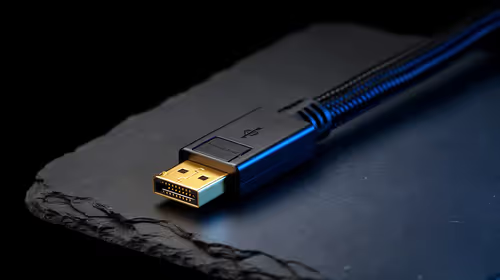
DisplayPort 2.1 and 1.4 differences matter when SA PC builders match GPUs, monitors, and refresh targets. Use this difference between displayport 2 1 and displayport 1 4 explained pc builders guide to avoid mismatched parts.
Read more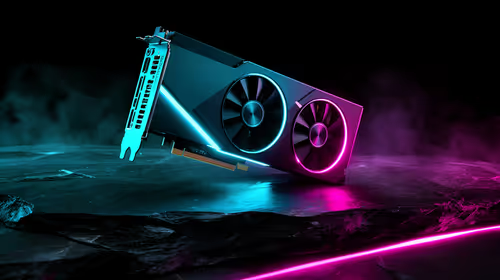
Ray tracing vs Path tracing depends on Strategy and sim games needs, platform limits, and budget fit. Compare compatibility, latency, upgrade path, and real setup constraints before choosing for an SA build.
Read more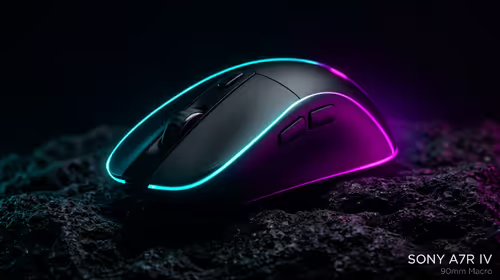
wireless mouse guide for Gqeberha gamers should be shortlisted around the job it must do. South African buyers should compare sensor, shape, weight, and wireless latency, warranty path, and upgrade room before treating any pick as best.
Read more
From 1 October 2026, WhatsApp Business Platform service replies in South Africa are expected to cost about $0.0076, or 12 cents, per delivered message.
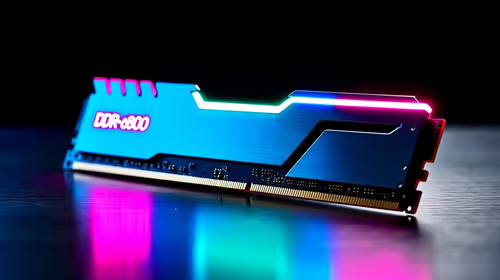
DDR5-8000 RAM Kits pros and cons depend on the build, budget, and workload. Weigh gaming needs, platform fit, power, cooling, warranty support, and South African pricing context before shortlisting it.
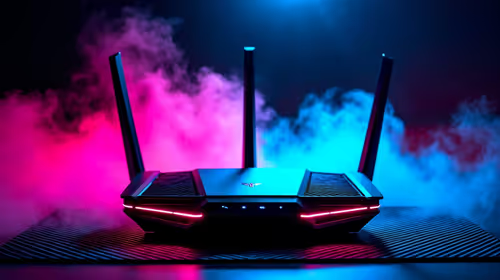
Wi-Fi 6E vs Wi-Fi 6 depends on AAA single-player gaming needs, platform limits, and budget fit. Compare compatibility, latency, upgrade path, and real setup constraints before choosing for an SA build.
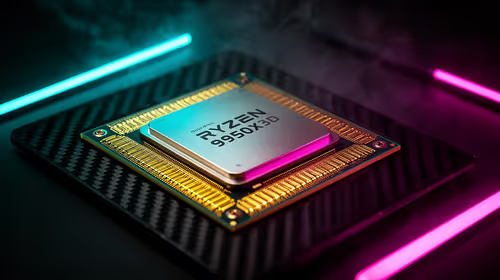
Ryzen 9 9950X3D dead pixel checks should isolate the panel first. Run colour fills, inspect the monitor menu, test another cable or input, and capture proof before linking it to the SA CPU upgrade.

YouTube will count public views from the first frame across video formats from 24 August, while earnings and eligibility remain tied to engaged viewing.
Canonical expects Ubuntu on WSL users to outnumber native Ubuntu desktop users before the end of 2026. The software is open source and runs inside supported Windows PCs.
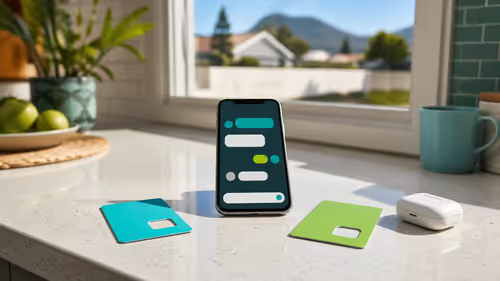
Telkom's daily bundles pair WhatsApp access with 10 all-network voice minutes. The R15 option includes 300MB, while the R17 option uses a fair-use threshold.
A 10,000-hour test found similar image retention across older and newer OLED TVs, while newer panels were brighter and more efficient. Local OLED monitors started at R9,999.
650W for RTX 5090 needs a full-build check, not a simple yes. Review GPU guidance, CPU draw, transient load, connectors, PSU quality, and upgrade plans before deciding.
PCIe 5.0 and PCIe 4.0 differ most in lane support, compatibility, and upgrade value for strategy and sim games. SA buyers should match the choice to their actual hardware and games.

How to fix FPS drops Windows 11 RX 9070 XT starts with GPU drivers, overlays, power plans, and frame pacing checks. For SA gaming PCs, verify chipset updates, HAGS, refresh rate, thermals, and per-game graphics settings.
AM5 vs AM4 for video editing in 4K Difference explained is mostly about compatibility, budget, upgrade path, and setup fit. SA buyers should check device support and real needs before expecting a clear win from either option.