Pack for a work trip and the maths is brutal: a second screen would double your productivity in the hotel room, but a desktop monitor is a non-starter the moment you try to fit it in a bag. A portable monitor exists precisely to solve that. The honest comparison is not which screen is better at a desk, it is which one can actually travel with you, and on that question the gap is not close.
Quick Answer
For travel, a portable monitor wins outright. A 15.6-inch portable panel weighs roughly 700 to 900 grams, sits about 9mm thick and slides into a laptop bag. A desktop monitor brings a heavy stand, a power brick and a panel at least 20mm deep, which simply cannot be packed for a trip. At a fixed desk the desktop still rules, but on the road it is no contest.
The Portability Gap Is the Whole Story
The two screens are designed for different lives, and travel exposes that immediately.
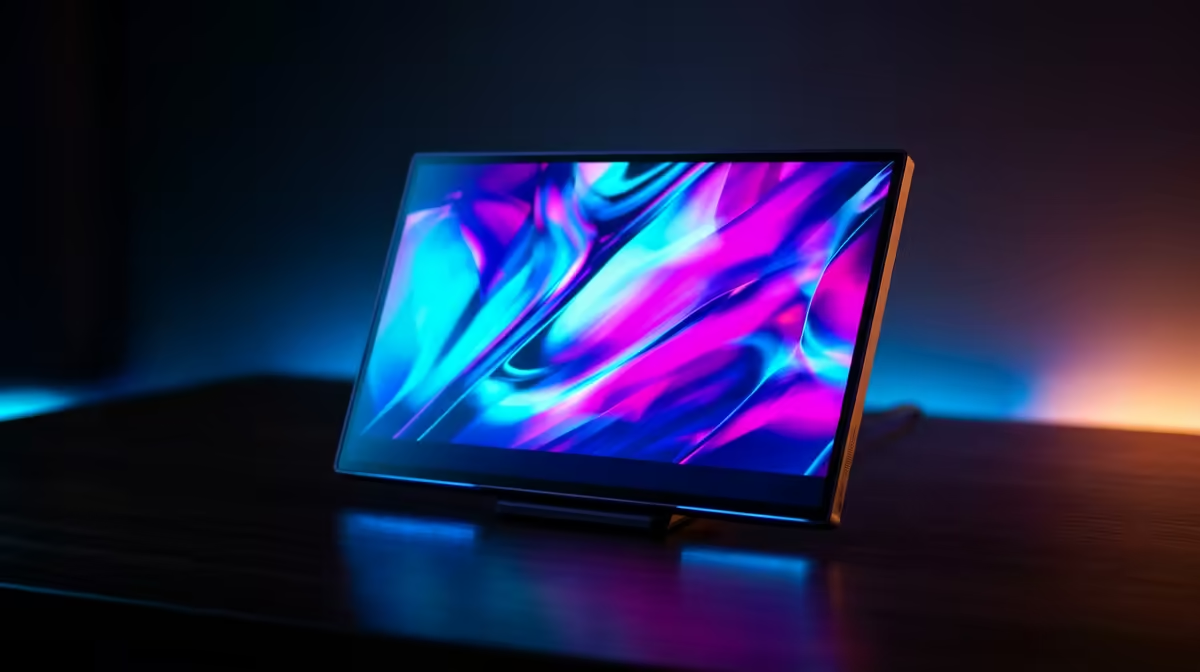
A portable monitor is built around a single guiding rule: go anywhere. It draws power and display signal through one USB-C connection from your laptop, folds flat, and weighs less than a thick paperback. You can carry one in the same sleeve as your notebook and forget it is there until you need it.
A desktop monitor is built around the opposite priority: be the best possible screen in one fixed spot. That brings a substantial stand, a separate power supply, and a chassis that is never meant to move. The qualities that make it excellent at a desk, size, weight and a proper base, are exactly what make it impossible to take with you.
You can see the full travel-screen lineup on the portable monitor range at Evetech to gauge the sizes and weights that suit your bag.
Weight, Size and Packing
What a Portable Monitor Actually Adds to Your Bag
A 15.6-inch portable monitor typically weighs 700 to 900 grams and measures around 9mm at its thinnest. Slipped into the secondary sleeve of a standard laptop bag, it adds barely noticeable bulk. Many ship with a folio cover that doubles as a stand, so the whole travelling kit is the panel and one cable.
Why a Desktop Monitor Cannot Come Along
A 24-inch desktop monitor weighs several kilograms once you include the stand, needs its own mains power brick, and has a panel depth that no laptop bag accommodates. Even a small desktop model is a separate item of luggage with its own fragility risk. For a trip, that is the end of the conversation.
Connectivity and Power on the Road
A good portable monitor runs from a single USB-C connection that combines the display feed and the power supply in one wire, so there is nothing else to pack and nothing to plug into a wall. That single-cable simplicity is the feature that makes it genuinely travel-friendly. Some models offer mini-HDMI as a fallback for devices without USB-C video output, which is worth checking against your laptop before you buy.
A desktop monitor always needs mains power and usually a full-size HDMI or DisplayPort cable, tying it to a fixed setup. On a train, in a hotel, or at a client's boardroom table, that dependency is the deal-breaker.
Where the Desktop Monitor Still Wins
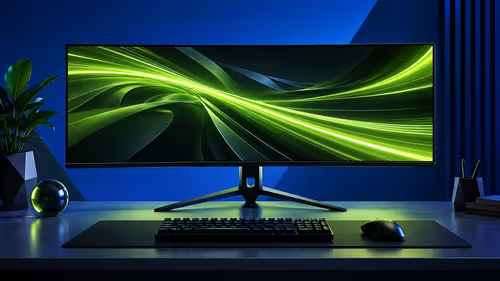
This is not a blanket verdict against desktop screens. At a permanent desk in Cape Town or Joburg, a desktop monitor gives you a bigger panel, higher brightness, a fuller range of sizes and resolutions, and a sturdier stand with proper ergonomic adjustment, often for less money per inch. If the screen never leaves the room, that is the smarter buy.
The two are not really rivals. A portable monitor is the travel and second-screen tool, a desktop monitor is the home-base workhorse, and plenty of people sensibly own both for different jobs.
Refresh Rate, Resolution and Panel Quality Compared
On a like-for-like basis, a portable monitor makes deliberate compromises that a desktop screen does not. Most portables land at 1080p and 60Hz on a 15.6-inch IPS panel. Colour coverage is good but rarely matches a calibrated desktop display, and sustained brightness is lower. These are trade-offs the category accepts in exchange for weight under a kilogram and a profile thin enough to slide into a laptop sleeve.
A desktop monitor at the same price point outperforms the portable on every measured spec: larger panel, higher peak brightness, better ergonomic stand, and more resolution options. That comparison is only relevant if the screen stays in one place, which is the one scenario where the portable loses completely.
The practical conclusion: judge a portable monitor against the reality of your travel habits, not against a desktop panel at a fixed desk. The two are different tools priced differently because they do different jobs.
Who Should Buy Which
Buy a portable monitor if you travel for work, present to clients, study between campus and home, or want a slim second screen for a laptop on the move. Buy a desktop monitor if your screen lives at one desk and size and value matter most. If you commute between a fixed office and frequent travel, owning both covers every situation. To compare fixed-desk options alongside the portable picks, the monitor best sellers list reflects the screens SA buyers are currently gravitating toward across both categories.
Frequently Asked Questions
How heavy is a portable monitor really?
A typical 15.6-inch model lands between 700 and 900 grams, roughly the weight of a thin hardcover. That is light enough to carry alongside a laptop every day without thinking about it.
Can a portable monitor run from just one cable?
Most modern models do, drawing both video and power over a single USB-C connection from a compatible laptop. Verify that the USB-C port on your machine is capable of display output before relying on it, since some ports handle only data and charging.
Is a portable monitor as good as a desktop screen?
For its size it can be very good, but a desktop monitor still offers larger panels, higher brightness and better value per inch at a fixed desk. The portable wins on travel, not on raw desk performance.
Can I use a desktop monitor for travel at all?
Realistically, no. The stand, mains power requirement and panel depth make it impractical to pack, and the fragility risk is high. A portable monitor exists precisely because desktop screens cannot travel.
Should I own both?
If you have a fixed desk and also travel often, yes. A desktop monitor handles the home-base work and a portable monitor covers the road, and each does its job far better than asking one to do both.
Pick the screen that fits how you actually work. Browse the portable monitor range at Evetech for a travel-ready second display, or compare fixed-desk options in the monitor best sellers list to find your home-base workhorse.