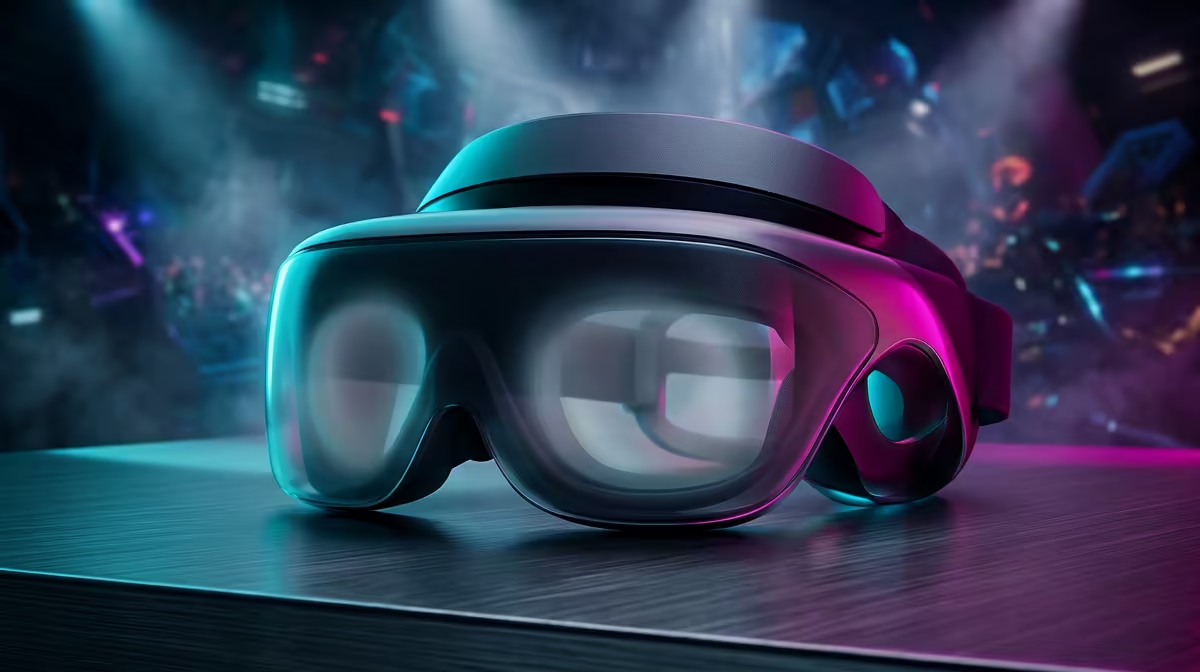
Strap on a Quest 3 and the first thing you notice is the room around you in full colour, not the black void older headsets dropped you into. That passthrough is the headline feature, yet Quest 3 mixed reality competes for your time against the thing most people actually bought the headset for: immersive VR games. Knowing which mode earns its keep day to day is the difference between a headset that lives on the shelf and one that gets used.
Quick Answer
The Quest 3 handles both modes well, but most owners spend the majority of their time in fully immersive VR games. Mixed reality, powered by the same 4MP colour passthrough cameras and depth sensor, is the standout demo and a genuinely useful secondary mode, yet it tends to be the feature people show off rather than the one they live in.
The Hardware Behind Both Modes
The Quest 3 runs the same sensor stack for everything. Two outward-facing 4MP colour cameras feed the passthrough view, and a dedicated depth sensor maps the room so virtual objects can sit on your real table or dodge your real couch. That depth data is what separates the Quest 3 from older headsets that only had grainy black-and-white passthrough.
The same cameras and tracking that enable mixed reality also handle controller-free hand tracking and room boundary detection for VR. So the hardware is not split between two purposes; it is one system serving both. That matters because it means mixed reality is not a bolt-on, it is built into how the headset sees the world.
Where Pure VR Wins
Immersion that mixed reality cannot match
The reason most time goes to full VR is simple: presence. When the headset blacks out your room and drops you onto a mountain, into a cockpit, or inside a rhythm game, the immersion is total. Mixed reality, by design, keeps you tethered to your actual lounge, which is reassuring but less transporting.
The library is VR-first
The deepest, most polished experiences, the long campaigns, the fitness games people return to daily, the social spaces, are built as fully immersive VR. Mixed reality titles are growing but are still a smaller, often shorter catalogue. People follow the content, and the content is VR.
Comfort for long sessions
A full VR scene can be tuned for visual consistency. Passthrough, however good, carries a slight processing delay and a softer image than your eyes expect, which is fine in bursts but more tiring across a long session.
Where Mixed Reality Earns Its Place
Mixed reality is not a gimmick, and it shines in specific cases. It makes the headset feel safer for newcomers, because you can see your space and step around furniture. It is excellent for room-scale games that use your actual walls and floor, turning your lounge into the play area. It suits productivity and casual apps where you want virtual screens floating over a real desk while still seeing your keyboard and coffee. And it lowers the barrier for shared use, since you can hand the headset to someone nervous about VR and let them ease in while still seeing the room.
Practical mixed reality apps worth trying
Several mixed reality titles take real advantage of the Quest 3's depth sensing. Room-scale puzzle games place objects on your actual floor and furniture. Virtual desktop apps let you float a large monitor in front of your real couch. Fitness programmes use your real floor space as the play area. And casual paint or drawing apps project canvases into your room, which makes them genuinely different from their flat-screen equivalents. These are not tech demos; they are practical reasons to keep mixed reality mode in rotation even if VR gets the bulk of your hours.
The colour passthrough changes the feel
The jump to 4MP full-colour passthrough is the single biggest reason mixed reality went from a curiosity to something usable. Earlier headsets gave you a fuzzy monochrome view that felt like a security camera. The Quest 3's colour view is clear enough to read your phone, find your drink, and interact with people, which is what makes blended apps practical.
The Library Gap in Numbers
The case for VR being the primary mode is not just anecdotal. The Quest 3 dethroned the Quest 2 as the most-used VR headset on Steam in 2026, roughly two years after its release, and the catalogue it leads with is almost entirely full-immersion VR. Developers building for the Quest platform had little incentive to make mixed reality the default mode while the Quest 2, which had no colour passthrough at all, still represented a large share of the installed base. That legacy shaped what got built: deep VR campaigns, fitness apps with daily return loops, and social worlds designed for full immersion.
Mixed reality content is growing, but the experiences that drive daily engagement, the long campaigns, the competitive fitness titles, the social hubs, are VR-first by design. Passthrough titles tend to be shorter, more novelty-focused, and updated less frequently than the flagship VR catalogue.
The Productivity Angle
One area where mixed reality pulls ahead for some owners is productivity. Floating a large virtual monitor above your real desk while still seeing your keyboard and coffee cup is a genuinely different workflow from either a physical monitor or a fully immersive VR space. If your use case includes remote work or long reading sessions, mixed reality gives you a screen that fills your field of view without blocking the room. For gaming, the VR catalogue wins; for focus work with spatial flexibility, mixed reality earns its place.
So How Should You Split Your Time
For most owners the honest pattern is roughly: VR for the games and workouts you actually sink hours into, mixed reality for room-scale titles, quick demos to show friends, and any app where staying aware of your surroundings is the point. Buy the Quest 3 for VR first, and treat the strong mixed reality as a genuine bonus rather than the main event. To see what is stocked across the AR and VR category locally, the AR glasses and headset section at Evetech lists current options.
Frequently Asked Questions
Do most Quest 3 owners use mixed reality or VR more?
Most spend the majority of their time in fully immersive VR games, where presence and the deepest content live. Mixed reality is a strong secondary mode used for room-scale titles and demos.
What makes the Quest 3 passthrough better than older headsets?
Two 4MP full-colour cameras plus a dedicated depth sensor. That replaces the grainy black-and-white view of earlier headsets with a clear colour image good enough to read text and navigate your room.
Is mixed reality just a gimmick?
No. It is genuinely useful for room-scale games, productivity with floating screens, and easing newcomers into VR safely. It is just that the headline VR library is deeper, so it gets more hours.
Can I see my real keyboard while using the headset?
Yes. Colour passthrough lets you see your desk, keyboard, and drink clearly enough to use them, which is what makes blended productivity apps practical.
Should I buy the Quest 3 for mixed reality or for VR?
Buy it for VR first, since that is where you will spend most of your time. Treat the strong mixed reality as a valuable bonus rather than the primary reason.