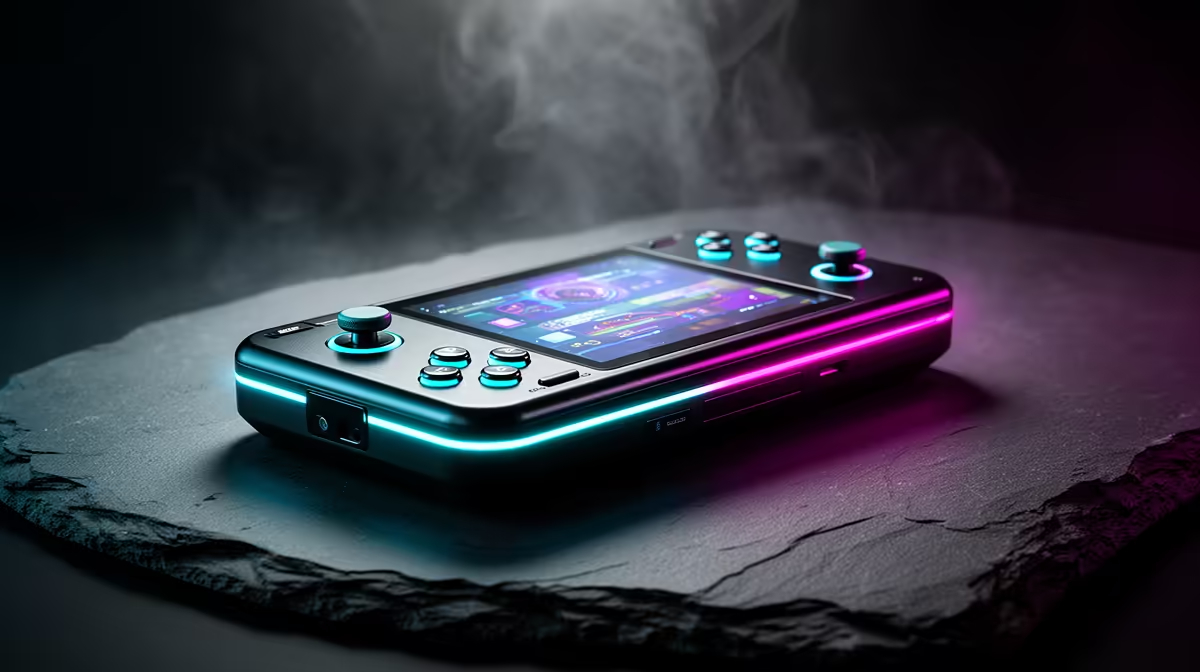
A pocket device that runs everything from 8-bit classics to PlayStation 2 sits at one end of a market, and a tiny Linux unit that fits a few NES carts' worth of nostalgia sits at the other. Retro gaming handhelds have grown into a genuine spectrum, and the right one depends entirely on how far up the console generations you want to go. For South African buyers, there is an extra wrinkle most overseas reviews ignore: nearly all of these devices arrive here through import, so local pricing and availability rarely match the figures you read abroad.
Quick Answer
Retro handhelds split into two camps. Compact Linux pocket devices handle 8-bit and 16-bit eras cheaply and simply, while high-end Android units built on chips like the Snapdragon 8 Gen 2, such as the Ayn Odin 2, push into PlayStation 2, GameCube and beyond. Most reach South Africa via import, so budget for higher local pricing than international reviews quote.
The two ends of the market
At the entry end are small Linux-based handhelds. These run a lightweight custom operating system, boot straight into a game library, and focus on the older, less demanding consoles: 8-bit and 16-bit systems, classic handhelds, and the early 2D era. They are cheap, pocketable, have long battery life, and are dead simple to use, which makes them an easy first step into emulation. The trade-off is a hard ceiling on what they can emulate; ask one to run a PlayStation 2 game and it simply cannot.
At the other end are powerful Android handhelds. The Ayn Odin 2 is the standout reference point, built on the Qualcomm Snapdragon 8 Gen 2 with an Adreno 740 GPU. Where a pocket Linux device tops out in the 2D era, the Odin 2 emulates demanding systems up to the PlayStation 2 and GameCube generation with stability, and even reaches toward later platforms. It runs full Android with access to the Google Play Store, so you install emulators and apps directly, and the Portal variant adds a larger 7-inch AMOLED display. That power and flexibility come at a much higher price and shorter relative battery life under heavy emulation.
How to pick the right tier
The single most useful question is: what is the newest console you genuinely want to play? Answer that honestly and the tier chooses itself, because paying for PlayStation 2 power you never use is wasted money, while buying a cheap device that cannot run your favourite system is a different kind of regret.
If your nostalgia lives in the 8-bit and 16-bit eras, an early handheld, or 2D arcade classics, a compact Linux device covers it for far less money and far less fuss. If you want PlayStation 1, Nintendo DS, PlayStation Portable, and especially PlayStation 2 or GameCube, you need the muscle of a high-end Android unit. There is a sensible middle ground too: mid-range Android handhelds that handle up to PlayStation 1 and PSP comfortably without the flagship price of an Odin 2.
Linux versus Android, beyond raw power
The operating system shapes the experience as much as the chip does. Linux pocket devices are appliance-like: turn on, pick a game, play. There is little to configure and little that can go wrong, which suits anyone who wants the games without the tinkering.
Android handhelds are small computers. They run Android, install emulators from the Play Store, support standalone apps, and let you tune each emulator in depth. That openness is powerful for enthusiasts who enjoy dialling in settings per system, but it asks more of the owner. Some buyers love that control; others find it more involved than they wanted. Knowing which type of user you are matters as much as the spec sheet. To see which models are currently stocked locally, browse the handheld gaming consoles range at Evetech for up-to-date availability.
The South African import reality
This is where local buyers need clear eyes. The retro handheld scene is driven by overseas brands, and the dollar prices you see in international reviews are not what you pay here. Import duties, shipping and exchange rates push local pricing above the headline overseas figure, and stock availability for any specific model can be intermittent rather than guaranteed. A device praised in a foreign review may be hard to find locally, or land at a noticeably higher rand price than a straight currency conversion suggests.
The practical takeaway is to treat overseas pricing as a rough guide, not a quote, and to check current local availability before settling on a model. Budget realistically, including a generous microSD card for game storage and a decent case, since these devices travel. For cables, cards and accessories that round out a handheld setup, checking the top-selling PCs at Evetech shows the kind of storage and peripheral picks that local buyers add alongside compact devices.
Frequently Asked Questions
What is the most powerful retro handheld right now?
Among widely referenced devices, the Ayn Odin 2 sits at the top end, built on the Snapdragon 8 Gen 2 with an Adreno 740 GPU. It emulates demanding systems up to the PlayStation 2 and GameCube era with strong stability, well beyond what compact Linux handhelds can manage.
Can a cheap handheld run PlayStation 2 games?
No. Budget Linux pocket devices are built for 8-bit and 16-bit eras and early 2D systems. PlayStation 2 and GameCube emulation needs a high-end Android handheld with a powerful chip, which costs considerably more.
Should I choose a Linux or Android handheld?
Choose Linux for a simple, appliance-like device that boots straight into older games with minimal setup. Choose Android if you want to emulate newer systems, install emulators from the Play Store, and tune settings yourself, accepting more complexity in exchange for power and flexibility.
Why are these handhelds more expensive in South Africa?
Most are imported brands, so local pricing reflects shipping, import duties and exchange rates on top of the overseas figure. International review prices are a rough guide only, and you should check current local availability and rand pricing before buying.
Do I need a separate memory card for games?
Yes, in almost all cases. Game files live on a microSD card, and a generous card is essential since libraries grow quickly. Budget for a decent card alongside the device itself when planning your purchase.