The single biggest mistake in buying a retro handheld is paying for a chip that plays consoles you never wanted. Someone who only cares about Game Boy, SNES, and the odd PlayStation classic does not need a device that can run GameCube, and spending up for that headroom is money left on the table. Match the silicon to the highest console on your wishlist and you stop overspending. The whole market sorts neatly along that one axis.
Quick Answer
Pick your handheld by the most demanding system you want to emulate. Budget Allwinner H700 devices handle everything up to PlayStation 1 cleanly, with GBA, SNES, and arcade running flawlessly, while a Snapdragon 865 unit like the Retroid Pocket 5 reaches GameCube, PS2, and Wii at full speed. Buying more chip than your target library needs simply wastes Rand.
The chip ladder, explained
Emulation difficulty rises sharply as consoles get newer, because the handheld has to translate the original hardware in software. An 8-bit NES is trivial. A PS2 is enormous by comparison. That gap is why a single processor decides which eras you can play, and why the market splits into clear tiers rather than a smooth slope.
Two chips anchor the conversation in 2025: the budget Allwinner H700 at the bottom, and the Snapdragon 865 in the upper-midrange. Knowing what each clears tells you almost everything you need before you spend.
The budget tier: Allwinner H700
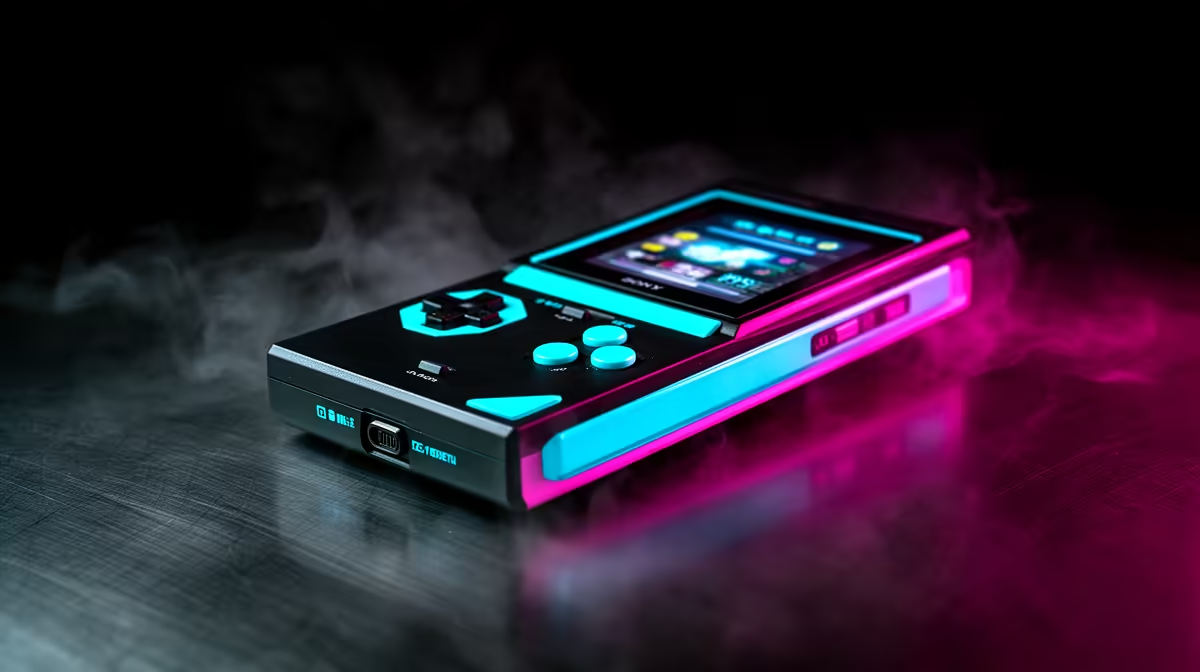
The H700 powers the affordable Anbernic XX line, devices like the RG35XX Plus, RG40XX H, and RG Cube XX. This is the sweet spot for classic gaming. Everything 8-bit and 16-bit runs perfectly: NES, SNES, Mega Drive, Game Boy, and GBA all play at full speed with room to spare. Arcade libraries are well covered, and PlayStation 1 runs cleanly across the bulk of its catalogue.
Push past PS1 and the picture gets mixed. Nintendo 64, Dreamcast, and PSP are playable on the H700 but inconsistent, with some titles smooth and others stuttering. Nintendo DS is hit and miss. So if your dream library tops out at PS1 and the 16-bit greats, an H700 device delivers it for the least money, and there is no reason to climb higher.
Who the H700 is for
Anyone whose nostalgia lives in the cartridge era. Students and commuters who want a pocketable device for SNES platformers, GBA RPGs, and PS1 classics on a train or in res. It is light, cheap, and battery-friendly, and it does the classics without complaint.
The performance tier: Snapdragon 865
The Snapdragon 865, found in the Retroid Pocket 5, is a different class of machine. It pairs that chip with 8GB of LPDDR4X RAM, 128GB of UFS 3.1 storage, and a 5.5-inch 1080p OLED screen with hall-effect sticks that resist drift. On the emulation side it clears everything the H700 does, then keeps going.
PS1, N64, Dreamcast, and PSP all run at full speed with no caveats. PS2 handles the full library, often upscaled to two or three times the original resolution. GameCube runs playably through Dolphin, and the device reaches into 3DS and Wii U territory. It can also boot Linux-based systems like Batocera, which appeals to tinkerers.
Who the Snapdragon 865 is for
People whose wishlist includes the disc-based sixth generation. If you want PS2 and GameCube in your pocket with a screen that genuinely rivals a phone, this is the tier to buy into. The extra outlay buys real capability, not just headroom.
Matching the device to your library
Write down the single newest console you actually want to play. If it is PS1 or older, an H700 handheld is the rational buy and anything pricier is overkill. If it is PS2, GameCube, or Wii, you need a Snapdragon 865 device and an H700 will frustrate you. There is very little reason to land in the middle, since the two tiers cover the meaningful split. Browse the handheld gaming console range at Evetech to compare locally stocked options by capability, and check the Evetech best sellers to see which portable systems South African buyers are choosing right now.
Planning your library before you buy
The most useful thing you can do before buying is write a short list of the games you most want to replay. Group them by console. If the heaviest system on that list is PlayStation 1, Game Boy Advance, or anything older, an H700 handheld does every one of them without strain. You can buy a quality device for under R1,500 landed and have a machine that genuinely delivers the classics.
If the list includes any disc-based sixth-generation title, whether it is a GameCube platformer, a PS2 JRPG, or a PSP action game at native resolution, you need the Snapdragon 865 tier. The step up in price is real, but so is the step up in capability. Trying to split the difference by buying a mid-tier device usually leaves you frustrated by the ceiling and wishing you had spent the extra.
One practical tip for South African buyers: the import cost of these devices is not trivial, and a locally stocked unit removes the customs guesswork entirely. Factor the final landed price, not just the foreign sticker, before comparing tiers.
Frequently Asked Questions
What is the cheapest handheld that plays PS1 well?
An Allwinner H700 device, such as the Anbernic XX line, runs the bulk of the PS1 library cleanly at a budget price. It also handles all 8-bit and 16-bit systems flawlessly, so it covers the classic era completely.
Can the Allwinner H700 run PS2 or GameCube?
No. The H700 tops out at solid PS1 performance, with N64, Dreamcast, and PSP playable but inconsistent. PS2 and GameCube need a far stronger chip like the Snapdragon 865.
Is the Retroid Pocket 5 worth the extra money?
If you want PS2, GameCube, or Wii on the go, yes. Its Snapdragon 865, OLED screen, and hall-effect sticks deliver full-speed sixth-generation emulation that budget devices cannot touch.
What chip do I need for GBA and SNES only?
The budget Allwinner H700 is more than enough. Both systems run perfectly on it, so paying for a Snapdragon device just to play GBA and SNES is wasted money.
Do these handhelds need their own game files?
Yes. You supply your own legally obtained game files on a microSD card. Both tiers read standard formats, and a 128GB card holds an enormous classic library on an H700 device.