Most USB-C hubs include an SD card slot, sometimes a microSD slot too, and occasionally both. What the product listing rarely explains is whether the SD and TF card reader built into that hub will actually read the card you own or cap out somewhere below the card's full capacity.
Quick Answer
SD and TF (microSD) card readers in USB-C hubs support capacity limits set by their controller chips, not the physical slot. SDXC-capable controllers handle cards up to 2 TB. SDUC extends the theoretical ceiling to 128 TB, but consumer controllers rarely implement it. UHS-I speeds (up to 104 MB/s) are standard; UHS-II requires a dedicated second row of contacts and a controller that supports it.
💾 SD vs TF: Same Signal, Different Shell
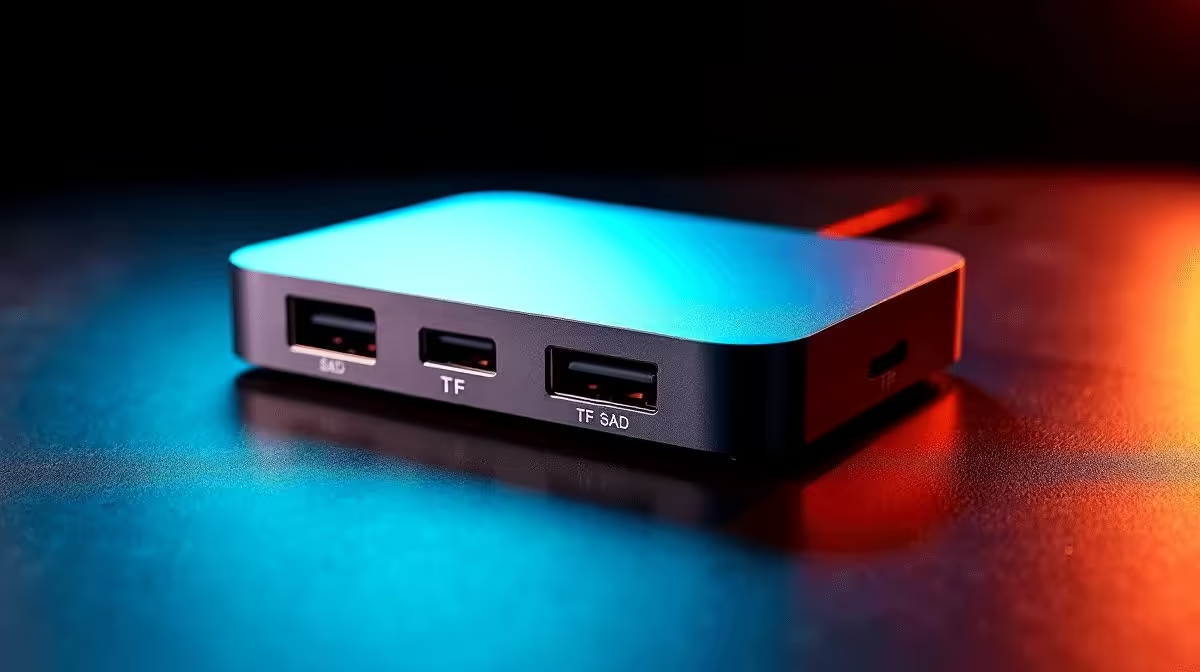
TF card is the original trade name for what became the microSD standard. The two terms describe the same format, just different branding conventions. A TF card slot accepts microSD cards; a standard SD slot accepts the larger format. Some hubs include both physical slot sizes but route them through the same controller chip, meaning they cannot be used simultaneously at full speed, and in some implementations, they share a single data bus.
The capacity ceiling in either slot depends on which SD specification the controller implements. SDSC (Standard Capacity) supports up to 2 GB. SDHC (High Capacity) reaches 32 GB. SDXC (Extended Capacity) covers 32 GB to 2 TB, which is the relevant range for virtually every card on the market today. SDUC (Ultra Capacity) extends this to 128 TB but remains rare in consumer hardware. Most hub card readers are SDXC-capable, meaning they will read cards from 32 GB through 2 TB without issue.
⚡ UHS-I vs UHS-II and Real Transfer Speeds
UHS-I (Ultra High Speed I) is the standard speed bus for SD cards, delivering up to 104 MB/s. This is what virtually all hub card readers support. UHS-II doubles the bus lanes by adding a second row of electrical contacts on the card, recognisable by the extra contact row on the underside.
Hub readers that support only UHS-I still read UHS-II cards, but at UHS-I speeds. You do not lose the card's data; you lose roughly half of its potential read speed. For regular footage offloads from a UHS-II camera card, a dedicated card reader with a UHS-II controller is the better choice.
On hubs where both SD and microSD slots share one controller bus, simultaneous use may halve throughput or disable one slot entirely. Hubs that explicitly list simultaneous read support use independent bus lanes per slot.
🗂️ Controller Capacity Caps and Older Hub Gotchas
Older USB-C hubs built before 2018 may use controllers that predate the SDXC 512 GB and 1 TB tiers. A 512 GB microSD card inserted into an older hub may appear as unformatted or be misread as a smaller capacity.
A hub with a current-generation controller handles cards up to 1 or 2 TB without issue. If you experience capacity mismatches on large cards with an older hub, the controller limit is the most likely cause rather than a faulty card.
Frequently Asked Questions
Can I use a 1TB microSD card in a USB-C hub card reader?
Yes, provided the hub uses an SDXC-capable controller. Most hubs manufactured after 2019 support SDXC capacities up to 2 TB. Older hubs may cap recognition at 256 GB or 512 GB depending on the controller generation.
What is the difference between SD and TF card slots on a hub?
TF is the original brand name for microSD. They refer to the same card format. An SD slot accommodates the larger full-size card; a TF slot accepts the smaller microSD format. Many hubs include both physical sizes.
Will my UHS-II card work in a hub that only supports UHS-I?
Yes, UHS-II cards are backward compatible with UHS-I readers. The card will function correctly but at UHS-I speeds, capped at around 104 MB/s rather than the UHS-II maximum of 312 MB/s.
Can I use both card slots simultaneously in a USB-C hub?
It depends on the hub's internal design. Hubs with independent bus lanes per slot allow genuine simultaneous use. Hubs that route both slots through one controller share bandwidth between them. Check the specification sheet or manufacturer documentation for confirmation.
What is SDUC and do I need to care about it?
SDUC extends the theoretical SD capacity ceiling to 128 TB. No consumer storage media currently approaches that limit, and very few hub controllers implement SDUC. For cards available today, SDXC support is all you need.
Need a hub that handles your cards and drives together?
Evetech's USB-C hub range includes multi-slot readers with broad card compatibility. Have a look at what is available and match it to your workflow.