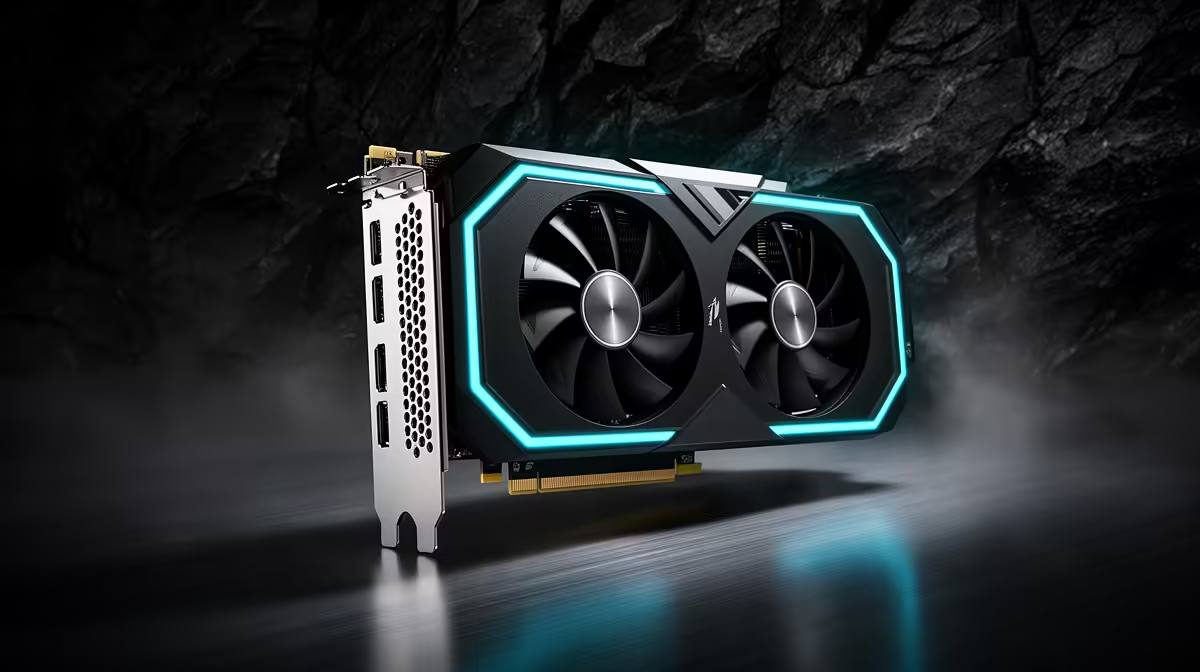
Quick Answer
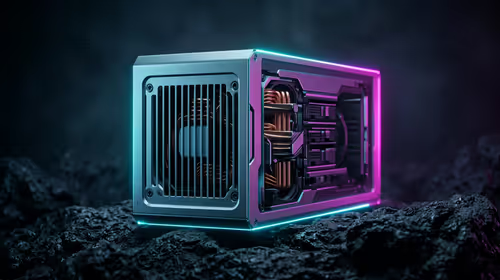
An 850W PSU is the minimum edge case, not the comfortable recommendation. For SA RTX 5090 builds, a quality 1000W to 1200W ATX 3.1 PSU is the safer target. Do not treat these bands as live pricing; use them to frame the shortlist, then confirm the current Evetech listing before checkout.
Wattage Maths First
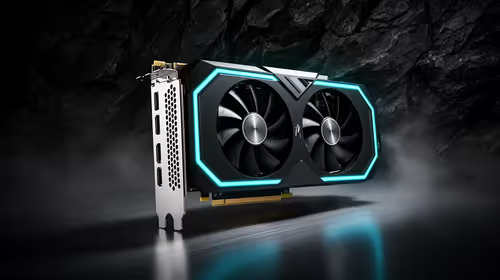
Compare named options such as Corsair RM1000x Shift, MSI MPG A1000G, Seasonic Vertex GX-1000, and Cooler Master 1200W-class units because the label alone is too thin for a good buying decision. The useful checks are RTX 5090 around 575W board power, high-end CPU spikes of 200W to 300W, ATX 3.1 support, and native 12V-2x6 cabling. A realistic RTX 5090 gaming PC can move beyond 800W at the wall under combined CPU and GPU load. That gives the article a concrete performance target instead of a vague promise.
For budget planning, keep the range around R3,500 to R7,500 unless the exact model is on promotion or replaced by a newer revision. A cheaper option can still be right if it matches the desk, PC, console, fibre line, or study workload it will actually serve.
Why Smaller PSUs Become Risky
For SA builds, plan around local warranty support, courier handling, and the actual wall power draw of the finished PC. Check the order details, packaging size, and warranty route before committing, especially for bulky items or components that must arrive undamaged.
If the item is part of a bigger setup, match it to the rest of the gear before spending. A monitor needs the right GPU, DDR5 needs a compatible board, a router needs modern client devices, and a PSU needs the correct cable standard.
Safe SA Build Target
Use 1000W as the practical starting point for most RTX 5090 gaming PCs, and move to 1200W if the build uses a Core i9-class CPU, heavy overclocking, many drives, or long rendering workloads. The key features are ATX 3.1 support, a native 12V-2x6 cable, strong warranty cover, and enough physical room in the case for cable bend clearance.
A lower wattage unit may boot, but booting is not the same as sustained safety. The risk shows up when GPU spikes, CPU boost, fans, pumps, and storage all draw power at the same time.
FAQ
What should SA buyers check first before choosing a RTX 5090 power supply?
Start with compatibility and daily use. Confirm the size, required ports, platform support, warranty route, and whether the R3,500 to R7,500 planning band fits the rest of the setup.
Is the cheapest RTX 5090 power supply always the best value?
No. The cheapest option is only good value when it still meets the key spec target, such as 32GB DDR5, 144Hz refresh, 1TB SSD storage, 2.4GHz wireless, or a safe PSU wattage. Spending slightly more can be smarter when it avoids an immediate replacement.
How do I avoid ordering the wrong RTX 5090 power supply?
Write down the current PC, desk, room, or fibre setup before comparing products. Match that list against the Evetech product specifications, then choose the model that fits the requirement instead of the one with the loudest name.
PSU Check
Before pairing an RTX 5090 with any PSU, confirm the exact wattage, ATX 3.1 support, native 12V-2x6 cable, and case cable clearance. If the build is 850W or lower, plan a PSU upgrade before gaming or rendering seriously.